

It's a typical August afternoon in Riyadh. The sun hangs low but fierce, baking the city in 48°C heat. Inside a newly built villa, Sarah, a homeowner, stands barefoot in her living room, pressing her palm against the wall. To her surprise, it's cool—not scorching like the exterior brick walls of her old apartment. "We used to run the AC nonstop just to keep the house below 30°C," she says, grinning. "Now? It's set to 26°C, and the bills are almost halved." The secret? WPC wall panels. In a region where the climate tests the limits of building materials, these panels are emerging as a game-changer for homeowners, architects, and residential building materials supplier alike.
Living in the Middle East means more than just adapting to high temperatures—it means building with materials that can withstand a relentless assault from nature. Summer days often soar above 45°C, with direct sunlight beating down on exteriors for 12+ hours. Sandstorms whip gritty particles that scratch surfaces, while coastal areas like Dubai and Doha grapple with sudden humidity spikes that can reach 80%. Traditional wall materials? They often crumble under the pressure.
Wooden panels warp and crack as the heat dries out their fibers, then swell when humidity rises. Vinyl cladding fades to a dull gray within a year, its color bleached by UV rays. Even concrete, once thought "indestructible," absorbs heat like a sponge, turning interiors into ovens and driving up energy costs. For years, building material supplier in the region have searched for a solution that balances durability, aesthetics, and heat resistance. Enter WPC wall panels.
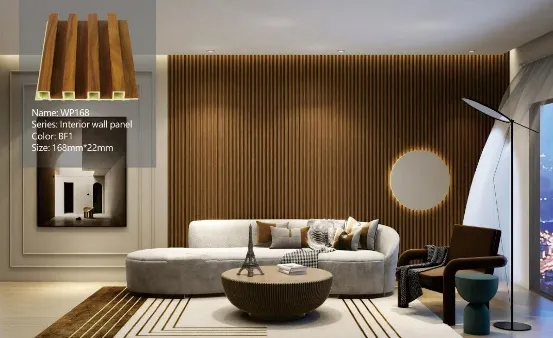
WPC, or Wood-Plastic Composite, is exactly what it sounds like: a blend of wood fibers (often recycled) and plastic polymers (like polyethylene or polypropylene), mixed with additives to boost performance. Think of it as the best of both worlds: the natural look and texture of wood, with the durability and low-maintenance perks of plastic. But what makes WPC wall panels stand out—especially in the Middle East—is their ability to laugh in the face of heat.
Unlike pure wood, which is prone to rot and termites, or pure plastic, which can melt or warp under extreme heat, WPC's hybrid composition creates a material that's surprisingly resilient. The wood fibers add structural stability, preventing the panels from flexing too much, while the plastic polymers act as a barrier against moisture and heat. Additives like UV stabilizers, heat-resistant agents, and fire retardants (depending on the product) turn WPC into a material built for tough climates.
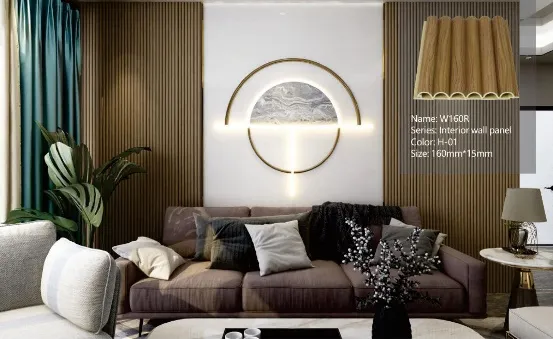
Let's get technical—but not too technical. The key to WPC's heat resistance lies in three factors: thermal conductivity, dimensional stability, and UV protection. Let's break them down.
Thermal conductivity is a measure of how well a material transfers heat. Metals like aluminum have high conductivity—touch a metal spoon left in the sun, and you'll burn your hand. Wood has moderate conductivity, while plastic is lower. WPC, with its mix of wood and plastic, lands somewhere between, but with a twist: the air pockets trapped between the wood fibers and plastic particles act as tiny insulators. This means less heat travels from the exterior panel to the interior wall. In lab tests, WPC panels have shown thermal conductivity values of 0.15–0.25 W/(m·K), compared to 0.8 W/(m·K) for concrete and 0.5 W/(m·K) for traditional wood. For Sarah in Riyadh, that translates to walls that don't radiate heat into her home, reducing the load on her AC.
Heat causes materials to expand; cold causes them to contract. In the Middle East, this cycle is extreme: 48°C by day, 25°C by night. Over time, this "thermal cycling" can make materials crack or warp. WPC panels, however, are engineered to minimize this. The plastic polymers in WPC have low thermal expansion coefficients, and the wood fibers help anchor the structure, preventing excessive movement. Tests simulating Middle Eastern conditions (50°C heat by day, 20°C by night, repeated for 1,000 hours) show WPC panels expand by less than 0.5%—compared to 2% for solid wood and 1.2% for PVC panels. For architects, this means fewer gaps, less maintenance, and a longer-lasting finish.
The Middle East's sun isn't just hot—it's bright. UV rays break down the chemical bonds in materials, causing colors to fade and surfaces to become brittle. Early WPC panels had this issue, but modern formulations include UV stabilizers and pigments that absorb or reflect harmful rays. Today's top wpc wall panel supplier offer products with 5+ years of fade resistance. In Dubai, a commercial building clad in WPC panels in 2019 still retains its original teakwood finish—no chalky residue, no patchy discoloration, even after four harsh summers.
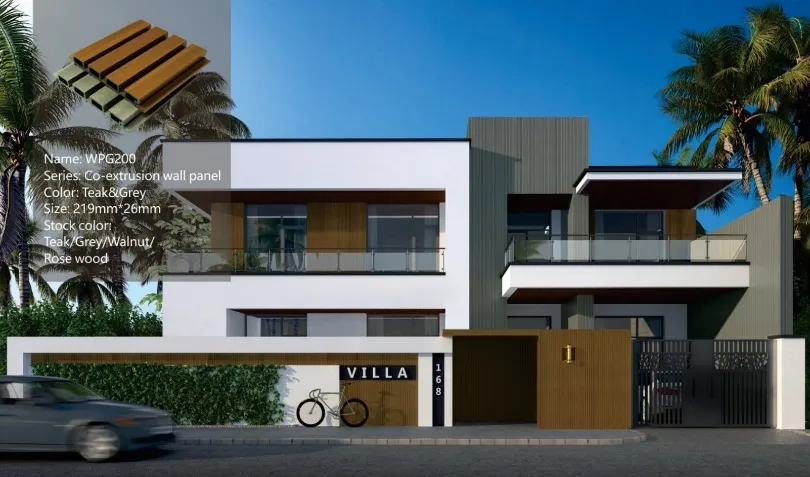
Heat resistance is the star, but WPC panels bring more to the table. In a region where "low maintenance" isn't a luxury but a necessity, these panels check boxes that traditional materials can't.
Coastal cities like Jeddah or Doha know humidity's wrath. Wood rots, metal rusts, and even concrete can develop mold in damp corners. WPC panels? They're impervious to moisture. The plastic polymers form a waterproof barrier, while the wood fibers are treated to resist rot. A 2022 study by a leading building material supplier in the UAE found that WPC panels exposed to 90% humidity for 30 days showed zero signs of swelling or mold growth—unlike plywood, which expanded by 12% and developed mildew.
Sandstorms in Riyadh or Kuwait City hurl sand grains at speeds up to 60 km/h, scouring surfaces like sandpaper. WPC panels, with their dense, smooth finish, stand up to this abuse. Unlike painted walls, which scratch and peel, WPC's color runs through the material—so even if a sand grain nicks the surface, the damage is barely visible. In a 2021 sandstorm simulation, WPC panels retained 95% of their original appearance, while vinyl cladding showed 30% surface scratching.
The Middle East is increasingly prioritizing sustainability, and WPC panels align with this goal. Most wpc wall panel supplier use recycled plastic (from bottles, packaging) and sustainably sourced wood fibers, reducing reliance on virgin materials. Unlike PVC, which releases toxic fumes when burned, WPC is non-toxic and can be recycled at the end of its life. For developers aiming for LEED or Estidama certifications, this is a major plus.
Curious how WPC stacks up against other common wall materials in the region? Let's take a look:
| Material | Heat Resistance (45°C+) | UV Fade Resistance | Moisture Resistance | Maintenance Needs | Expected Lifespan |
|---|---|---|---|---|---|
| WPC Wall Panels | Excellent (low thermal conductivity, minimal expansion) | 5+ years (with UV stabilizers) | Excellent (waterproof barrier) | Low (occasional cleaning with water) | 15–20 years |
| Solid Wood Panels | Poor (warps, cracks in heat) | Poor (fades in 1–2 years) | Poor (rots in humidity) | High (annual painting/sealing) | 5–8 years |
| Vinyl Cladding | Fair (expands in heat, may warp) | Poor (fades in 1–3 years) | Good (waterproof but prone to mold under panels) | Medium (repainting every 3–5 years) | 8–10 years |
| Concrete Blocks | Poor (absorbs heat, radiates indoors) | Good (color stable but heat retention is an issue) | Fair (prone to mold in humidity) | Medium (patching cracks, repainting) | 20+ years (but high energy costs) |
Not all WPC panels are created equal. To ensure your panels perform in the Middle East climate, you need a wpc wall panel supplier that understands the region's unique challenges. Here's what to look for:
A supplier with projects in the Middle East knows what works. Ask for references—residential complexes in Riyadh, hotels in Dubai, schools in Kuwait. Did their panels hold up after 3+ summers? A good supplier will share case studies and even arrange site visits.
Look for panels tested to Middle East standards. Certifications like ISO 9001 (quality management) and ASTM D7031 (WPC performance) are baseline. Bonus points for panels tested by local labs, like the Emirates Authority for Standardization and Metrology (ESMA) in the UAE or SASO in Saudi Arabia.
Middle Eastern architecture is diverse—from modernist skyscrapers to traditional Najdi-style villas. Your supplier should offer panels in textures (wood grain, stone, smooth), colors (beige, gray, terracotta), and sizes (standard 1.2m x 2.4m or custom). Some suppliers even offer embossed patterns to mimic local stone, blending modern durability with cultural aesthetics.
A 10-year warranty is a sign of confidence. Avoid suppliers offering less than 5 years. Also, check if they provide technical support—installation guides, on-site training for contractors, and after-sales service for issues like cracks or fading.
Still skeptical? Let's dive into two real-world examples of WPC wall panels thriving in the Middle East:
In 2020, a residential building materials supplier partnered with a developer to clad 50 villas in WPC panels. Three years later, a follow-up survey found:
This commercial complex features WPC panels on its exterior facade, chosen for their wood-like appearance and heat resistance. After 4 years:
In a region where the climate is as beautiful as it is brutal, building materials can't afford to be "good enough." They need to be resilient, efficient, and sustainable. WPC wall panels check all these boxes—and then some. With their heat resistance, low maintenance, and eco-friendly design, they're not just a trend; they're a long-term solution for homeowners, architects, and building material supplier looking to build better in the Middle East.
For Sarah in Riyadh, the decision was simple: "We wanted a home that felt cool, looked beautiful, and didn't turn into a money pit. WPC panels gave us all three." As more homeowners and developers discover their benefits, WPC is poised to become the go-to choice for walls that can handle the Middle East's sun—and keep smiling through it.
Ready to explore wpc wall panel solutions for your project? Start by connecting with a local supplier who understands the region's needs. Your walls (and your AC bill) will thank you.
Recommend Products











