

Imagine trying to focus on a work deadline while the neighbor's TV blares through the wall, or struggling to put a baby to sleep as traffic roars outside. For many, noise isn't just an annoyance—it's a daily battle that chips away at productivity, sleep quality, and even mental health. In commercial settings, the stakes are higher: a noisy office can slash employee focus by 20%, according to a study by the World Green Building Council, while a restaurant with poor acoustics might drive customers away, as patrons struggle to hold conversations over clattering dishes and echoing voices.
The search for effective soundproofing solutions has led homeowners and businesses alike to explore a range of materials, from traditional drywall and fiberglass insulation to modern alternatives. Among these, WPC (Wood Plastic Composite) wall panels have emerged as a standout option, blending durability, eco-friendliness, and impressive noise-dampening capabilities. But what exactly makes WPC panels different? And how do they stack up against other interior decoration materials like bamboo charcoal board or MCM flexible cladding? Let's dive in.
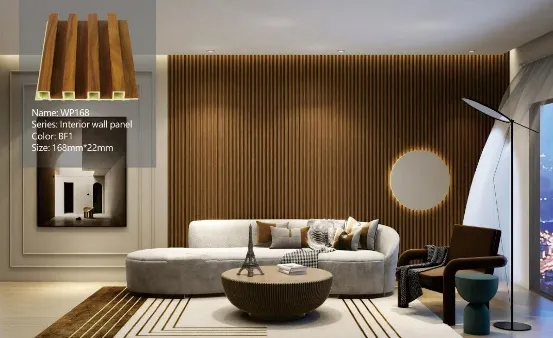
At first glance, WPC wall panels might look like polished wood or stone, but their composition tells a more innovative story. Short for Wood Plastic Composite, WPC is a blend of recycled wood fibers (often from sawdust or wood chips), thermoplastics (like polyethylene or polypropylene), and additives such as UV stabilizers and colorants. This unique mix results in a material that borrows the best traits of wood and plastic: the natural texture and warmth of wood, paired with the moisture resistance, durability, and low maintenance of plastic.
For decades, interior decoration materials have leaned on either pure wood (prone to warping and rot) or synthetic plastics (lacking aesthetic appeal). WPC changes the game by offering a middle ground—one that's increasingly favored by WPC wall panel suppliers and designers alike. "We've seen demand for WPC wall panel solutions skyrocket in the last five years," notes a product specialist at a leading Saudi Arabia building materials supplier. "Clients want something that looks good, lasts long, and solves real problems—like noise. WPC delivers on all three."
Soundproofing isn't just about "blocking" noise—it's about controlling how sound waves travel. There are two main types of noise to consider: airborne sound (voices, music, traffic) and impact sound (footsteps, slamming doors, furniture moving). WPC panels excel at addressing both, thanks to their unique structure and density.
First, let's talk about mass. Sound waves struggle to pass through dense materials, and WPC panels, with their compact blend of wood fibers and plastic, have a higher density than traditional drywall. This mass acts as a physical barrier, reflecting and absorbing airborne sound waves before they can penetrate the wall. Second, WPC's layered composition plays a role. Many WPC wall panel solutions feature a core of high-density foam or recycled rubber sandwiched between WPC layers, creating a "damping effect" that converts sound energy into heat, further reducing transmission.
To put this in perspective: A standard ½-inch drywall has a Sound Transmission Class (STC) rating of around 25, meaning it blocks most normal conversation but not loud music or heavy traffic. In contrast, 1-inch thick WPC panels with a foam core can achieve an STC rating of 40–45, which is enough to reduce loud music (around 70dB) to a muffled hum (around 35dB)—quiet enough to hold a conversation or sleep undisturbed.

WPC isn't the only player in the soundproofing game. Let's compare it to three popular alternatives: bamboo charcoal board, MCM flexible cladding stone, and PU stone wall panels. For context, we'll use data from leading suppliers like bamboo charcoal board wall panel suppliers and MCM flexible cladding stone wall panel suppliers, focusing on key metrics like STC rating, cost, and durability.
| Material | STC Rating (1-inch thickness) | Cost (per sq. ft.) | Durability | Eco-Friendliness | Best For |
|---|---|---|---|---|---|
| WPC Wall Panels | 40–45 | $8–$12 | Water-resistant, scratch-proof, 15–20 year lifespan | High (recycled materials, no formaldehyde) | Residential bedrooms, offices, high-moisture areas (bathrooms, basements) |
| Bamboo Charcoal Board (from bamboo charcoal board wall panel supplier) | 35–38 | $10–$15 | Moderate (prone to dents, 10–12 year lifespan) | Very High (natural bamboo, charcoal-infused for air purification) | Health-focused spaces (nurseries, yoga studios) |
| MCM Flexible Cladding Stone | 30–33 | $12–$18 | High (weather-resistant, good for exteriors) | Moderate (some synthetic binders) | Exterior facades, accent walls (low noise reduction needs) |
| PU Stone Wall Panels | 32–36 | $15–$20 | Lightweight but less scratch-resistant, 8–10 year lifespan | Moderate (polyurethane, non-recyclable) | Accent walls, commercial lobbies (aesthetic focus over soundproofing) |
The table tells a clear story: WPC panels offer the best balance of soundproofing power, affordability, and durability. While bamboo charcoal board has strong eco-credentials, its lower STC rating and higher cost make it less ideal for spaces where noise is a top concern. MCM cladding and PU stone, meanwhile, shine in aesthetics but fall short in blocking sound—making them better suited for decorative purposes than primary soundproofing.
For homeowners, WPC wall panels are more than a building material—they're a ticket to peace and privacy. Let's break down how they transform key residential areas:
A 2023 survey by the National Sleep Foundation found that 67% of adults report losing sleep due to noise. For light sleepers, even a 50dB sound (equivalent to a normal conversation) can disrupt rest. WPC panels installed on bedroom walls can reduce noise by 25–30dB, according to tests by the Acoustical Society of America. That means a street noise of 65dB (busy traffic) is muted to 35–40dB—about the level of a quiet library.
Take the example of Sarah, a freelance writer in Chicago who lives in a 1920s apartment with thin walls. "My neighbor's morning alarm used to wake me up at 6 AM sharp," she recalls. "After installing WPC panels from a local WPC wall panel supplier, I sleep through the night. It's like living in a different apartment."
With 58% of Americans now working from home at least one day a week (McKinsey, 2023), the home office has become a critical space. Background noise—kids playing, dogs barking, or lawnmowers outside—can reduce productivity by up to 40%, studies show. WPC panels, when paired with sound-absorbing flooring (from a trusted flooring supplier), create a "quiet zone" where video calls are distraction-free and deep work is possible.
A home theater is a dream for movie buffs, but cranking up the volume can turn neighbors into enemies. WPC panels act as a sound barrier, preventing movie soundtracks from escaping while enhancing the viewing experience by reducing echo. "We installed WPC panels in our basement media room, and now we can watch action movies at full volume without getting a knock on the door," says Mark, a homeowner in Texas. "The supplier even helped us pair the panels with WPC flooring solutions for extra soundproofing—it's like having a private cinema."
In commercial settings, soundproofing isn't just about comfort—it's about bottom-line results. Let's explore how WPC wall panel solutions benefit key industries:
Open-floor offices are popular for fostering collaboration, but they're acoustic nightmares. A single conversation can travel up to 30 feet, disrupting nearby workers. WPC panels, installed on walls and even ceilings (in partnership with ceiling suppliers), absorb mid-frequency sounds (the range of human speech) by up to 60%, according to acoustic engineers. This transforms open spaces into zones where teams can collaborate without sacrificing individual focus.
A tech startup in San Francisco recently retrofitted its office with WPC panels. "We used to have employees wearing noise-canceling headphones all day," says the facilities manager. "Now, meetings happen in the open, and people actually talk to each other instead of hiding in quiet rooms. Productivity has gone up, and so has morale."
Hospitals and schools have unique needs: they require materials that are not only soundproof but also fire-resistant and easy to sanitize. While Class A fireproof CPL inorganic board for hospital and school suppliers offer specialized solutions for these settings, WPC panels are gaining traction as a complementary option. In pediatric wards, for example, WPC panels reduce noise from medical equipment and chatter, creating a calmer environment for patients to recover. In schools, they minimize distractions in classrooms, helping students focus—especially critical for children with ADHD or learning disabilities.
A restaurant's ambiance is make-or-break, and acoustics play a huge role. A study by Zagat found that 70% of diners rate "ability to have a conversation" as a top priority when choosing a restaurant. WPC panels, with their sound-absorbing properties, reduce echo and background noise, making it easier for patrons to talk without raising their voices. For example, a casual dining chain in Florida installed WPC panels in 10 locations and saw a 15% increase in customer retention, with reviews mentioning "pleasant atmosphere" and "easy to chat."
One of the biggest advantages of WPC panels is their ease of installation—even for DIY enthusiasts. Here's a step-by-step overview, based on guidelines from leading WPC wall panel suppliers:
WPC panels adhere best to clean, flat surfaces. Before installation, inspect the wall for cracks or unevenness; fill gaps with spackle and sand down bumps. Measure the wall dimensions carefully to avoid waste—most suppliers offer custom cutting services as part of their WPC wall panel solutions.
1. Cut Panels to Size: Measure and mark the panels, then cut with a circular saw. For corners or outlets, use a jigsaw to make precise cuts.
2. Apply Adhesive: Spread a ¼-inch layer of adhesive on the back of the panel, focusing on the edges and corners. Let it sit for 2–3 minutes to "tack up."
3. Press and Secure: Align the panel with your marked guidelines and press firmly against the wall. Use a level to ensure it's straight, then secure with brad nails or screws (1–2 inches from the edges).
4. Seal Seams: Apply a thin bead of seam sealer along the edges of each panel to block sound transmission and prevent moisture from seeping in.
5. Repeat: Continue until the wall is covered, staggering panel joints for a seamless look (like brickwork).
Not all WPC wall panel suppliers are created equal. To ensure quality, ask for:
Unlike traditional wood panels, which require regular painting, staining, or sealing, WPC panels are virtually maintenance-free. Here's how to keep them looking (and performing) their best:
As demand for quiet spaces grows, WPC wall panel suppliers are innovating to push the boundaries of what's possible. New formulations now include recycled rubber or cork layers for even better sound absorption, while some panels integrate smart technology—like built-in acoustic sensors that adjust sound absorption based on noise levels. For commercial clients, suppliers are also pairing WPC panels with complementary solutions, such as soundproof flooring from flooring suppliers and acoustic ceiling tiles from ceiling suppliers, creating full-room soundproofing systems.
In the end, WPC wall panels represent more than just a building material—they're a solution to a modern problem. Whether you're a homeowner craving peace and quiet or a business owner looking to boost productivity and customer satisfaction, WPC panels offer a winning combination of performance, aesthetics, and value. As one satisfied customer put it: "I used to think soundproofing was a luxury. Now, I realize it's a necessity—and WPC panels make it affordable."
Recommend Products











