

Walk onto any construction site, and you'll likely be greeted by the same sight: piles of discarded materials. Broken drywall, splintered plywood, chipped tiles, and scraps of lumber—these are the silent byproducts of building our homes, offices, and cities. What many don't realize is that this waste isn't just an eyesore; it's a massive environmental and economic burden. According to the United Nations Environment Programme, construction and demolition activities generate over 2 billion tons of waste annually, accounting for nearly 40% of global solid waste. For builders, developers, and even homeowners, this translates to higher disposal costs, project delays, and a heavier carbon footprint. But what if there was a building material that could drastically cut down on this waste while still delivering on durability, style, and performance? Enter WPC wall panel solutions—a game-changer that's quietly revolutionizing how we build.
To understand why WPC wall panels are such a critical innovation, let's first unpack the problem they're solving. Construction waste isn't just about the materials left on-site. It starts long before the first shovel hits the ground, with manufacturing processes that guzzle resources and generate emissions, and continues long after the project ends, as discarded materials sit in landfills for decades (or centuries). Take traditional drywall, for example: it's lightweight and cheap, but it's also fragile. A single misstep during installation can crack a sheet, rendering it useless. Cutting drywall to fit around windows or electrical outlets often leaves irregular scraps that can't be reused, ending up in dumpsters. Plywood, while sturdier, is prone to warping and water damage, leading to frequent replacements—and more waste. Even natural materials like brick or stone require extensive cutting and shaping on-site, with up to 15% of the original material ending up as dust or offcuts.
The economic toll is just as steep. For a typical residential renovation, waste disposal can add 5-10% to the total project cost. Commercial projects, with their larger scale, face even higher bills. And then there's the time lost: crews spend hours hauling waste, sorting debris, and waiting for dumpsters to be emptied—time that could be spent actually building. For residential building materials suppliers and commercial building materials suppliers alike, this inefficiency has long been a pain point. Clients demand sustainable options, but until recently, few materials could balance eco-friendliness with practicality and affordability. That's where WPC wall panels come in.

If you're not familiar with the term, WPC stands for Wood Plastic Composite. As the name suggests, these panels are made by blending wood fibers (often recycled sawdust or wood chips) with plastic resins (typically recycled polyethylene or polypropylene). The result is a material that marries the best of both worlds: the natural look and feel of wood, with the water resistance, durability, and low maintenance of plastic. But what truly sets WPC wall panels apart—especially when it comes to waste reduction—is how they're made and how they perform on-site.
Let's start with manufacturing. Unlike traditional materials that often rely on virgin resources, many WPC wall panel suppliers prioritize recycled inputs. Wood fibers might come from sawmills that would otherwise discard them as waste, and plastic resins often come from post-consumer plastic bottles or packaging. This not only keeps waste out of landfills but also reduces the need to harvest new trees or extract fossil fuels for plastic production. The manufacturing process itself is also designed to minimize waste: the composite mixture is heated, extruded into precise shapes, and cut to standard sizes with minimal trimming. Unlike plywood, which requires cutting down entire trees and processing them into sheets (with significant waste at every step), WPC panels are engineered to use every bit of their raw materials efficiently.
But the real magic happens once these panels arrive at the construction site. Imagine a stack of WPC wall panels delivered to a job site: each one is lightweight, uniform in size, and pre-finished. There's no need for sanding, painting, or sealing—they're ready to install right out of the box. Compare that to traditional drywall, which requires multiple steps: hanging, taping, mudding, sanding, and painting, each step generating its own waste (dust, paint cans, tape scraps). With WPC panels, the process is streamlined, and so is the waste.

To truly grasp the waste-reducing power of WPC wall panel solutions, let's put them head-to-head with the materials they're replacing. The table below breaks down key metrics: manufacturing waste, installation waste, replacement cycles, and recyclability. These numbers are based on industry data from leading residential and commercial building materials suppliers, as well as third-party sustainability reports.
| Material Type | Manufacturing Waste (%) | Installation Waste (kg/sqm) | Typical Replacement Cycle (Years) | Recyclability |
|---|---|---|---|---|
| Drywall | 12-15% | 2.3 | 10-15 | Low (difficult to recycle; often landfilled) |
| Plywood | 18-22% | 3.1 | 15-20 (if well-maintained) | Moderate (recyclable as mulch or low-grade fuel) |
| Brick | 8-10% | 4.5 | 50+ (but mortar fails sooner) | Low (reusable but not easily recyclable) |
| WPC Wall Panels | 3-5% | 0.8 | 25-30 | High (can be recycled into new panels at end of life) |
Let's break this down. Starting with manufacturing waste: WPC panels generate just 3-5% waste during production, compared to 12-22% for drywall and plywood. Why? Because the extrusion process is highly controlled, with minimal material loss. Plywood, by contrast, requires cutting large logs into thin sheets, and much of the tree is left unused. Installation waste tells a similar story: WPC panels produce 0.8 kg of waste per square meter, while drywall and plywood generate 2.3 kg and 3.1 kg, respectively. This is because WPC panels are precision-cut at the factory to standard sizes (or even custom sizes for specific projects), reducing the need for on-site cutting. When cuts are needed, the panels are easy to saw with standard tools, producing clean, minimal dust and scraps that are often small enough to be collected and recycled.
Then there's the replacement cycle. WPC panels last 25-30 years on average, outperforming drywall (10-15 years) and plywood (15-20 years). This longevity means fewer replacements over the lifetime of a building, which translates to less waste in the long run. And when they do reach the end of their life, many WPC wall panel suppliers offer take-back programs, where old panels are ground down and reused in new products—a closed-loop system that traditional materials can't match.
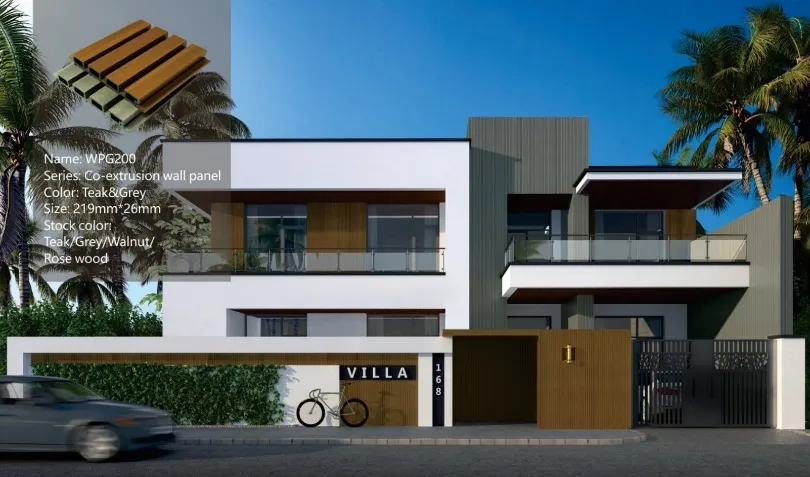
It's one thing to say WPC panels reduce waste, but how exactly do they do it? Let's walk through a typical building project to see the difference. Imagine you're a contractor hired to renovate a 1,500 sqft residential home. The client wants new walls in the living room, kitchen, and bedrooms—about 800 sqft of wall space total. If you opt for traditional drywall, here's what happens:
First, you order drywall sheets. Since drywall comes in standard 4x8ft sheets, you'll need to cut them to fit around windows, doors, and corners. Those cuts leave irregular scraps—some too small to reuse, others damaged during cutting. On average, drywall installation generates about 2.3 kg of waste per square meter, so for 800 sqft (≈74 sqm), that's 74 x 2.3 = 170.2 kg of waste. Then there's the mudding, sanding, and painting: sanding creates fine dust that's hard to contain, and unused paint cans (even partially full) are considered hazardous waste, requiring special disposal. By the end of the project, you're looking at over 200 kg of waste, not including packaging materials.
Now, swap drywall for WPC wall panels. As a residential building materials supplier would likely advise, you can order panels custom-cut to the exact dimensions of the walls, minimizing on-site cutting. WPC panels are also lightweight (about 30% lighter than drywall), so there's less risk of breakage during transport or installation. Installation waste drops to 0.8 kg/sqm, so 74 x 0.8 = 59.2 kg—less than a third of the drywall waste. There's no need for mudding, sanding, or painting, so no dust or paint waste. And since the panels are pre-finished, you avoid the waste from primer cans, paint rollers, and tape. Total waste? Maybe 70 kg, including packaging. That's a 65% reduction—just like that.
The savings are even more dramatic for commercial projects. Imagine a 10,000 sqft office building with 5,000 sqft of wall space. Using traditional materials, waste could top 1,500 kg. With WPC wall panel solutions, that number plummets to 400 kg or less. For commercial building materials suppliers, this isn't just a selling point—it's a way to help clients meet sustainability goals and stay on budget. "We've had developers tell us that switching to WPC panels cut their waste disposal costs by 40% on a recent office project," says a representative from a leading commercial building materials supplier. "That's real money, not to mention the PR boost from marketing the building as 'low-waste.'"
WPC wall panels don't just reduce waste during construction—they keep cutting waste for decades. Let's talk about durability. Traditional materials like drywall or plywood are vulnerable to moisture, pests, and wear and tear. A leaky pipe, a termite infestation, or even heavy furniture scrapes can damage these materials, requiring repairs or full replacements. Each repair means more materials, more waste, and more disruption. WPC panels, by contrast, are water-resistant (they won't rot or warp), pest-resistant (termites don't eat plastic), and scratch-resistant. In humid environments like bathrooms or kitchens, they outlast drywall by years. In high-traffic commercial spaces like retail stores or hotels, they stand up to daily wear without needing repainting or refinishing.
Take a hotel hallway, for example. With traditional drywall, the walls might need repainting every 2-3 years to cover scuffs and stains. Each repaint requires sanding (dust waste), primer, paint, and new rollers—generating waste every time. WPC wall panels, with their durable finish, might go 10+ years without needing more than a wipe-down. That's 7-8 fewer repaints over a decade, each avoiding 50-100 kg of waste. Multiply that by hundreds of hotel rooms, and the impact is staggering.
Then there's end-of-life recyclability. When WPC panels finally reach the end of their lifespan (25-30 years), they can be recycled. Many WPC wall panel suppliers offer take-back programs, where old panels are ground into pellets and reused in new products. Traditional materials like drywall or plywood, by contrast, often end up in landfills. Drywall, for instance, breaks down slowly and can release methane (a potent greenhouse gas) as it decomposes. WPC panels, when recycled, keep materials in the loop, reducing the need for virgin resources and cutting manufacturing waste even further.
In 2024, a family in Riyadh decided to renovate their 2,500 sqft villa, focusing on the living room, kitchen, and three bedrooms. Their contractor initially proposed using traditional drywall and plywood for the walls, estimating waste disposal costs of 3,000 SAR (≈$800). After consulting with a residential building materials supplier, they opted for WPC wall panels instead.
The supplier provided custom-cut panels for each wall, including curved panels for the living room's accent wall. Installation took just 3 days (compared to 5 days for drywall), and waste totaled 85 kg—mostly from packaging and a few small offcuts. Disposal costs dropped to 1,100 SAR (≈$290), a 63% savings. "We were shocked by how little waste there was," the homeowner said. "The site was so clean, we could barely tell they were working. And the panels look amazing—like real wood, but without the worry of water damage in the kitchen."
A commercial developer in Jeddah recently built a 50,000 sqft office complex, aiming for LEED certification (a global green building standard). To meet LEED's waste reduction requirements, they partnered with a commercial building materials supplier specializing in sustainable solutions, choosing WPC wall panels for 80% of the interior walls.
The project required 12,000 sqft of wall panels. By using custom-cut WPC panels, the construction team reduced installation waste to 96 kg (0.8 kg/sqm x 120 sqm). Traditional materials would have generated over 300 kg of waste. This waste reduction helped the project earn LEED points, and the developer estimates that lower disposal costs and faster installation saved them 50,000 SAR (≈$13,300) overall. "LEED certification was a priority for attracting eco-conscious tenants," the developer noted. "WPC panels made it easier to hit our sustainability goals without compromising on design or budget."
Behind every successful WPC wall panel project is a reliable supplier. Residential and commercial building materials suppliers aren't just selling products—they're providing expertise that maximizes waste reduction. A good supplier will work with clients to:
1. Customize Sizes: By offering panels cut to the exact dimensions of the project, suppliers eliminate the need for on-site cutting, the single biggest source of installation waste. "We use 3D modeling software to map out the client's walls and produce panels that fit like puzzle pieces," explains a WPC wall panel supplier based in Saudi Arabia. "It takes a little extra planning, but the waste savings are worth it."
2. Source Sustainably: Leading suppliers prioritize recycled materials in their WPC panels, further reducing the environmental impact. Some even use plastic waste collected from oceans or landfills, turning a problem into a solution. "Our panels contain 60% recycled content—wood fibers from sawmill waste and plastic from post-consumer bottles," says another supplier. "For clients who care about circular economy, that's a huge selling point."
3. Provide Installation Support: WPC panels install differently than traditional materials, so training the crew is key to minimizing waste. Suppliers often offer on-site training or detailed guides to ensure panels are handled and installed correctly, reducing breakage and mistakes.
4. Offer Take-Back Programs: As mentioned earlier, end-of-life recyclability is a big part of WPC's waste-reduction story. Suppliers that take back old panels for recycling close the loop, ensuring the materials don't end up in landfills.
Despite their benefits, WPC wall panels still face some skepticism. Let's address the most common myths:
Myth 1: "They don't look as good as real wood or stone." Early WPC panels had a reputation for looking "plastic-y," but modern technology has changed that. Today's panels feature high-definition printing and texture techniques that mimic real wood grain, marble, or stone so closely that even experts struggle to tell the difference. "We had a client who thought we'd installed real oak panels until we told them it was WPC," laughs a supplier. "They were shocked—and thrilled when we explained the maintenance savings."
Myth 2: "They're not durable enough for high-traffic areas." WPC panels are actually more durable than many traditional materials. They're scratch-resistant, moisture-resistant, and UV-stable (so they won't fade in sunlight). In commercial settings like retail stores or hotels, they've been known to last 20+ years with minimal wear.
Myth 3: "They're too expensive." It's true that WPC panels have a higher upfront cost than drywall or plywood—often 20-30% more. But when you factor in lower installation time (labor savings), reduced waste disposal costs, and longer lifespan (fewer replacements), they're often cheaper over the long term. A study by the Saudi Green Building Forum found that WPC panels have a payback period of 3-5 years for residential projects and 2-3 years for commercial projects, thanks to these savings.
As the world grapples with climate change and resource scarcity, the demand for low-waste building materials will only grow. WPC wall panel solutions are at the forefront of this shift, proving that sustainability and practicality can go hand in hand. For residential building materials suppliers, they're a way to meet the rising demand for eco-friendly homes. For commercial building materials suppliers, they're a tool to help clients achieve green certifications and attract environmentally conscious tenants.
Looking ahead, innovations in WPC technology promise even greater waste reduction. Some suppliers are experimenting with bio-based plastics (made from corn or sugarcane) to replace petroleum-based resins, further lowering the carbon footprint. Others are developing panels with integrated insulation or wiring channels, reducing the need for additional materials (and more waste). "The goal is to create a wall system that's not just low-waste to install, but zero-waste over its entire lifecycle," says a materials scientist at a leading WPC manufacturer.
Construction waste doesn't have to be inevitable. WPC wall panel solutions are proof that with the right materials, we can build smarter, cleaner, and more sustainably. From residential renovations to commercial skyscrapers, these panels are cutting waste by 50-70% while delivering on style, durability, and cost-effectiveness. As more builders, developers, and homeowners discover their benefits, and as WPC wall panel suppliers continue to innovate, the days of construction sites drowning in waste may soon be a thing of the past.
So the next time you walk onto a construction site, keep an eye out for those piles of waste. Then imagine a world where they're gone—replaced by clean, efficient workspaces and buildings that leave a lighter footprint on our planet. That world isn't just possible; it's already being built, one WPC panel at a time.
Recommend Products











