

Hey there, architecture lovers! If you're wrestling with how to make wood-plastic composite (WPC) panels play nice with different building styles, you're in the right place. You know that moment when you see a gorgeous historic home ruined by clashing modern materials? Or a sleek modern build made awkward by traditional cladding that doesn't fit? We've all been there. Today I want to show you how WPC's customization magic can save the day for any architectural style you're working with.
WPC isn't just durable and low-maintenance—it's like clay in the hands of a master architect. I've seen it transform spaces through creative use of color , texture , shaping , and installation techniques . Whether you're restoring a Victorian gem or building a minimalist retreat, this stuff gives you incredible flexibility without sacrificing performance.
Remember when choosing exterior colors meant settling for "forest green" or "colonial red"? WPC blows that limitation away. You're working with a full artist's palette:
Last summer, I worked on an art deco building where we matched the original sea-foam green trim to the WPC wall panels perfectly. The owners nearly cried seeing how the material brought their historic color scheme back to life after decades of bad renovations.
Texture is where WPC truly shines compared to one-dimensional alternatives. Unlike rigid materials that force compromises, WPC lets you choose the exact tactile experience:
Hand-Carved Charm: Deep wood grains perfect for Tudor revivals or rustic lodges
Industrial Edge: Smooth metallics or concrete-inspired mattes for loft conversions
Subtle Sophistication: Fine linear finishes ideal for mid-century modern homes
Natural Statement: Dramatic stone patterning for Mediterranean villas
That last one—stone simulation—is especially clever. I once used it on a Spanish colonial project where real stone would've overloaded the foundation. Got all the visual impact at 1/3 the weight. The contractor called it "cheating" (meant as a compliment!).
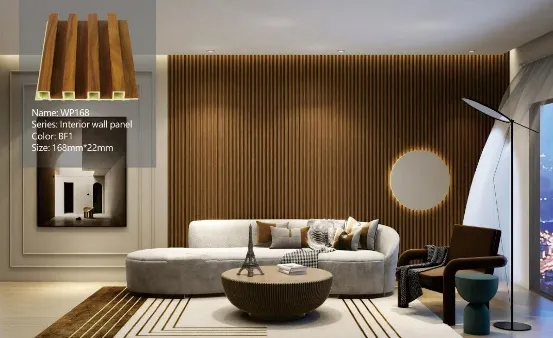
Forget cookie-cutter rectangles! WPC can be precision-cut to fit unique architectural elements:
Real World Example: Frank had a contemporary lakeside home with triangular wedge windows. Standard panels would've required ugly seams across the design. Instead, we had WPC panels pre-cut into trapezoids that followed the architecture. Installation time decreased by 40%, and the result looked like custom sculpture.
Here's where creativity explodes. By mixing installation techniques, you develop unique surfaces that become architectural features:
Herringbone Harmony: Classic pattern made fresh for colonial or Georgian styles
Modern Mosaic: Mixed material panels (WPC + metal) for industrial chic
Vertical Illusion: Height-enhancing lines perfect for cramped urban rowhouses
Random Rhythm: Asymmetrical placement for abstract contemporary looks
Ever seen salt air destroy siding? Or UV rays bleach color? Unlike rigid materials, WPC can be enhanced during manufacturing:
In Maine, I used specialized WPC designed to withstand both extreme cold and salt water spray. Eight winters later, it still looks new while neighboring wood homes need constant repainting. That's the kind of smart protection that makes clients lifelong advocates.
Secret upgrades that solve chronic architectural headaches:
Quiet Rooms: Acoustically-engineered panels absorbing urban noise for city residences
Fire Protection: Meeting code requirements for multi-unit buildings
Thermal Blankets: Integrated insulation backing cutting energy bills up to 23%
That thermal advantage isn't just eco-friendly—it's money-smart. Most homeowners recoup the premium in energy savings within 4 seasons. For commercial projects? Tax incentives and LEED points become serious considerations.
Problem: Gingerbread trim clashes with modern panels. Solution: Custom-milled scalloped edges and period-accurate color matching
Project Highlight: Restored San Francisco Painted Lady used WPC with custom-milled scalloped edges mimicking wood detailing. Pre-aging technique accelerated patina so panels matched 130-year-old elements seamlessly.
Problem: Flat surfaces show every flaw. Solution: Micro-textured WPC hiding imperfections while maintaining stark silhouettes
Design Win: Phoenix desert home achieved dramatic floating effect with continuous seamless panels stretching 52 feet without visible joints.
Problem: Synthetic materials feel inauthentic. Solution: Knotty textures with hand-scraped character and faded finishes
What's coming blows current options away:
Some European manufacturers already offer solar-integrated panels generating power while shading interiors. Imagine entire facades becoming energy generators without visual compromises!
Standing in front of that Tudor revival project last month, I had this thought: We've reached a place where the trade-off between aesthetics and durability no longer exists. With thoughtful WPC customization, we get both—historical accuracy with zero-maintenance performance. A colonial farmhouse gets authentic split-wood texture without termite fears. A contemporary cube achieves razor-sharp edges that won't warp over decades.
It's not about hiding that it's composite material; it's about celebrating what this chameleon can become. When that Mediterranean villa owner told me "It looks like it's always been there"? That's the magic we've unlocked. Any style. Any climate. Any imagination. That's what we can build now.
Recommend Products











