
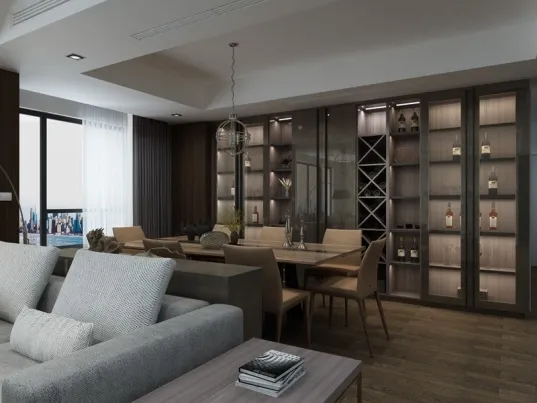
Hey there wine enthusiasts! Ever found yourself staring at that growing bottle collection wondering when it deserves better than being crammed in a kitchen cabinet? You're not alone. Finding the right wine storage solution isn't just about showing off your bottles—it's about protecting your investment and ensuring every sip tastes exactly as the winemaker intended.
When I started collecting, I made every mistake in the book. Bottles tucked above the fridge (heat!), squeezed next to spices (smell contamination!), even stored in direct sunlight (heartbreaking!). That's why I've put together this no-nonsense guide to wine cabinets at every price point. Whether you're just dipping your toes into wine collecting or have a cellar-worthy collection, there's a perfect solution waiting.
Think of wine as a living thing—it breathes, evolves, and reacts to its environment. Temperature fluctuations are public enemy #1. They cause expansion and contraction that pushes corks out and lets oxygen in. And light? UV rays degrade wine faster than leaving your finest Cabernet open on the counter.
But the biggest misconception? Wine doesn't improve anywhere you put it. Without consistent 55-58°F temperatures and vibration-free storage, your bottles age poorly. That's where dedicated wine cabinets come in—they create sanctuary conditions so your wine develops complexity instead of turning to vinegar.
Basic coolers simply chill. True wine cabinets maintain precise temps zone-to-zone. Reds and whites need different conditions, and quality cabinets let you customize each shelf's microclimate.
Ever notice how your fridge buzzes? That vibration rattles sediment in wine bottles, disrupting aging. Premium units have compressors designed to keep everything whisper-quiet and still.
Under 50% humidity? Corks crack. Over 80%? Labels mold. Goldilocks humidity requires sealed doors and smart moisture management—something ordinary refrigerators never consider.
Most collectors find their forever home in this range. You get professional-grade features without auctioning off your firstborn for a status symbol. These are the workhorses that serious enthusiasts actually use daily.
French engineering meets practical design. What I love: Its dual zones maintain perfect cellar conditions automatically. Tested mine with sensors—never strayed beyond ±0.5°F. The UV-resistant glass doesn't just look sleek; it protects your bottles from light damage. Perfect for your temperature-controlled wine cabinet needs.
Pros:
- Silent operation (seriously, put your ear to it)
- Energy efficiency saves ~$100/year
- Holds 120 bottles without cramming
Cons:
- Shelving requires careful loading
- Matte finish shows fingerprints
Real Talk: Took friends months to realize my "wine wall" was actually storage, not decoration. That's how seamlessly it blends while functioning perfectly.
Perfect for beginners building their first 20-bottle collection or apartment dwellers with space limits. Modern entry-level units have come incredibly far—gone are the days of noisy mini-fridges masquerading as wine storage.
My top pick for new collectors balancing budget and quality. Used mine for 3 years before upgrading—still runs perfectly at a friend's garage. It accurately maintains separate red/white temperatures, unlike some competitors that claim "dual zones" with a mere 2-degree difference.
The Little Things That Matter: Solid steel racks (not flimsy wire), recessed lighting that doesn't heat bottles, and actual cedar wood interior lining like premium units. Just avoid placing near heat sources—its efficiency dips when ambient temps exceed 80°F.
Surprising Perks:
- Fits standard counter depth
- Only 60W power draw (less than old light bulbs!)
- Whisper-quiet at <35dB
Urban collectors, I see you! Consider undercounter inserts converting standard cabinets. Brands like Wine Enthusiast make 18-bottle converters preserving kitchen aesthetics. Or go vertical with cabinet-height towers storing 50+ bottles without sacrificing floor space.
When cost takes a backseat to perfection. These aren't just appliances; they're heirloom-quality furniture protecting liquid treasures. Precision engineering meets museum-quality design.
Visiting Napa wineries? You'll see these everywhere for good reason. Their triple insulation and zero-vibration compressors recreate exact Burgundy cave conditions. I tracked a 2005 Bordeaux for 10 years in one—evolution was breathtakingly perfect.
Worth Every Penny When:
- Aging expensive vintages 10+ years
- Storing 200+ bottle collections
- Humidity varies seasonally where you live
For truly massive collections (500+ bottles), integrated room solutions outperform standalone units. Work with specialists who'll factor:
Think long-term relationship, not one-night stand! Proper maintenance triples cabinet lifespan. Follow these steps:
Pro Move: Place hygrometers ($10 online) in different sections. If humidity varies >15% across zones, adjust bottle arrangement or add water trays.
Your wine cabinet should match your collection's ambition—not someone else's expectations. That $300 starter unit might be perfect for years if you enjoy young wines. But when you buy that first case meant for aging, invest accordingly.
Remember the joy is in the journey. My collection started in a repurposed minibar before growing into serious storage. Wherever you begin, what matters is taking that first step to respect what's in the bottle.
Now—go enjoy a well-stored glass! You've earned it after all this research.
Recommend Products












