
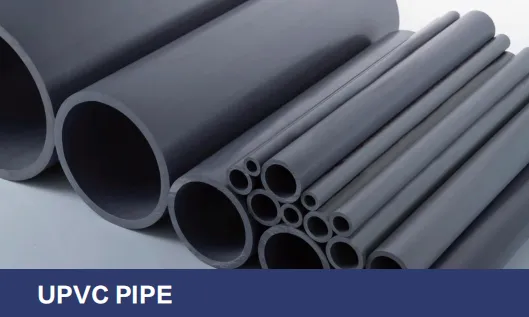
Beneath the polished surfaces of our homes, offices, hospitals, and schools lies a hidden network that keeps everything running smoothly: pipes. These unassuming components carry water, waste, and essential fluids, making them the circulatory system of any building. Yet, for all their importance, pipes face a silent and relentless enemy: corrosion. Over time, rust, chemical degradation, and environmental wear can turn sturdy pipes into ticking time bombs—leaking, contaminating, and driving up repair costs. In the quest for durable, reliable piping, one material has risen to prominence: UPVC. As a leading one-stop architectural solution provider and Saudi Arabia building materials supplier , we've seen firsthand how UPVC pipe solutions outshine alternatives in combating corrosion. Let's explore why UPVC has become the go-to choice for builders, engineers, and facility managers worldwide.
Corrosion isn't just a cosmetic issue—it's a structural and financial threat. Imagine a hospital where a corroded pipe leaks contaminants into the water supply, risking patient health. Or a school where a rusted drainage line bursts, disrupting classes and requiring expensive repairs. In residential buildings, a single corroded pipe can flood basements, ruin furniture, and even lower property values. For commercial projects, downtime from pipe failures can cost businesses thousands in lost revenue. In regions like Saudi Arabia, where extreme temperatures, high humidity, and soil salinity create harsh conditions, corrosion accelerates, making the choice of pipe material even more critical. This is why partnering with a trusted building materials supplier—one that understands local challenges—is essential.
Corrosion in pipes typically stems from three sources: chemical reactions (e.g., exposure to acidic or alkaline fluids), environmental factors (moisture, soil composition, temperature fluctuations), and biological activity (bacteria that produce corrosive byproducts). Metal pipes, once the industry standard, are particularly vulnerable. Galvanized steel, for example, relies on a zinc coating to resist rust, but over time, this coating wears away, leaving the steel exposed. Copper pipes, while durable, can corrode when exposed to certain water chemistries or soil conditions. The result? Leaks, reduced water pressure, and in worst-case scenarios, contamination of drinking water or building materials.
UPVC—short for unplasticized polyvinyl chloride—isn't just another pipe material. It's a corrosion-resistant powerhouse, designed to stand up to the harshest conditions. Unlike metal pipes, UPVC contains no iron or steel, eliminating the risk of rust. Its chemical composition—rigid, dense, and inert—makes it impervious to most acids, alkalis, and salts. Whether carrying wastewater, industrial chemicals, or potable water, UPVC pipes maintain their integrity, ensuring fluids flow safely without degrading the pipe itself.
But UPVC's resistance to corrosion goes beyond its material makeup. Its smooth inner surface prevents the buildup of scale, sediment, and bacteria—common culprits that accelerate wear in other pipes. This smoothness also improves water flow, reducing pressure loss and energy costs. For builders and installers, UPVC offers another advantage: lightweight durability. Unlike heavy metal pipes, UPVC is easy to transport, cut, and install, reducing labor time and costs. And because it doesn't require specialized tools or welding, it's a practical choice for both large-scale commercial projects and small residential jobs.
Manufacturers of UPVC pipe solutions adhere to strict global standards, such as ASTM D2846 and DIN PN10, ensuring consistency and reliability. This commitment to quality is why UPVC pipes are trusted in critical applications, from hospitals and schools (where safety is non-negotiable) to industrial facilities and coastal construction. As a supplier offering class A fireproof CPL inorganic board for hospital and school solutions , we know that when paired with fire-resistant materials, UPVC creates systems that prioritize both safety and longevity.
To truly appreciate UPVC's superiority, let's compare it to other popular pipe materials. The table below highlights how UPVC stacks up against PPR, PEX, PVC DWV, and traditional galvanized steel in key areas, with a focus on corrosion resistance.
| Material | Corrosion Resistance | Ideal Temperature Range | Common Applications | Key Limitation |
|---|---|---|---|---|
| UPVC Pipe | Excellent (resistant to acids, alkalis, salts; no metal components) | 0°C – 60°C | Potable water, drainage, industrial piping, underground systems | Not suitable for high-temperature fluids (e.g., hot water above 60°C) |
| PPR Pipe & Fitting | Good (resistant to most chemicals; no metal) | 0°C – 95°C | Hot and cold water systems, residential plumbing | Less durable in highly acidic/alkaline industrial environments |
| PEX Pipe & Fitting | Good (flexible, resistant to scale; no metal) | -20°C – 95°C | Underfloor heating, residential hot water lines | Prone to damage from UV light; not ideal for outdoor use without protection |
| PVC DWV Pipe | Good (resistant to wastewater chemicals) | 0°C – 60°C | Drainage, waste, and vent systems | Not designed for pressure applications (weaker than UPVC) |
| Galvanized Steel | Poor (zinc coating wears off, leaving steel vulnerable to rust) | -40°C – 120°C | Older plumbing systems, industrial piping (rarely used today) | Prone to corrosion; heavy and difficult to install |
As the table shows, UPVC outperforms galvanized steel by a wide margin in corrosion resistance and offers distinct advantages over PPR, PEX, and PVC DWV in harsh or chemically active environments. While PPR and PEX excel in hot water applications, UPVC is the clear choice for projects where corrosion is a primary concern—such as underground piping, industrial facilities, or coastal areas with saline soil. And unlike PVC DWV, UPVC is engineered for pressure, making it versatile enough for both drainage and water supply systems.
UPVC's corrosion resistance isn't just a technical specification—it translates to real-world benefits across industries. Let's explore some key applications where UPVC pipe solutions shine:
In homes, apartments, and office buildings, UPVC pipes deliver clean water and remove waste without the risk of rust or contamination. Their smooth inner walls prevent clogs, reducing the need for frequent maintenance. For homeowners, this means peace of mind—and lower utility bills. For developers, UPVC's affordability and durability make it a cost-effective choice for large-scale projects.
Hospitals and schools demand materials that prioritize safety and hygiene. Corroded pipes can contaminate water supplies, putting patients and students at risk. UPVC's inert nature ensures no leaching of harmful substances, making it ideal for these sensitive environments. When paired with class A fireproof CPL inorganic board solutions —another specialty of leading building materials suppliers—UPVC creates systems that meet the strictest safety codes.
Factories, farms, and chemical plants often handle aggressive fluids, from fertilizers to industrial solvents. UPVC's resistance to acids, alkalis, and salts makes it the material of choice for transporting these substances. In agricultural irrigation, UPVC pipes withstand soil chemicals and UV exposure, ensuring reliable water delivery to crops.
In Saudi Arabia, where temperatures soar and soil can be high in salt, corrosion is a constant threat. As a trusted Saudi Arabia building materials supplier , we've seen how UPVC pipe solutions thrive in these conditions. Whether used in residential complexes, commercial towers, or infrastructure projects, UPVC stands up to the heat, humidity, and soil salinity, reducing maintenance costs and extending the lifespan of buildings.
While UPVC pipe solutions are a cornerstone of corrosion resistance, the best building projects rely on integrated systems. That's why leading suppliers offer more than just pipes—they provide a full range of products to meet every need. From PVC DWV pipe solutions for drainage to PPR pipe and fitting solutions for hot water systems, and PEX pipe and fitting solutions for flexible installations, a one-stop architectural solution provider ensures consistency in quality and compatibility across all building components.
But the offering doesn't stop at pipes. Modern buildings require cohesive design, which is why many suppliers also provide wall solutions (like MCM flexible cladding stone panels and bamboo charcoal board wall panels), flooring options (granite, terrazzo, cloud stone), and even sanitary fixtures. This comprehensive approach saves builders time, reduces logistical headaches, and ensures that every element of the project works together seamlessly.
Not all UPVC pipe solutions are created equal. To ensure you're getting the best corrosion resistance and durability, partner with a supplier that prioritizes quality, innovation, and customer support. Look for a provider with:
Corrosion may be a silent enemy, but UPVC pipe solutions are a powerful defense. With unmatched chemical resistance, durability, and versatility, UPVC has redefined what's possible in piping systems. Whether you're building a home, a hospital, or a commercial complex—especially in challenging environments like Saudi Arabia—UPVC ensures your pipes will stand the test of time. And when sourced from a trusted one-stop architectural solution provider , you gain access to not just pipes, but a partner committed to your project's success.
In the end, the choice is clear: for corrosion resistance, reliability, and peace of mind, UPVC pipe solutions are the smart investment. After all, the best buildings are built to last—and so should their pipes.
Recommend Products












