
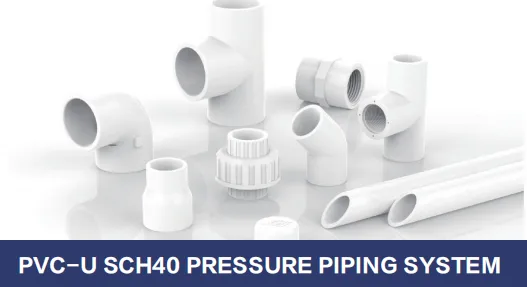
Ever wonder what holds together the modern world? Beyond the steel and glass of skyscrapers, there's an unsung hero you rarely notice – the PVC-U SCH40 pressure piping system. Picture this: A complex network of pipes inside every commercial building, working silently like arteries in the human body. Just as you'd want healthy blood vessels for your body, architects and engineers need reliable piping for their creations. This unassuming technology is quietly revolutionizing how we build offices, hospitals, and shopping centers.
The shift toward PVC-U SCH40 isn't accidental. Architects describe it as the "quiet revolution" in construction materials. When I visited a major hospital construction site last month, the project manager put it perfectly: "With SCH40, we're not just installing pipes – we're building peace of mind." Let's explore why this material is becoming the go-to choice for forward-thinking construction professionals.
Think of SCH40 as the reliable workhorse of piping systems. While flashier materials grab headlines, SCH40 quietly delivers day after day thanks to:
What makes these specs truly remarkable is how they translate to real-world benefits. You won't find architects excited about pipe diameters, but ask them about avoiding costly repairs or reducing material expenses, and their eyes light up. SCH40 strikes that perfect balance between performance and practicality that makes accountants and engineers equally happy.
Let's talk brass tacks – construction budgets are tight these days. Remember the office tower project down in Houston? The developers saved approximately 30% on piping costs simply by switching to SCH40 instead of traditional metal pipes. And the savings kept compounding:
Corrosion? Not in SCH40's vocabulary. While metal pipes start developing problems after 10-15 years, SCH40 systems in schools and hospitals installed in the 1980s are still going strong today. That kind of longevity creates a ripple effect:
Imagine this scenario: Your commercial building hosts several restaurants. Kitchen environments with constant moisture and chemicals normally devour traditional metal pipes. But with SCH40's immunity to rust and chemical corrosion, you won't get midnight emergency calls about leaks damaging expensive kitchen equipment.
Construction managers describe SCH40 installation like "putting together Legos – but for grown-ups." The solvent welding process connects pipes securely in minutes. During last year's hotel renovation in Miami, workers installed 500 feet of piping in two days – work that would've taken a week with metal alternatives.
Here's where we connect with that required keyword: SCH40 represents a perfect example of **green and environmentally friendly building materials**.
The environmental advantages stack up impressively:
SCH40 isn't a one-trick pony. Its versatility explains why it appears in nearly every commercial setting:
Medical Facilities: Hospitals prefer SCH40 for its contamination resistance, needing piping that won't harbor bacteria in critical care units.
Restaurant Infrastructure: Handles high-temperature wastewater and grease-laden flows that defeat lesser materials.
Laboratory Settings: Transparent PVC variants allow visual flow monitoring for chemical processes without reactivity.
Multistory Offices: Lightweight SCH40 reduces structural loading costs compared to heavy metal alternatives.
A particularly innovative application I encountered recently: A tech campus in California using SCH40 in their geothermal heating/cooling loops. The engineers described how the material handles temperature fluctuations that would fatigue metal pipes over time, making it perfect for sustainable energy systems.
"But what about freezing?" I hear this common concern often. Yes, PVC becomes more brittle below freezing, but construction managers across the Northeast have developed smart solutions:
The maintenance chief at a Minnesota shopping mall shared an ingenious trick: "We wrap SCH40 pipes near loading docks with heating cables under insulation. For about $10 per linear foot, we avoid thousands in potential damage." Properly installed SCH40 handles winters as well as any other material.
The future of SCH40 looks brighter than ever as material scientists enhance its capabilities:
Emerging innovations include:
Construction visionaries recognize how SCH40 aligns perfectly with green building certifications like LEED. It's not simply about compliance though – it's about responsibility. As the project director at a new Seattle high-rise told me: "When our great-grandchildren study this building, they won't find our broken pipes polluting landfills or requiring dangerous repairs. That's legacy thinking."
PVC-U SCH40 represents more than engineering specs – it embodies practical innovation meeting human needs. Its advantages reveal themselves not in glossy brochures but in predictable budgets, quiet confidence during inspections, and maintenance logs with fewer emergency entries.
The next time you enter a modern commercial space, look beyond the marble lobbies and glass facades. Realize that an advanced nervous system of SCH40 piping flows within its walls – a network delivering water to sinks, managing heating systems, handling waste disposal. It's a hidden hero making modern commercial architecture possible. As builders increasingly demand materials balancing performance, economy and environmental responsibility, SCH40 isn't merely keeping pace with the future – it's helping create it.
Recommend Products












