
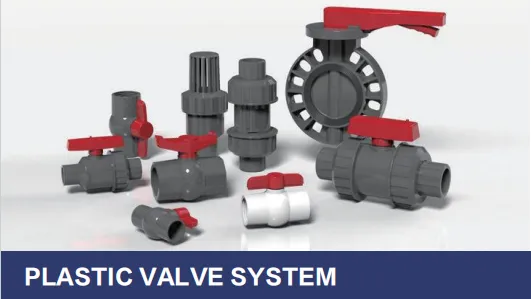
The quiet revolution transforming mechanical rooms nationwide
Walk into any modern commercial building - hospitals, labs, corporate campuses - and beneath the polished surfaces you'll find a quiet revolution. Plastic valves are steadily replacing metal counterparts in critical systems. And once you understand why, you'll see why this shift isn't just happening - it's accelerating.
Remember when copper pipes were the unquestioned standard? That mentality is fading fast as building engineers discover what plastic valves deliver that metals simply can't. It's not just about upfront costs - though those matter - but the total lifecycle value that's driving adoption.
"The municipal water treatment plant was replacing brass valves every 18 months," explains project engineer Lisa Chen. "When we switched to CPVC valves, the maintenance calls dropped to zero for three straight years. The chemical resistance is just in another league."
A 2-inch plastic ball valve weighs about one-fifth of its brass counterpart. That doesn't just mean easier installation - it fundamentally changes structural requirements. "We're retrofitting older buildings where every pound matters," notes facilities manager Derrick Wilson. "The weight reduction alone saved us thousands in reinforcement costs."
Plastic's thermal insulation properties have unexpected benefits. In chilled water systems, condensation formation drops dramatically. "Our energy monitor showed 7% reduced chiller load immediately after switching valve materials," reveals data from Northwestern Memorial Hospital's retrofit project.
Let's cut through the marketing speak. Where do plastic valves genuinely outperform?
Modern water treatment uses aggressive disinfectants. Municipal systems now blend chloramines that rapidly degrade metal alloys. PVDF valves laugh at these challenges - their polymer structure remains unaffected by chemicals that would pit stainless steel.
In bio-pharma facilities, plastic valves aren't just preferred - they're mandated. As Dr. Anika Patel explains: "Unlike metals, specialized plastics won't leach ions that contaminate sensitive processes. That's why USP Class VI polymer valves dominate our cleanrooms."
Not all plastics are created equal. Here's how the options stack up:
Amid climate pressures, plastic valves offer tangible advantages:
As an eco-friendly building material , modern plastic valve systems outperform traditional alternatives not just environmentally, but economically. This intersection of practical and planetary benefits ensures their lasting place in sustainable construction.
The transition is accelerating as building codes evolve. California's Title 24 now incentivizes plastic systems for their thermal efficiency. Meanwhile, new polymer blends address previous limitations - PEEK valves now handle 300°F steam lines, shattering old temperature barriers.
Commercial buildings aren't just switching to plastic valves to save pennies. They're embracing them because they solve real problems: reducing maintenance headaches, enabling sustainable operations, and future-proofing mechanical systems. As material science advances, this trend won't just continue - it'll become the unquestioned standard for intelligent facility design.
Recommend Products












