
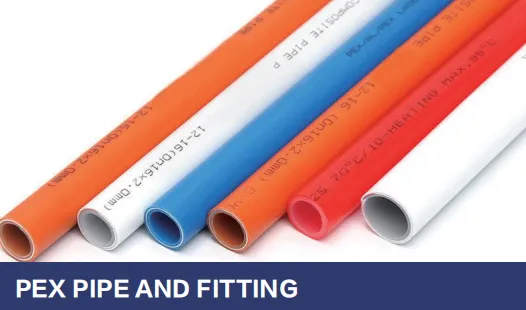
When contractors, developers, and homeowners look for reliable plumbing infrastructure, the conversation increasingly turns to modern polymer-based piping. Among the most talked-about options today, pex pipe and fitting solutions have reshaped how residential and commercial water systems are designed, installed, and maintained. In this article, we explore what makes PEX systems stand out, how they compare to traditional materials, and why sourcing from a trusted supplier matters for the long-term success of any project.
For decades, copper and galvanized steel dominated plumbing installations. While these metals are durable, they come with notable downsides — high material costs, labor-intensive installation, susceptibility to corrosion, and vulnerability to freezing damage. PEX (cross-linked polyethylene) entered the scene as a practical alternative that addresses many of these pain points.
The crosslinking process is the foundation of PEX performance. By chemically bonding polymer chains at a molecular level, manufacturers create a pipe that is simultaneously flexible, strong, and resistant to temperature extremes. Unlike rigid metal pipes that require elbows and joints at every corner, PEX can bend around obstacles, reducing the number of fittings needed and cutting down installation time significantly.
One of the most important qualities of a plumbing pipe is how it handles hot water. PEX pipes, especially the PEX-A variant, can withstand continuous operating temperatures of up to 95°C (203°F) without deforming or losing structural integrity. This makes them equally suitable for cold water supply lines and hot water distribution. In addition, the crosslinked molecular structure provides strong resistance to the chemicals commonly found in municipal water supplies, including chlorine and chloramines, meaning the pipe maintains its performance characteristics over decades of service.
In regions where winter temperatures drop below freezing, rigid metal pipes are prone to bursting when water inside them expands as it turns to ice. PEX pipes offer a distinct advantage here: their flexibility allows them to expand slightly under the pressure of freezing water and then return to their original shape once thawed, dramatically reducing the risk of catastrophic pipe failure. This property alone has made PEX a preferred choice for plumbing systems in northern climates and high-altitude regions.
A pipe is only as reliable as the connections that hold it together. This is why pex pipe fittings solutions deserve just as much attention as the pipes themselves. The fittings — including couplings, elbows, tees, valves, and adapters — must be manufactured to precise tolerances and made from compatible materials to ensure leak-free joints that stand the test of time.
There are several joining methods used in PEX systems, each suited to different project requirements. Crimp and clamp fittings are among the most common, using a metal ring compressed over the pipe and fitting to create a secure seal. Push-fit (or press-fit) fittings offer tool-free installation and are popular for retrofit and repair work where speed is a priority. Expansion fittings, which rely on the shape-memory property of PEX-A, provide an exceptionally tight connection as the pipe naturally contracts around the fitting.
Key takeaway: Whether you are working on a single-family home, a multi-unit apartment complex, or a commercial facility, investing in high-quality fittings is just as critical as selecting the right pipe grade. A poorly manufactured fitting can compromise an otherwise well-designed plumbing system.
When a building owner evaluates the total cost of ownership for a plumbing system, maintenance and longevity matter at least as much as the upfront material cost. PEX pipes demonstrate excellent long-term strength, with a projected service life of 50 years or more under normal operating conditions. The material resists scale buildup — a common problem with metal pipes that gradually narrows the internal diameter and reduces water pressure over time. Because PEX does not corrode, rust, or pit, the flow characteristics remain stable throughout the life of the system.
Another factor contributing to low maintenance requirements is the reduced number of joints in a typical PEX installation. With fewer connections, there are fewer potential leak points. Combined with the material's natural resistance to environmental stress cracking and oxidative degradation, PEX systems tend to be quieter, more reliable, and easier to service than their metal counterparts.
The quality of PEX pipe and fittings varies considerably depending on the manufacturer and supplier. When sourcing materials for a project, it pays to work with an experienced pipes fittings supplier who can provide not only competitive pricing but also consistent product quality, technical support, and reliable delivery timelines.
COLORIA GROUP, headquartered in Foshan, China, has positioned itself as a comprehensive building material supplier offering a wide range of piping solutions. Their pipes and fittings product line covers PEX, PPR, PVC, CPVC, UPVC, and PPH systems — with standards compliance that includes ASTM, DIN, AS/NZS, and IRAM specifications. Whether your project calls for PPR hot/cold water pressure piping, PVC-U SCH40 pressure systems, CPVC SCH80 high-pressure piping, or ppr pipe and fitting solutions, the range is designed to meet diverse international construction requirements.
Beyond the product catalog, working with a single supplier who covers multiple piping categories streamlines procurement — one point of contact, one set of shipping logistics, and consistent quality control across the entire order. For project managers juggling tight schedules and budgets, this consolidation translates into real operational efficiency.
PEX systems are remarkably versatile. In residential construction, they are widely used for potable water distribution, radiant floor heating, and hydronic snow-melt systems. The material's flexibility allows installers to run continuous lengths of pipe from a central manifold directly to individual fixtures, minimizing hidden joints behind walls and under floors.
In commercial settings — hotels, hospitals, office towers, and educational facilities — the same advantages apply at a larger scale. The reduced labor time and lower material waste compared to copper or steel piping make PEX an economically attractive option for budget-conscious projects without sacrificing quality. In industrial environments, PEX is often used for compressed air lines, chemical transfer, and process cooling, where its chemical resistance and ability to dampen vibration add significant value.
For projects in the Middle East, including Saudi Arabia, where COLORIA GROUP maintains a dedicated agent office, the demand for reliable, heat-resistant plumbing materials is particularly strong. High ambient temperatures and hard water conditions put extra stress on plumbing infrastructure, making the durability and chemical resistance of cross-linked polyethylene a practical advantage.
As the construction industry continues to evolve toward materials that offer better performance, faster installation, and lower lifetime costs, PEX piping has earned its place as a standard component in modern plumbing design. The key to maximizing these benefits lies in selecting the right combination of pipe, fittings, and supplier — ensuring that every joint holds, every line flows, and every building is served by a plumbing system built to last.
Looking for PEX Pipe and Fittings for Your Next Project?
Explore COLORIA GROUP's full range of pex pipe and fitting solutions and discover how a trusted pipes fittings supplier can help you deliver high-quality plumbing systems on time and on budget. Contact the team at +86-13630185350 or visit www.coloriagroup.net for more information.
Recommend Products












