
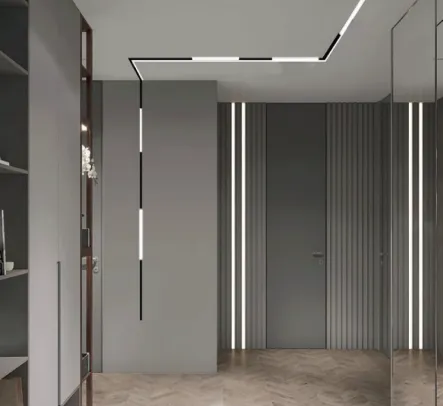
Have you ever walked into a commercial space and instantly felt the vibe was just... off? Chances are, the lighting was working against the design rather than enhancing it. Today, we're diving into how magnetic track lighting solves this problem while transforming ceilings into canvases of possibility.
Picture this: your restaurant needs to shift seating areas seasonally, or your boutique wants spotlight changing merchandise zones. Traditional lighting? You'd need an electrician to rewire everything. Magnetic systems? Just slide fixtures along the track by hand. That's why these setups have become a favorite among commercial lighting specialists tackling dynamic retail spaces.
| Feature | Magnetic Track | Traditional Lights |
|---|---|---|
| Installation Time | ~2 hours | ~8 hours |
| Reposition Cost | $0 (DIY) | $200+ per change |
| Energy Consumption | ~40% less | Standard |
Modern buildings aren't just containers; they're experiences. That's where integrated architectural lighting solutions make all the difference. I've seen museums use track lights to spotlight exhibits at 25º angles while galleries feather light across textured walls at 45º – all on the same system.
Unlike bulky fixtures that fight against ceiling panels , these low-profile tracks become part of the architecture. They practically disappear while giving total control over light patterns.
The latest magnetic systems aren't just about manual adjustments:
These innovations transform lighting from static utility into responsive environmental design – especially vital in hospitality and healthcare.
Remember when LED was new and expensive? Early adopters now see 80% lower replacement costs. Magnetic tracks follow this trajectory. Buildings designed around conventional fixtures inevitably require costly retrofits.
But magnetic tracks? Their modular nature handles technology upgrades seamlessly. When a new generation of LED lights emerges, you just snap in new fixtures – no rewiring necessary. It dramatically extends your ceiling infrastructure's lifespan.
Beyond flexibility, precision lighting minimizes waste. You illuminate only what needs highlighting – not entire walls. Combined with high-efficiency LED lights , I've seen clients cut lighting bills by 60%.
"We retrofitted our showroom with magnetic tracks and saw lighting energy consumption drop 47% immediately." – Retail Design Manager, Saudi Arabia
Consider this real transformation:
The system paid for itself within 14 months through energy savings alone.
From art galleries to airport terminals, magnetic track lights are rewriting commercial lighting rules. They turn passive ceilings into dynamic tools while offering unprecedented creative freedom. While suspended ceiling system installers once dominated commercial projects, now it's lighting specialists creating value through adaptability.
The verdict? Buildings designed without this flexibility are already behind the curve. Because in architecture's future, light shouldn't be fixed – it should flow.
Recommend Products












