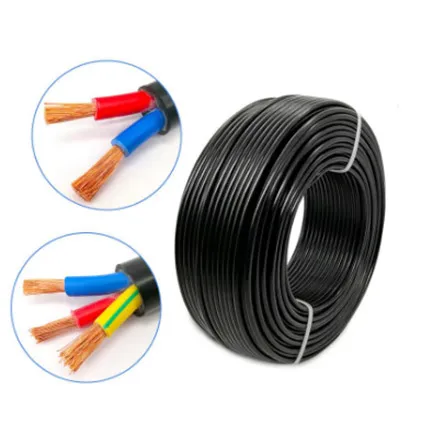
You're standing in the electrical aisle, staring at a wall of cables. One costs $5, another $50, and that premium one over there? $200. What gives? It's not like they're fundamentally different - they're just wires inside plastic, right? Well, pull up a chair and grab some coffee, because we're about to dive deep into the surprisingly complex world of why cables cost what they do. And trust me, it's way more interesting than you'd think.
First things first – cables aren't just "wires in plastic." That outer jacket? It could be cheap PVC or high-end thermoplastic. The actual conductive material? Night-and-day differences:
| Material Type | Cost Factor | Performance Impact | Where You'll Find It |
|---|---|---|---|
| Bare Copper | $$$ | High conductivity, durable, corrosion-resistant | Quality power cables , industrial wiring |
| Copper-Clad Aluminum | $$ | Decent conductivity, lighter weight, oxidizes over time | Mid-range audio cables, extension cords |
| Pure Aluminum | $ | Lower conductivity, prone to breaking | Cheapest extension cords, bargain bin cables |
| Oxygen-Free Copper | $$$$ | Ultra-pure, minimal signal loss | Audiophile gear, precision control cables |
But wait – the copper versus aluminum debate is just the start. Ever heard of tinning? Some manufacturers coat copper wires with tin to prevent corrosion. That adds cost but prevents your power cables from turning into green mush in humid conditions. And don't get me started on silver-plated copper – that's when you're entering the "my gold-plated connectors sound warmer" territory.
Here's where things get sneaky. When you compare two seemingly identical cables, the expensive one might have hidden engineering:
Signal Integrity Tricks: Premium cables often feature precision twisting ratios (how tightly wires are braided), specialized dielectric materials (the stuff separating conductors), or multi-layer shielding that blocks electromagnetic interference better than cheap foil wraps.
For control cables used in automation systems, this isn't just audiophile mumbo-jumbo. A factory floor buzzing with motors can drown signals in cheap cables, causing maddening glitches. The $200 cable doesn't just work – it works perfectly when everything around it is trying to ruin its day.
Then there's durability. A standard USB cable might be rated for 1,000 bends. A premium one? 10,000+. That jacket isn't thicker – it's smarter rubber compounds that resist cracking. Ever notice how cheap cables crack at the connector after a few months? That doesn't happen by accident.
This is where costs skyrocket – and for good reason. Consider:
I saw this firsthand installing electrical equipment and cable sales in commercial kitchens. The difference between a restaurant-grade power cord and a cheap replacement wasn't just $20 – it was whether the cable would melt near the oven after a year. When safety's involved, cutting corners can cost way more than money.
Suddenly everyone cares about sustainability – and cable manufacturers have noticed. But environmentally friendly electrical equipment and cables command premium pricing because:
While browsing electrical equipment and cable sales listings, I found two identical gauge power cords – one standard, one "eco." The price difference? 40%. Is it worth it? For your kid's nursery or a public school, that extra cost buys peace of mind that off-gassing chemicals won't fill the air.
Location matters immensely in cable pricing. A cable from a no-name factory versus one from an established China cable manufacturer with ISO-certified labs tells two tales:
| Factor | Budget Cable Factory | Premium Cable Factory |
|---|---|---|
| Wire Drawing Tolerance | ±0.05mm | ±0.005mm |
| Shielding Coverage | 70-80% (visible gaps) | >95% (laser-aligned) |
| Jacket Thickness Variation | Up to 15% | <3% |
| Testing Rigor | Sample testing | Every spool tested |
Visiting a top-tier China cable manufacturer changed my perspective. Their extrusion machines cost millions, running 24/7 with microscopic precision. Meanwhile, discount factories use worn equipment leaving copper strands unevenly coated – a defect invisible without cutting the cable open.
Ever wonder why some HDMI cables cost $10 and others $100? Often, the difference is literally at the tips:
For data or control cables carrying critical signals, a corroded or loose connector can mean dropped connections – a nightmare when controlling machinery or entertainment systems.
Here's a hard truth: most cable costs have little to do with manufacturing. Consider a hypothetical premium Ethernet cable:
Retail Price Breakdown:
• Raw Materials: $2.80
• Manufacturing Labor: $0.90
• Factory Profit: $1.30
• Importer Markup: $5.00
• Distributor Markup: $7.00
• Retailer Markup: $12.00
• Shipping/Overhead: $3.00
→
Total Retail Price: $32.00
See how material costs became less than 10% of the retail price? Each player adds their cut. This explains why buying directly from electrical equipment and cable sales specialists online often beats big-box retailers – fewer hands in the cookie jar.
So how do you avoid overpaying but still get quality? After 15 years of navigating this jungle, I stick to these rules:
Sometimes that bargain cable makes sense - like charging your kid's toy car. But when plugging in your $5,000 home theater? That 18 AWG wire "rated" for high power might melt under real load. Been there, smelled that.
Cables cost different for the same reason Ferraris cost more than Fiestas. They might both transport electrons or data from A to B, but how they do it – and what happens when pushed to the edge – reveals why prices diverge wildly. From the raw copper in a basic power cable to the nano-engineered shielding in professional control cables , these differences compound exponentially.
Yet here’s the final twist: Most mid-priced cables actually come from the same factories as premium brands. Many reputable China cable manufacturer facilities produce both "budget" lines with looser tolerances and premium lines meeting military specs. The difference? Quality control passes on the assembly line. That $5 HDMI cable? The one that failed QC for the $50 batch. Food for thought next time you’re tempted to save a buck on those unglamorous wires that literally power our world.
Recommend Products