
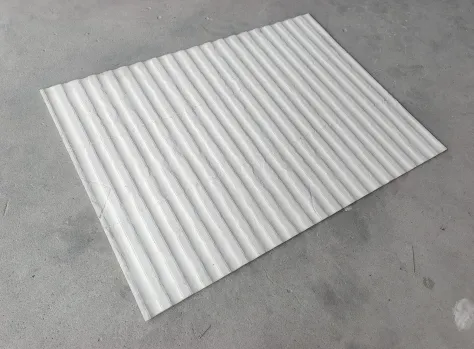
Ever walked through a downtown area and noticed how some buildings seem to radiate character and durability while others look tired and dated? That's not accidental - it all comes down to the siding. Choosing the right exterior for commercial buildings isn't just about aesthetics; it's a multi-million dollar decision that affects everything from energy bills to maintenance costs and tenant satisfaction.
Commercial siding is the unsung hero of real estate development. It's the protective skin that stands between your investment and mother nature's fury. Get it wrong, and you'll face endless repair headaches, sky-high energy costs, and that "dated look" that scares away premium tenants. Get it right? You'll have a property that commands higher rents, stands the test of time, and becomes a landmark in the community.
Property developers and architects are caught between conflicting priorities:
Traditional materials like brick, stucco, and metal each solve part of this equation but come with significant trade-offs. Brick offers timeless appeal but at premium costs. Metal provides industrial chic but lacks insulation. Stucco fits Mediterranean styles but cracks in freeze-thaw cycles. Fiber cement copies natural materials but still looks... well, fake.
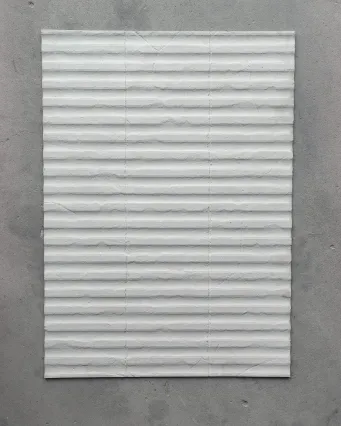
This is where exterior wall siding has evolved to solve these challenges. Century Stone Siding isn't just another cladding option - it's what happens when material science meets architectural ambition. Forget the dated notion that synthetic means "cheap imitation." Modern stone composites blend the best of natural materials with cutting-edge technology.
Picture this: The grandeur of quarried stone meets the practicality of modern engineering. That's Century Stone Siding - delivering the visual impact of premium natural stone without the logistical nightmares and excessive costs. But how does it actually transform commercial properties? Let's unpack why architects call this "the smart builder's secret weapon."
First impressions matter immensely in commercial real estate. Century Stone's realistic texture and color variation outclass flat-looking alternatives. Unlike uniform synthetic materials, it captures:
Developers report a tangible "wow factor" that translates to higher perceived value. Case in point: Sacramento's new tech hub "Innovation Plaza" saw 27% faster leasing after installing Century Stone. Tenants literally described it as "feeling substantial and successful."
City buildings face relentless assaults:
Century Stone laughs at these challenges through:
Property manager Sarah Jennings of True Build Group shares: "We used to budget $20K annually for stucco repairs across our portfolio. Since switching to Century Stone? That line item has vanished."
Here's what most developers overlook - thermal mass matters. Century Stone's:
Energy modeling shows a typical 50,000 sq ft office building saves $18,000 annually compared to metal panels. Retrofits see even more dramatic returns - Oakland's historic Garfield Building cut HVAC costs by 42% after its Century Stone upgrade.
The initial cost comparison misses the big picture. Consider:
Financial analyst Mark Thompson notes: "The 10-year lifecycle cost of Century Stone beats brick by 35%, stucco by 42%, and fiber cement by 28%. This isn't an expense - it's an appreciating asset."
| Feature | Century Stone | Natural Stone | Fiber Cement | Metal Panels |
|---|---|---|---|---|
| Cost per sq ft (installed) | $28-$34 | $48-$62 | $16-$22 | $18-$26 |
| Maintenance Cycle | Essentially none | Annual sealing | Recoating every 8-12 yrs | Anti-corrosion treatments |
| Weight (lbs/sq ft) | 8.5 | 30+ | 5.2 | 3.8 |
| Installation Speed | 400 sq ft/day | 120 sq ft/day | 350 sq ft/day | 500 sq ft/day |
| R-value (insulation) | R-13 | R-1 | R-8 (with backer) | R-6 (with backer) |
| Fire Rating | Class A | Non-combustible | Class A | Class A |
| Design Flexibility | Infinite shapes/colors | Limited by stone type | Limited textures | Flat panels only |
The numbers speak clearly: Century Stone offers the premium appearance of stone without the structural or financial burdens. Architect Daniel Wu observes: "It's allowed us to restore historic facades where adding real stone weight would've required costly structural reinforcement."
Beyond performance metrics, Century Stone is rewriting design rules. Consider these game-changing applications:
Forward-thinking developers are blending materials for dramatic impact:
Portland's award-winning Cascade Tower uses dramatic stone piers anchoring glass expanses - achieving visual weight without literal tons. "The contrast makes both materials look more premium," explains designer Elena Rodriguez.
Beyond energy savings, Century Stone offers:
San Francisco's net-zero Aurora Building achieved LEED Platinum partly through innovative stone siding that minimizes thermal bridging. The development team credits this for 15% of their certification points.
Imagine siding that does more than just sit there:
Chicago's NexGen Convention Center uses "smart stone" panels embedding wayfinding tech and dynamic lighting - all hidden until activated. Property manager David Chen marvels: "Tenants love that our building 'comes alive' for events while maintaining elegant stone sophistication."
Some contractors hesitate because "stone sounds complicated." Let's debunk misconceptions:
Myth:
"You need masons"
Reality:
Century Stone installs like premium siding. Certified crews train in 3 days.
Myth:
"It's fragile during installation"
Reality:
Impact-resistant formulation withstands typical job site bumps.
Myth:
"Curves are impossible"
Reality:
Flexible backing allows radius curves up to 3 feet.
Modern profiles include:
General contractor Miguel Santos reports: "Our first install took 15% longer than vinyl. By the third project? We were beating vinyl installation speed by 10% with zero callbacks."
In commercial architecture, we've come full circle. Where natural stone was once prized then abandoned as impractical, advanced composites have resurrected its virtues while solving its flaws. Century Stone represents this evolution - offering the gravitas and permanence of stone with the practicality of modern materials.
As sustainability demands intensify and tenants seek premium experiences, the siding playing field has fundamentally changed. Property developer Angela West summarizes it perfectly: "In our new medical complex, Century Stone wasn't the most expensive option - it was the most valuable. Tenants feel they're in something substantial, our maintenance team sleeps better, and frankly, it photographs beautifully for our investors."
The verdict is clear: For commercial properties where image, performance, and value intersect, Century Stone isn't just another option - it's the new benchmark. Welcome to the future of exterior wall siding , where beauty meets brains, and durability dances with design.
Recommend Products












