
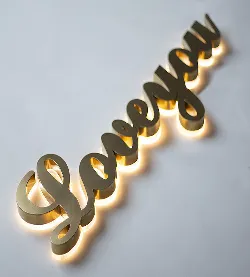
Ever walked down a city street and wondered why some store signs glow like premium champagne while others look like bargain-bin soda? You're not alone. The price differences in illuminated signs – what pros call "light letters" – aren't just random. They're as calculated as the difference between a luxury car and a base model. Let's dive into what really makes one set of glowing letters cost triple what another does.
"It's like comparing a quartz countertop to laminate," says Miriam Chen, a signage veteran with 20 years in the trade. "Both might look okay from 30 feet away, but up close? The craftsmanship screams quality – or lack of it." Those price tags reflect everything from stainless steel guts to how well they'll survive a monsoon.
Think of light letters as a sandwich. The bread might look similar, but the filling? That's where the magic – and cost – happens:
| Price Factor | Budget Version | Premium Version |
|---|---|---|
| Housing Material | Thin plastic or cheap aluminum that warps in heat | Marine-grade stainless steel or 3mm-thick coated aluminum |
| Waterproofing | Basic silicone caulking that fails in 2 seasons | Laser-welded seams + IP68 gaskets (think submarine tech) |
| Light Source | Generic LEDs that dim unevenly by year 3 | Hospital-grade LED modules with 50,000-hour lifespans |
| Mounting System | Exposed brackets that rust visibly | Hidden aircraft-grade aluminum channels |
A fancy restaurant might use the premium version because their sign is part of the integrated ceiling system design. A 24-hour laundromat? They'll likely grab the budget model. Both light up – but only one lasts a decade.
Ever notice how some letters glow evenly like moonlight while others look like scattered dots? That's not magic – it's physics and cash. Premium letters use light-diffusing acrylic lenses and carefully spaced LEDs. Cheap ones? They slam bulbs against opaque plastic and call it a day.
"The difference is like LVT vinyl flooring versus marble," explains architect Leo Torres. "One's engineered for perfect consistency, the other's slapped together." This matters most for thin fonts like "McDonald's" – budget versions often have dark spots in the curves.
Here's where I lost my favorite bakery. Their gorgeous sign failed after 18 months because water seeped into the electrical channels. Proper waterproof design adds 20-40% to the price because:
Coastal cities punish signs mercilessly. That bathroom tile supplier near Miami Beach? Their sign uses triple-sealed marine aluminum that costs more per foot than actual boat parts.
White light isn't just "white." Budget LEDs often emit a sterile blue-ish glare (think morgue lighting). Premium versions mimic afternoon sunlight. And colored lighting? Red LEDs degrade fastest unless you use gold-bonded chips.
"A client once asked why our quote was triple the 'sign guy on Craigslist'," recounts lighting designer Elena Rossi. "We showed them a pink sample under rain simulation. Their cheap version leaked dye in 15 minutes. Ours? Survived a pressure-washer test. That's why hospitals use premium-grade acoustic ceiling tiles equivalents in signage."
How letters attach to walls creates massive price swings. Basic mounts work on perfect concrete but crumble on brick or stucco. Premium systems include:
A "simple" installation on historic limestone? That requires custom-milled stainless steel standoffs costing more than the letters themselves.
Corporate franchise signs must match Pantone colors exactly . A Starbucks green isn't just "green" – it requires custom powder coating with UV inhibitors. Miss the shade? They'll reject the whole shipment. That precision adds 30% minimum.
| Element | Local Business Cost | Franchise Requirement |
|---|---|---|
| Color Matching | Standard RAL palette (±5% variance) | Exact Pantone ±0.5% with lab reports |
| Font Precision | Close enough visually | Laser-scanned template matching |
| LED Color Temp | 3000K-4000K acceptable | 3500K ±100K with certification |
It's why a McDonald's sign costs as much as a compact car while Joe's Diner gets similar-sized letters for half the price.
Sign companies offering just letters? They're dying. Winners provide turnkey services covering:
This holistic approach – turning signs into art pieces rather than industrial PVC drain pipe commodities – justifies premium pricing. The client isn't just buying bulbs in a can; they're buying reassurance.
Here's the dirty secret: Cheap signs cost more over time. Access panels for LED replacement? Premium units have magnetic access panels . Budget versions require dismantling the entire sign. Labor for one letter swap:
High-traffic areas like malls demand durability that prevents monthly bucket-lift rentals. That's why their quotes will always make your eyes water.
Should everyone buy premium light letters? Nope. A pop-up shop needs affordable, disposable signs. But for flagship stores or hurricane zones? Paying for commercial-grade floor tile toughness in signage pays dividends in reduced headaches and replacement costs.
Next time you see glowing letters, notice the details: The seamless glow, invisible hardware, and how they weather storms. That craftsmanship? It literally shines through – and explains why price differences aren't just about profit margins, but survival engineering.
Recommend Products












