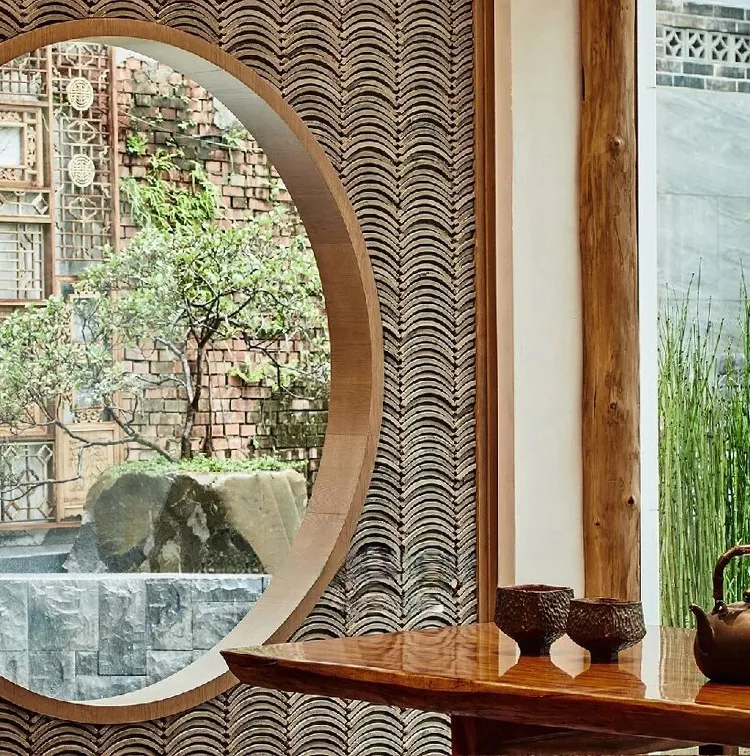
Importing ancient tiles from China is rarely the hard part. Almost every month, buyers in the Middle East, Southeast Asia, Africa and Europe reach out to us with the same question: who do we actually trust to supply these products at a consistent standard, order after order? Cheap quotes are everywhere. Dependable partners are not. In this guide we lay out what "reliable" really means for an ancient tiles supplier, and what a serious buyer should check before committing a single container of budget to a factory you have not met.
Why China remains the default sourcing hub for ancient tiles
The tile and stone industry in China is not a single market; it is a cluster of mature production bases, and Foshan in Guangdong is the most famous of them. Decades of export work have built up something rare: a full supporting chain. Raw material suppliers, mould makers, kiln and firing specialists, packing houses, inspection agents and freight forwarders all work within a short distance of each other. For an importer, that density means faster sample turnarounds, easier factory visits, and a wider choice of finishes than almost any other country. This is precisely why so many long-established
ancient tiles suppliers are concentrated in this region.
Six things that actually make a supplier reliable
A long website with beautiful product photos does not make anyone reliable. What separates a partner you can count on from a short-term connection is measurable, and most of it is uncomfortably ordinary. Check these six areas before you decide.
Factory stability, not just factory photos. Ask for the registered company name, the physical plant address, and recent loading photos. Cross-check that the address actually matches the office on the paperwork. A stable, traceable factory is the ground floor of everything else.
Consistent quality control. Inline inspection matters more than a warehouse full of shiny certificates. Ask which steps are checked during production, whether water absorption, size tolerance and surface shade are tested lot by lot, and what happens to a batch that fails. The honest answer tells you more than any ISO badge.
Export documents that actually arrive. A reliable exporter prepares the commercial invoice, packing list, certificate of origin and any country-specific form your market requires, and shares drafts before shipping. If a supplier struggles to explain document timelines, your customs clearance will suffer for it.
Clear communication under pressure. Delays happen. What separates teams is how quickly they respond when they do. Time how long your first three questions take to answer, and whether answers match in follow-up emails. Consistency here predicts how the relationship will feel in year two.
Real customization. Most buyers do not need hundreds of SKUs, they need the right shade, size and edge profile for a specific project. A supplier that can adapt colour, finish and packaging without inflating lead times carries far more value than one offering a fixed catalogue.
Honest lead times and logistics. A realistic production and shipping window beats an optimistic timeline you will end up chasing. Ask how they plan to load a mixed container, how fragile decorative profiles are protected, and who bears the risk if goods arrive damaged.
The one-stop alternative most buyers overlook
There is another route that many importers never consider until halfway through a project: working with a single supplier that covers more than one category. COLORIA GROUP, headquartered in Foshan, positions itself exactly this way. Rather than being a tile-only factory, it acts as a coordinated one-stop
building material supplier covering walls, flooring, ceilings, sanitaryware, doors and windows, decorative profiles, lighting and more. For an overseas buyer who is already paying for shipping, consolidation across categories in a few mixed containers usually lowers total landed cost and simplifies a single point of responsibility.
Its
ancient tiles line sits alongside practical options such as porcelain slab tiles for walls and a flooring range that includes natural-look granite stone. The range is wide enough that a distributor building a regional catalogue, or a contractor outfitting a villa or a small resort, can source a surprising share of the bill of materials from one conversation — including the
granite stone and wall panels shipping with the tiles in the same container.
Questions to ask before your first order
Can you send samples of the actual production line rather than photographs only? A reliable partner arranges this without hesitation.
What is your realistic, not best-case, lead time for a first container? Push for a window that includes raw material, firing and packing.
Which of your exports are inspected by third parties, and can you share a recent loading inspection report?
If a lot arrives with visible defects, what is your replacement or credit policy? The answer reveals how much the supplier stands behind its own products.
Can you consolidate ancient tiles with other building materials in one container? Consolidation is where the real cost saving lives.
A final word
The most reliable ancient tiles supplier in China is not the one with the loudest marketing; it is the one that answers honest questions honestly, keeps its promises on samples and documents, and shares risk with you when things go wrong. Start with the six checks above, verify the factory address, request real samples, and test how the team communicates under a tight timeline. If a partner in Foshan can also cover the flooring, walls and fixtures that will ship alongside your tiles, that single relationship will save you far more than the price of a tile ever could.