
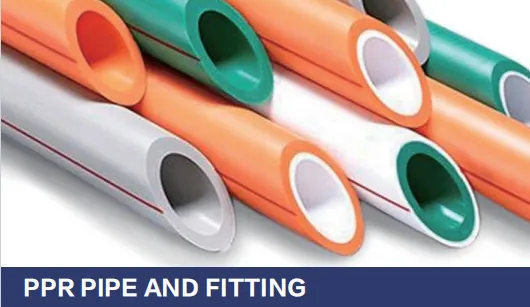
Every time you turn on a faucet, flush a toilet, or enjoy a warm shower, you're relying on a network of pipes that work silently behind the walls. In construction—whether residential, commercial, or industrial—these pipes are the unsung heroes, carrying water, gas, and other essentials that make buildings functional. Among the many piping materials available today, PPR (Polypropylene Random Copolymer) has emerged as a top choice for its durability, efficiency, and versatility. But with so many suppliers in the market, how do you identify the one that stands out as a leader? This article dives into the world of PPR pipes and fittings, exploring what makes a supplier truly exceptional, and why the right partner can transform your construction project from good to great.
Before we answer the question of who leads the pack, let's first understand why PPR pipes have become a staple in construction. Unlike traditional materials like copper or galvanized steel, PPR pipes offer a unique blend of benefits that align with today's demands for speed, sustainability, and cost-effectiveness. They're resistant to corrosion, which means they won't rust or degrade over time—critical for ensuring long-term water quality. They also handle high temperatures (up to 95°C) and pressure, making them ideal for both hot and cold water systems. Installation is a breeze too: PPR pipes use heat fusion, creating seamless joints that reduce the risk of leaks, a common headache with older piping materials. Add to that their lightweight nature, which cuts down on labor costs, and it's clear why PPR has become the go-to for architects, contractors, and developers worldwide.
But here's the catch: not all PPR pipes are created equal. The quality of raw materials, manufacturing standards, and testing protocols vary widely between suppliers. A subpar PPR pipe might save you money upfront, but it could lead to leaks, bursts, or costly replacements down the line. That's why choosing a reliable PPR pipe and fitting supplier isn't just a purchase—it's an investment in the safety and longevity of your project.
So, what separates a good supplier from a great one? A leading PPR pipe and fitting supplier isn't just someone who sells products—they're a partner in your project's success. Here are the key qualities to look for:
1. Uncompromising Quality: The best suppliers use 100% virgin PPR raw materials, avoiding recycled plastics that can weaken the pipes. They adhere to strict international standards, such as ISO 9001 for quality management and DIN 8077/8078 for PPR pipe specifications. Certifications matter here—look for suppliers with third-party testing to back up their claims.
2. Comprehensive Product Range: Construction projects have diverse needs. A top supplier offers PPR pipes in various sizes (from 20mm to 160mm or more), pressure ratings (PN10, PN16, PN20), and fittings (elbows, tees, reducers, valves) to suit every application, from residential plumbing to large-scale commercial HVAC systems.
3. Global Reach and Local Support: Construction is a global industry, and a leading supplier should have the infrastructure to deliver products to projects worldwide—whether in Riyadh, Singapore, or Paris. Equally important is local support: technical teams that can assist with installation guidance, troubleshooting, and after-sales service.
4. Innovation and Adaptability: The construction sector evolves fast, with new regulations and sustainability goals emerging regularly. A leader stays ahead by investing in R&D—developing eco-friendly pipes, fire-resistant options, or solutions for specific industries like hospitals or schools.
5. One-Stop Solution Capabilities: Today's developers and contractors value efficiency. The best PPR suppliers don't stop at pipes—they offer a full suite of building materials, from flooring and wall panels to sanitary fixtures. This "one-stop architectural solution provider" model reduces coordination efforts, cuts costs, and ensures consistency across materials.
To truly appreciate PPR's value, let's compare it to other common piping materials. The table below highlights how PPR stacks up against PVC, copper, and PE (Polyethylene):
| Material | Durability | Temperature Resistance | Installation Ease | Cost-Effectiveness | Best For |
|---|---|---|---|---|---|
| PPR | 50+ year lifespan; corrosion-resistant | Up to 95°C (continuous use) | Heat fusion for seamless joints; no soldering | Mid-range cost; low maintenance | Residential/commercial plumbing, hot water systems, HVAC |
| PVC | 25-40 years; prone to brittleness in cold | Up to 60°C (limited hot water use) | Glued joints; quick but risk of leaks | Low upfront cost; high replacement costs | Drainage, cold water lines, non-potable systems |
| Copper | 70+ years; corrosion-resistant but heavy | Up to 100°C+ | Soldering required; skilled labor needed | High upfront cost; energy-efficient but expensive | High-end residential, historic buildings |
| PE | 50+ years; flexible but less rigid | Up to 60°C (PEX is better for hot water) | Crimp or compression fittings; easy but bulkier | Mid-range cost; good for underground use | Underground water lines, irrigation |
As the table shows, PPR strikes a balance between durability, performance, and cost that's hard to beat—especially for projects where reliability and long-term savings are priorities.
When it comes to embodying these qualities, one name consistently rises to the top: a global one-stop architectural solution provider that has redefined what it means to be a building materials partner. With decades of experience, this supplier isn't just a PPR pipe and fitting supplier —it's a trusted resource for residential and commercial projects alike, earning its reputation as a leading residential building materials supplier and commercial building materials supplier across continents.
What sets this supplier apart? Let's break it down:
At the core of their offering is a premium PPR pipe and fitting range designed for global standards. Using 100% virgin PPR copolymer, their pipes undergo rigorous testing—including pressure tests at 20°C (10 bar for 1000 hours) and 95°C (6 bar for 165 hours)—to ensure they can withstand the toughest conditions. Their fittings are precision-engineered with reinforced sockets to prevent cracking during installation, and color-coded options (blue for cold water, red for hot) simplify on-site identification.
For specialized projects, they offer enhanced variants: UV-resistant pipes for outdoor use, sound-insulated options for high-rise apartments, and even antibacterial PPR pipes treated with silver ions to inhibit mold and bacteria growth—perfect for hospitals, schools, and residential buildings where hygiene is critical.
What truly makes this supplier a leader is its commitment to being a one-stop architectural solution provider . While PPR pipes are their specialty, they offer a full spectrum of building materials, from wall panels (like MCM flexible cladding and bamboo charcoal boards) to flooring, sanitary fixtures, and even electrical components. This means contractors can source everything from a single partner, reducing logistics headaches, ensuring material compatibility, and streamlining project timelines.
For example, a developer building a luxury residential complex can order PPR pipes for plumbing, WPC wall panels for interior design, and porcelain slab tiles for flooring—all from the same supplier. This integration not only saves time but also ensures consistent quality across every aspect of the project.
With distribution centers in key markets like Saudi Arabia, Europe, and Southeast Asia, this supplier ensures timely delivery to even the most remote construction sites. Their local teams speak the language, understand regional regulations (like Saudi Arabia's SASO standards or Europe's CE marking), and offer on-site technical support—whether it's training contractors on heat fusion techniques or troubleshooting a complex piping layout.
They also prioritize sustainability, using eco-friendly manufacturing processes and recyclable packaging. Their PPR pipes are lead-free and comply with global green building certifications like LEED and BREEAM, making them a favorite among developers focused on eco-conscious projects.
Let's look at how this leading supplier has delivered results for real-world projects:
A developer in Dubai was building a 45-story residential tower with 200+ apartments, each requiring a reliable hot and cold water system. They chose this supplier's PPR pipes for their corrosion resistance and ease of installation. The supplier provided custom-length pipes to reduce waste, and their technical team trained the on-site crew on heat fusion, cutting installation time by 30% compared to traditional copper piping. Today, the building's plumbing system runs flawlessly, with zero leaks reported in the first two years of occupancy.
A new hospital in Singapore needed piping that could handle high-temperature sterilization systems and maintain strict hygiene standards. The supplier's antibacterial PPR pipes, paired with Class A fireproof CPL inorganic boards (another product in their one-stop lineup), met both requirements. The hospital's facilities manager noted, "The PPR pipes have been maintenance-free, and the ability to source both piping and wall materials from one supplier simplified our project management significantly."
Now that you know what to look for, here's a quick checklist to help you evaluate potential PPR pipe and fitting suppliers:
Ask for certifications: ISO 9001, DIN 8077/8078, and local standards (e.g., SASO for Saudi Arabia).
Request samples: Test for weight, flexibility, and joint strength (a quality PPR pipe should feel sturdy but not brittle).
Inquire about technical support: Do they offer installation training or on-site assistance?
Check their range: Can they supply all the sizes and fittings your project needs?
Evaluate sustainability: Do they use eco-friendly materials and processes?
Read client reviews: Look for feedback on delivery times, product quality, and after-sales service.
In the world of construction, the leading PPR pipe and fitting supplier isn't just the one with the lowest prices or the most products. It's the one that combines quality, innovation, and a commitment to client success. A supplier that acts as a one-stop architectural solution provider , understanding both residential and commercial needs, and delivering solutions that stand the test of time.
So, who is this leading supplier? It's the one that prioritizes your project's goals, offers more than just pipes, and works with you to overcome challenges—whether you're building a single-family home or a sprawling commercial complex. When you find a supplier that checks all these boxes, you're not just buying PPR pipes—you're building a foundation for success.
Recommend Products












