
When we talk about building a home, most of us dream about the perfect flooring solutions , the coziest walls solutions , or the sleekest ceiling solutions . But there's a silent hero running through every corner of your house that rarely gets the spotlight: the pipes. These unassuming tubes are the "veins" of your home, carrying water for your morning shower, your kitchen faucet, and even the heat that keeps you warm in winter. Choosing the right pipe material isn't just a technical decision—it's about ensuring your home runs smoothly, safely, and efficiently for decades. As a ppr pipe and fitting supplier with over 15 years in the industry, I've sat across from countless homeowners, contractors, and even first-time builders, helping them navigate this crucial choice. Today, I want to share those insights with you.
Imagine waking up on a freezing winter morning, stepping into the shower, and being greeted by a blast of cold water. Or worse, coming home to a flooded basement because a pipe burst while you were away. These nightmares often stem from one mistake: choosing the wrong pipe material. Residential pipes handle everything from cold tap water to scalding hot water, from high pressure to chemical-laden waste. They're exposed to temperature fluctuations, moisture, and even the occasional bump from a wayward vacuum cleaner. The material you pick needs to stand up to all of this—and more.
Over the years, we've seen homeowners opt for cheap materials to save a few dollars upfront, only to spend thousands later on repairs. On the flip side, some overcomplicate things by choosing industrial-grade pipes that are overkill for a small family home. The key is balance: a material that's durable, safe, easy to install, and cost-effective over the long haul. Let's break down the most common options you'll encounter, and why we, as a ppr pipe and fitting supplier , often guide customers toward PPR.
Walk into any hardware store or chat with a pipes fittings supplier , and you'll be bombarded with acronyms: UPVC, PVC DWV, PEX, PPR. It's enough to make your head spin. Let's demystify each one, starting with the basics.
If you've ever heard someone mention "plastic pipes," they're probably talking about UPVC (Unplasticized Polyvinyl Chloride). As an upvc pipe supplier , we often recommend these for cold water supply lines—think your garden hose, your toilet's cold water inlet, or your laundry room's washing machine connection. They're lightweight, easy to cut, and incredibly affordable. I remember a customer once told me, "I just need something to get the water from point A to point B—nothing fancy." For that, UPVC works. But here's the catch: they're rigid. Bend them too much, and they'll crack. And forget using them for hot water—exposure to temperatures above 40°C (104°F) can make them brittle over time. If you're building a home where hot water is a daily necessity (which, let's be real, is every home), UPVC alone won't cut it.
Then there's PVC DWV (Drain, Waste, Vent) pipes. As a pvc dwv pipe supplier , I can tell you these are the unsung heroes of your home's plumbing system—they carry away wastewater from your sinks, showers, and toilets, and they vent sewer gases to keep your home smelling fresh. Unlike UPVC, DWV pipes are designed for gravity flow, not pressure. They're thicker, have larger diameters, and often feature sloped designs to help water and waste move efficiently. But here's the thing: they're not meant for carrying potable water. Their rough inner surface can trap bacteria, and they're not rated for high pressure. So while they're essential for drainage, they're not a one-size-fits-all solution for your home's water supply.
PEX (Cross-Linked Polyethylene) pipes burst onto the scene in the 1980s and quickly became a favorite among DIYers. As a pex pipe and fitting supplier , I get why: they're bendy. You can snake them around corners without elbows, which means fewer joints (and fewer potential leak points). They're also resistant to freezing—if water inside them freezes, they expand instead of cracking, then shrink back to size when thawed. That's a game-changer for homes in cold climates. But PEX has its downsides, too. It's sensitive to UV light, so you can't install it outdoors without protective covering. And while it handles hot water well (up to 82°C/180°F), it's not as durable as some other options. I once had a contractor tell me, "PEX is great for quick renovations, but I wouldn't trust it for a home I plan to live in for 30 years."
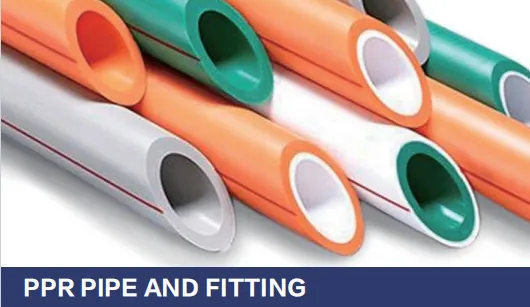
Now, let's talk about the star of the show: PPR (Polypropylene Random Copolymer) pipes. As a ppr pipe and fitting supplier , these are the backbone of our ppr pipe and fitting solutions for residential projects. PPR is a thermoplastic polymer that's been engineered to handle both hot and cold water—think everything from your kitchen sink to your bathroom shower to your radiators. What makes it stand out? Its molecular structure. The "random copolymer" part means the molecules are arranged in a way that gives PPR flexibility without sacrificing strength. It can handle temperatures up to 95°C (203°F) and pressures up to 20 bar, which is more than enough for a typical home. But what really sells homeowners is its longevity. Most PPR pipes come with a 50-year warranty, but in reality, they can last 70+ years with proper installation. I had a customer in 2010 who installed PPR pipes in his first home; he's now building a second house, and he walked into our showroom last month and said, "I'm not even considering anything else."
Still on the fence? Let's put these materials head-to-head. The table below breaks down key factors like temperature resistance, durability, and cost—straight from our supplier playbook.
| Material | Best For | Max Temperature Resistance | Expected Lifespan | Installation Complexity | Cost (Per Meter, Approx.) |
|---|---|---|---|---|---|
| UPVC | Cold water supply (low pressure) | 40°C (104°F) | 15–20 years | Easy (glue or threaded joints) | $1–$3 |
| PVC DWV | Drainage, waste, vent systems | Not for potable water | 20–30 years | Moderate (needs slope for gravity flow) | $2–$4 |
| PEX | Hot/cold water (flexible routing) | 82°C (180°F) | 30–40 years | Easy (crimp or clamp fittings) | $3–$5 |
| PPR | Hot/cold water, heating systems | 95°C (203°F) | 50–70+ years | Moderate (fusion welding required) | $4–$6 |
Supplier Tip: "Cost per meter can be misleading. PPR might seem pricier upfront, but factor in replacement costs (UPVC needs replacing every 15 years, PEX every 30) and potential leak repairs, and PPR becomes the most cost-effective choice long-term." — Sarah Chen, Senior Product Advisor, ppr pipe and fitting supplier
Let's dive deeper into why we, as a ppr pipe and fitting supplier , stand behind PPR for most residential projects. It's not just about the specs—it's about how these pipes impact your daily life.
One of the biggest fears homeowners have is pipe leaks. A single leak can damage bamboo charcoal board wall panel solutions , ruin terrazzo tile solutions , and even lead to mold growth. PPR pipes solve this with fusion welding. Unlike PEX (which uses crimps) or UPVC (which uses glue), PPR pipes are joined by heating the ends and fusing them together. The result? A seamless, monolithic joint that's as strong as the pipe itself. I've seen contractors pressure-test PPR systems at 1.5 times the working pressure, and they still hold. No leaks, no callbacks, no stress.
Your home's pipes shouldn't be adding anything to your water—good or bad. PPR pipes have a smooth inner surface that resists scaling and bacterial growth, making them ideal for potable water. They're also lead-free and BPA-free, which is a big win for families with young kids. We once worked with a family who had a history of water contamination issues in their old home; after installing PPR, they told us, "We finally feel safe letting our kids drink from the tap."
Hot water loses heat as it travels through pipes—especially in uninsulated areas like basements or crawl spaces. PPR has natural insulating properties that slow down heat loss, which means your water heater doesn't have to work as hard. Over time, that translates to lower energy bills. A customer in 2022 calculated that switching to PPR reduced their monthly energy costs by 12%—that's money back in their pocket.
Once PPR pipes are installed, they're practically maintenance-free. Unlike metal pipes, they don't corrode. Unlike PEX, they don't degrade when exposed to sunlight (though we still recommend burying them or covering them in walls). I had a customer call us last year, panicking because they thought their PPR pipes needed "cleaning." I had to reassure them, "Just run the water—PPR takes care of itself."
Don't get me wrong—PPR isn't the answer for every single scenario. There are times when PEX or UPVC might be a better fit, and as a responsible supplier, we'll never push a product that isn't right for you.
PEX Makes Sense If: You're retrofitting an older home with tight spaces. PEX's flexibility means you can snake it through walls and floors without tearing everything apart. It's also great for radiant floor heating systems, where flexibility is key.
UPVC Makes Sense If: You're on a super tight budget and only need cold water lines. For example, a guest house that's rarely used, or a workshop with a single cold water tap. Just remember: you'll need to replace them sooner.
Real-Life Example: Last year, we worked on a renovation project for a 1950s home with narrow wall cavities. The contractor initially wanted PPR, but after measuring, we realized PEX was the only way to avoid tearing down the original masonry stone solutions walls. We used PEX for the water supply and PPR for the main trunk lines in the basement—best of both worlds.
Even the best pipe material can fail if installed poorly. As a ppr pipe and fitting supplier , we can't stress this enough: hire a professional who's trained in PPR fusion welding. Here's why:
We offer free installation workshops for contractors, and we always provide homeowners with a list of certified installers in their area. It's the best way to ensure your PPR system lives up to its 50-year warranty.
At the end of the day, choosing a pipe material is about balancing cost, performance, and peace of mind. UPVC is cheap but temporary. PEX is flexible but not as durable. PVC DWV is essential for drainage but irrelevant for water supply. PPR, on the other hand, checks all the boxes: it's durable, safe, energy-efficient, and cost-effective over time.
As a ppr pipe and fitting supplier , we've seen firsthand how PPR transforms homes. It's the material we recommend to our own families, our friends, and anyone who wants a plumbing system they can rely on for generations. So the next time you're planning a home build or renovation, remember: the best residential building materials supplier won't just sell you pipes—they'll help you build a home that works as hard as you do.
Ready to learn more about ppr pipe and fitting solutions for your home? Reach out to a trusted supplier today—and here's to many leak-free years ahead.
Recommend Products












