
In the sun-baked landscape of Riyadh, where construction cranes pierce the skyline and sustainability has become more than just a buzzword—it's a client demand—Mohammed, a project manager for a mid-sized building firm, stares at two quotes on his desk. One is for concrete pipes, the material his father's generation relied on for decades. The other is for upvc pipe solutions , a lightweight plastic alternative his younger engineers keep advocating for. The project? A new elementary school, where the client has insisted on LEED certification and a carbon footprint report. "Which one's actually better for the planet?" Mohammed mutters, rubbing his temples. It's a question builders, architects, and even homeowners are asking more often: when it comes to pipes, is the old standby (concrete) really greener than the modern upstart (UPVC)? Let's dig in.
Before we compare the two, let's talk about why this debate even matters. Today's construction projects aren't just about durability or cost—they're about impact . Governments in Saudi Arabia, for example, are pushing for net-zero buildings by 2030. Schools, hospitals, and commercial complexes are chasing LEED, BREEAM, or Estidama certifications, which reward materials that minimize carbon emissions, reduce waste, and support long-term sustainability. Pipes might seem like a small part of the puzzle, but when you consider that a typical mid-rise building uses miles of piping for drainage, water supply, and vent systems, their cumulative environmental footprint adds up fast. So whether you're a builder like Mohammed or a homeowner renovating your bathroom, the choice between concrete and UPVC pipes isn't just about which lasts longer—it's about which leaves a lighter mark on the planet.
Let's start with the basics. Concrete pipes are the old reliable: made from a mix of cement, sand, gravel, and water, they're heavy, rigid, and have been used for everything from sewage systems to storm drains since the 19th century. They're known for their strength—able to withstand heavy soil loads and high pressure. But strength comes with a price: weight. A 10-foot section of 12-inch concrete pipe can weigh over 800 pounds.
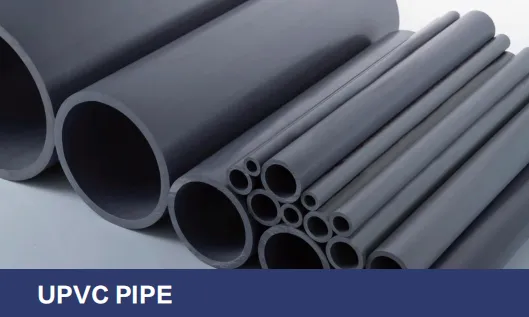
UPVC (Unplasticized Polyvinyl Chloride) pipes, on the other hand, are a type of rigid plastic pipe. They're made by extruding PVC resin (a polymer derived from petroleum and chlorine) into tubes, often reinforced with additives to boost durability. Unlike flexible PVC (used in hoses or wiring), UPVC is stiff, making it ideal for structural applications like water supply, drainage, and vent systems—hence the term pvc dwv pipe solutions (DWV stands for Drainage, Waste, and Vent, a common use for UPVC). UPVC pipes are lightweight, smooth, and resistant to corrosion, which is why they've become popular in residential, commercial, and even industrial projects.
Now, let's break down their environmental credentials, step by step.
The environmental impact of any material starts with what it's made of. Let's unpack the raw ingredients for both.
Concrete's main ingredient is cement, and here's the kicker: cement production is one of the most carbon-intensive industrial processes on the planet. To make cement, limestone (calcium carbonate) is heated in kilns to over 1,450°C, releasing carbon dioxide in two ways: first, from the chemical breakdown of limestone (about 60% of emissions), and second, from burning fossil fuels to heat the kilns (another 40%). The result? The cement industry accounts for roughly 8% of global carbon dioxide emissions —more than all the planes, trains, and cars in the world combined. That's a staggering number, and it's why concrete's "green" reputation is already on shaky ground before it even leaves the factory.
Then there's the sand and gravel. Mining sand for concrete has led to riverbed erosion, habitat destruction, and even beach depletion in some regions. In Saudi Arabia, where local sand is often too fine for construction, companies import sand from neighboring countries, adding transportation emissions to the mix.
UPVC starts with PVC resin, which is made from two main components: ethylene (from petroleum or natural gas) and chlorine (from salt, via electrolysis). Petroleum extraction, of course, has its own environmental issues—oil spills, habitat disruption, and greenhouse gas emissions from drilling and refining. Chlorine production, too, uses a lot of energy (think: powering electrolysis plants), though modern facilities have become more efficient.
But here's the counterpoint: UPVC uses far less raw material by weight than concrete. A 10-foot section of 12-inch UPVC pipe weighs about 30 pounds, compared to 800 pounds for concrete. That means even if PVC resin has a higher carbon footprint per pound, the sheer volume of material needed for concrete tips the scales. For example, producing one ton of PVC resin emits about 1.8 tons of CO2, while producing one ton of cement emits about 0.9 tons of CO2. But since you need 26 times more concrete (by weight) to make the same length of pipe, the total emissions for concrete end up being much higher. It's a classic case of "less is more" when it comes to raw material use.
Additives in UPVC (like stabilizers, plasticizers, and colorants) have also raised concerns—some early PVC products used lead-based stabilizers, which are toxic. But today's upvc pipe solutions use non-toxic alternatives (like calcium-zinc stabilizers), making them safer for both humans and the environment.
Raw materials are just the start. The way these pipes are made—their manufacturing processes—adds another layer of environmental impact.
Making concrete pipes involves mixing cement, sand, gravel, and water into a slurry, then pouring it into molds. The real energy hog, though, is curing the concrete. Some pipes are air-cured (left to dry for weeks), which uses little energy but delays production. Others are steam-cured, where they're placed in high-pressure autoclaves heated to 180°C, which uses massive amounts of energy (often from fossil fuels). A single concrete pipe factory can emit thousands of tons of CO2 annually, just from curing alone.
Waste is another issue. Concrete production generates leftover slurry, which often ends up in landfills, and defective pipes (cracked during curing) are heavy and hard to recycle, so they're usually dumped too.
UPVC pipes are made via extrusion: PVC resin is melted, mixed with additives, and forced through a die to form the pipe shape. Extruders run at lower temperatures (around 180–200°C) than concrete kilns, and the process is highly automated, reducing energy waste. Modern extrusion lines also recycle in-process waste —scraps or off-cuts are ground up and fed back into the machine, so almost no material is lost during production.
That said, plastic manufacturing isn't emission-free. The melting of PVC resin releases some volatile organic compounds (VOCs), though strict regulations in most countries (including Saudi Arabia) require factories to capture and treat these emissions. Some critics also point to "fugitive emissions" of chlorine-based compounds, but advances in equipment have minimized these risks.
When you add it all up, studies by the Plastics Pipe Institute and the World Business Council for Sustainable Development have found that UPVC pipe manufacturing emits 50–70% less CO2 per meter of pipe than concrete pipe manufacturing. For Mohammed's school project, that's a huge win for the carbon footprint report.
Let's shift from the factory to the construction site. How do these pipes perform when it's time to dig, haul, and lay them? Spoiler: This is where UPVC really shines.
Remember that 800-pound concrete pipe? Moving it requires a crane or a forklift, which guzzles diesel fuel. Loading and unloading a truck full of concrete pipes takes hours and a crew of 4–5 workers. On Mohammed's school site, where the ground is soft from recent rains, heavy machinery could get stuck, requiring even more equipment (and more emissions) to free them. Once in the trench, concrete pipes need to be carefully aligned—their weight makes them hard to adjust, and misalignment can lead to leaks down the line.
Transportation is another headache. A standard truck can carry about 20 concrete pipes per load, whereas the same truck can carry 200 UPVC pipes (since they're lighter). That means 10 times fewer truck trips for UPVC, slashing transportation emissions. In Saudi Arabia, where construction sites are often far from manufacturing hubs, those saved trips add up to significant carbon savings.
UPVC pipes are so lightweight that two workers can carry a 10-foot section by hand. No crane needed, no heavy machinery idling on-site. Installation is faster, too: UPVC pipes connect with simple solvent cement or rubber gaskets, which set in minutes, whereas concrete pipes require mortar sealing (which takes hours to cure). On a tight timeline like Mohammed's school project—where delays cost money and push back the (school opening) date—faster installation is a big plus.
Softer ground? No problem. UPVC's light weight means trenches can be narrower and shallower, reducing the amount of soil dug up (and later replaced), which saves time and minimizes disruption to the site's ecosystem. In urban areas, this also means less traffic congestion from construction vehicles—a hidden environmental benefit that often gets overlooked.
A 2019 case study by a Riyadh-based contractor summed it up: installing UPVC DWV pipes for a 50-unit apartment complex required 30% fewer labor hours and 40% less fuel for machinery than concrete pipes, cutting the installation phase's carbon footprint by nearly half.
"But concrete lasts forever, right?" That's the argument Mohammed's foreman, an old-school builder, keeps making. Let's fact-check that.
Concrete pipes are indeed strong—they can handle heavy soil loads and high water pressure. But they're also brittle. Ground shifts (common in areas with clay soil or seismic activity), tree roots, and freeze-thaw cycles can cause cracks. In Saudi Arabia, where temperatures swing from 50°C in summer to near-freezing in winter, concrete pipes often develop hairline cracks over time, leading to leaks. These leaks waste water and can erode the soil around the pipe, causing further damage.
Maintenance is a hassle, too. To fix a cracked concrete pipe, you often need to dig up the entire section—a process called "open-cut repair"—which disrupts the site, uses fuel for excavation equipment, and generates waste (the broken concrete). In schools or hospitals, where downtime is costly, this is a major drawback.
On average, concrete pipes last 50–70 years with proper care, but many fail earlier due to corrosion (from acidic soils or wastewater) or physical damage.
UPVC pipes might not look as tough as concrete, but they're surprisingly resilient. They're corrosion-resistant (so acidic soils or chemical-laden wastewater don't eat them away), smooth on the inside (which reduces clogs and improves water flow), and flexible enough to bend slightly with ground shifts, avoiding cracks. Tree roots? They can't penetrate UPVC's smooth surface, unlike concrete's porous texture, which roots often cling to.
Maintenance? Minimal. UPVC pipes don't need painting, sealing, or coating. Clogs are rare because their smooth interior prevents debris buildup. When repairs are needed, "trenchless" methods (like pipe lining) can often be used, avoiding the need to dig up large areas. This not only saves time and money but also reduces the environmental impact of maintenance.
How long do they last? Most manufacturers warranty UPVC pipes for 50 years, but real-world examples show they can last much longer. A university campus in Jeddah installed UPVC water supply pipes in 1985; a recent inspection found them in near-perfect condition, with no signs of corrosion or degradation. Compare that to a nearby hospital that replaced its concrete drainage pipes in 2010—just 25 years after installation—due to frequent leaks.
Longevity matters for sustainability because fewer replacements mean less material, less manufacturing, and less installation emissions over time . A pipe that lasts 80 years instead of 50 cuts the need for replacement by 37%, which is a huge win for the planet.
Even the greenest materials eventually reach the end of their useful life. What happens to them then?
Concrete is often hailed as "recyclable," but it's more accurately "downcyclable." Old concrete pipes are crushed into aggregate, which is used for road base, fill material, or low-grade concrete. This keeps them out of landfills, which is good, but the process requires energy (crushing, transporting) and the aggregate can't be used for high-quality applications (like new pipes). It's a one-way trip from "pipe" to "gravel."
Waste is still an issue. A single broken concrete pipe can weigh half a ton, so even when recycled, the sheer volume of material requires a lot of energy to process.
UPVC is technically recyclable—PVC can be melted down and reformed into new products. However, recycling rates for UPVC pipes are lower than they could be, mainly because of contamination (pipes mixed with other plastics) and a lack of dedicated recycling programs. That said, the tide is turning. Some upvc pipe solutions suppliers in Saudi Arabia now offer take-back programs for old pipes, which are then cleaned, shredded, and reprocessed into new pipes or other PVC products (like window frames or cable insulation).
When recycled properly, UPVC can be "upcycled"—turned into products of equal or higher quality. And because UPVC pipes are lightweight, transporting them to recycling facilities uses less fuel than hauling concrete. The downside? If UPVC ends up in a landfill, it doesn't biodegrade (though it also doesn't leach toxic chemicals, thanks to modern stabilizers). But in a world where landfills are filling up fast, recycling is key—and the industry is getting better at it.
One promising development: some manufacturers are using recycled PVC (rPVC) in their upvc pipe solutions. A Saudi supplier recently launched a line of DWV pipes made with 30% rPVC, cutting raw material use and emissions even further. For Mohammed's school project, choosing such a product would earn extra points toward LEED certification.
| Environmental Factor | Concrete Pipes | UPVC Pipe Solutions |
|---|---|---|
| Raw Material CO2 Emissions (per meter) | High (due to cement production) | Low (less material needed) |
| Manufacturing Energy Use | Very high (kilns, curing) | Moderate (extrusion, lower temps) |
| Installation Carbon Footprint | High (heavy machinery, more trips) | Low (lightweight, easy handling) |
| Typical Lifespan | 50–70 years (prone to cracking) | 50+ years (resistant to corrosion/damage) |
| Maintenance Impact | High (frequent repairs, open-cut digging) | Low (minimal upkeep, trenchless repairs) |
| Recyclability | Downcyclable (crushed for aggregate) | Recyclable (with proper programs) |
| Overall Carbon Footprint (Lifecycle) | Higher (due to materials, manufacturing, installation) | Lower (50–70% less than concrete) |
Back in his office, Mohammed spreads the comparison table on his desk. The numbers are clear: upvc pipe solutions have a lower carbon footprint across almost every stage of their lifecycle—from raw materials to installation to maintenance. They're lighter, faster to install, and just as durable (if not more so) than concrete pipes. For his school project, which needs to meet strict sustainability goals and open on time, UPVC makes sense.
But he also knows it's not a perfect solution. UPVC is still plastic, and plastic production relies on fossil fuels. That's why he'll ask his supplier about rPVC options and recycling take-back programs—steps that make the choice even greener. And he'll make sure the pipes are installed properly (no shortcuts!) to maximize their lifespan, ensuring that the initial environmental investment pays off for decades.
At the end of the day, "green" isn't about choosing a material with zero impact—it's about choosing the one with the least impact, while still meeting performance needs. For pipes, UPVC isn't just the modern choice; it's the responsible one. As Mohammed picks up the phone to call the UPVC supplier, he smiles. Maybe his father's generation had it right for their time, but today? The future of construction is lightweight, low-emission, and yes—greener. And it starts with the pipes we choose.
Recommend Products












