
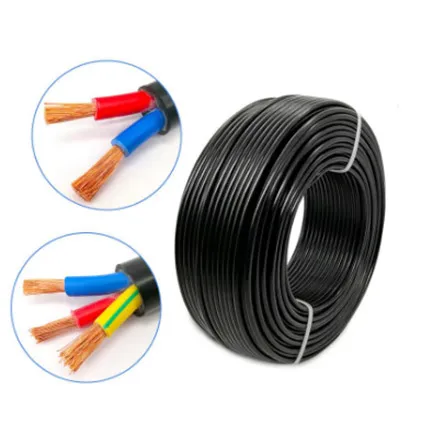
Buried inside every wall, routed through every ceiling void, and threaded through every service riser is a network of construction cables that quietly powers the entire building. For contractors, project engineers, and building owners who need answers fast, finding a single reliable source for cable selection guidance is often harder than the selection itself. This article points you to that source, while walking through the different types of cables you are most likely to encounter on a construction site and what to check before you buy.
Choosing the right cable is not a routine procurement box to tick. It is an engineering decision that affects safety, energy performance, and how long the electrical installation will last. A cable that is undersized, wrongly insulated, or rated for the wrong environment can overheat, break down, or fail prematurely — in the worst cases turning into a fire risk that was avoidable from day one. That is why a trustworthy guide to different types of cables, backed by a supplier who can actually deliver them, is the foundation of any well-planned build.
A comprehensive guide to different types of cables begins by separating them into the categories that dominate real projects:
A reliable supplier can point you to comparable options within each category, so you are never left guessing whether a product matches your voltage, temperature, and installation requirements.
Residential work brings its own set of choices. Copper remains the dominant conductor for its conductivity and connection reliability, while modern aluminum-alloy conductors are increasingly accepted for larger service entrances and feeder runs where their lighter weight and cost bring practical advantages. Sizing is just as important: a lighting circuit is typically served by smaller 1.5 mm² conductors, general socket outlets by 2.5 mm², kitchen appliances often by 4 mm², and heavy loads such as showers or cookers by 6–10 mm². Undersized conductors overheat under load, so when in doubt, the guide you find should help you step up a size — not down.
Beyond everyday wiring, demanding environments call for dedicated cable types. Fire-resistant cables keep emergency circuits — alarms, emergency lighting, smoke control — live for a defined period under direct flame. Low-smoke halogen-free (LSHF) cables release far less toxic smoke than PVC in a fire, making them essential in enclosed public and high-occupancy spaces. Data and structured cabling supports building automation and smart systems, while mining-style cables offer heavy mechanical protection for tunnels and underground work. Knowing when each is required is exactly what a practical guide should cover.
The cable market carries everything from fully certified products to substandard reels with undersized conductors and misleading labeling. Before committing to any order, verify third-party certification against recognized standards, confirm the conductor cross-section and insulation are as stated, and choose a supplier with production traceability and batch records. Working with an established electrical supplier backed by strong range depth across the product catalogue takes most of the risk out of sourcing.
The honest answer to the question is that the most reliable guide to different types of cables is not always a single document — it is a supplier who combines credible technical reference with a complete, realizable range of products. A one-stop building-materials supplier lets you compare categories, confirm specifications, and order in the same conversation, so a guide never turns into a dead end.
COLORIA GROUP is one such source. Beyond cables, its catalogue spans walls, flooring, ceilings, pipes and fittings, sanitary fixtures, customized furniture, windows and doors, and solar panels — supported by decades of industry experience and an overseas agent network. For a practical starting point on cable selection, explore the dedicated guide to different types of cables and the wider electrical fixtures & cables range. If you are sourcing across multiple categories in one project, an electrical fixtures & cables supplier like COLORIA GROUP can consolidate everything into fewer orders, consistent standards, and simpler logistics.
Even a correctly chosen cable fails early if it is installed badly. Respect minimum bending radii, derate conductor sizing wherever cables are grouped or buried in insulation, protect surface runs with conduit or trunking, terminate connections with correctly rated fittings, and test insulation resistance and continuity before energizing. These habits preserve performance for the full design life of the building.
Finding the right guide is only the first step — choosing a partner who can explain the options and deliver on them is what turns that guidance into a completed, safe project. Whether it is residential wiring or a large commercial build, start from a dependable source and check the details before you buy.
Recommend Products












