
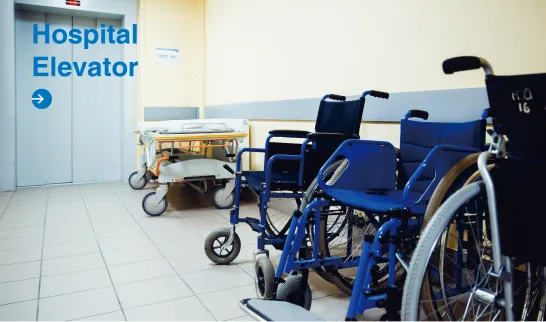
You're probably wondering - how do hospitals balance critical elevator needs with tight budgets? What's the secret to finding reliable vertical transport solutions that won't bankrupt your healthcare facility? Whether you're outfitting a new clinic or upgrading an aging medical center, this guide cuts through the jargon to help you navigate the world of hospital elevators without breaking the bank.
Finding affordable hospital elevators isn't about cutting corners - it's about smart priorities. The most cost-effective solutions match your facility's specific transport needs while ensuring uncompromised safety. This delicate balance requires understanding what really matters versus what's merely nice-to-have.
Not all elevators are created equal when lives are at stake. Hospital transport faces unique challenges:
Emergency stops, fire-rated doors, backup power systems, and sensor-driven safety features aren't optional. Did you know facilities can reduce patient transport accidents by 60% when elevators meet medical-grade certifications? These aren't places where you play the price guessing game.
Those glossy brochures showing smiling staff? Reality is beds, crash carts, and multiple staff members squeezed into tight spaces. True affordability means anticipating peak-hour crushes - when elevator doors open to reveal frantic scenarios requiring immediate transport.
Traditional brushed steel harbors invisible threats. Affordable medical elevators use seamless, non-porous materials that withstand constant chemical cleaning. Anti-microbial coatings aren't luxury add-ons but infection control necessities in modern healthcare.
The pricing puzzle has three main pieces:
| Cost Factor | Budget Impact | Smart Savings Approach |
|---|---|---|
| Customization Level | High (up to 40% variation) | Modular designs offer flexibility without full custom costs |
| Energy Efficiency | Long-term savings up to 70% | Prioritize ENERGY STAR models with regenerative drives |
| Maintenance Contracts | Can exceed 15% of initial cost/year | Predictive maintenance technology reduces emergency callouts |
The stories haunt every facility manager: that community hospital purchasing standard commercial lifts only to retro-fit at triple the cost three years later. Or the specialty clinic discovering their "affordable" model couldn't accommodate newer medical devices during emergencies.
Cost-saving myth busted: Off-the-shelf elevators seem cheaper until you calculate retrofitting expenses. Truly affordable solutions anticipate future medical technology dimensions and weight requirements from day one.
The market contains multitudes - from international giants to specialized medical elevator artisans. How do you spot genuine value?
Top providers won't start with catalogs. They'll ask about your patient demographics - percentage gurney transports? Pediatric facilities need different clearance heights. Geriatric centers require wider doors for walkers. A surprising number of hospital elevator suppliers overlook these critical factors.
Medical-grade elevators aren't one-size-fits-all, but smart modularity creates savings. Look for systems offering configurable interiors, door widths, and control interfaces without full custom engineering expenses.
The most "affordable" bidder often provides ghost service teams when elevators malfunction during critical situations. Reliable partners maintain dedicated medical equipment technicians trained specifically for high-stakes healthcare environments. They will become reliable elevator suppliers for you.
Modern affordable hospital elevators bring unexpected sophistication:
Algorithms that learn peak trauma hours, predicting surges before staff recognize them. During emergencies, coordinated group responses eliminate frantic button-mashing across multiple units, reducing transport delays by up to 40%.
UV-C light disinfection cycles running automatically between transports. Anti-microbial copper surfaces proven to kill pathogens. Vocal command interfaces eliminating germ-spreading touchpoints - these innovations reduce infection transmission risks significantly.
Patients terrified by jerky starts or dinging bells during critical moments? Modern servo motors provide near-silent acceleration. Smooth, vibration-free travel reduces patient anxiety. Peace shouldn't be a luxury reserved for private hospitals.
Consider the hidden "cost" of discomfort: Patients transferred during recovery experience heightened stress from loud mechanical noises or jarring movements. Prioritizing cabin comfort improves outcomes while reducing sedation requirements during sensitive transports.
How facilities integrate elevators determines true affordability:
That seemingly perfect elevator location near the ER? It might create bottlenecks during ambulance surges. Smart placements distribute traffic while minimizing construction disruption:
The most expensive installation phase? Always the unforeseen structural surprises lurking behind walls. Advanced scanning technology now maps existing utilities before cutting begins, preventing those budget-busting "surprises" that plague traditional installations. You need building materials suppliers who are dependable too.
The numbers etched on proposals rarely tell the full story:
Traditional traction elevators run like gas-guzzling trucks. Modern alternatives with regenerative drives capture and reuse energy during descent. Research indicates some hospitals cut power consumption by 70% - translating to thousands in annual savings.
Instead of scheduled checkups or emergency callouts, sensor-laden elevators report impending issues before failures occur. This approach reduces downtime by 90% while cutting service contract costs by up to 40%.
That budget stainless steel finish? It corrodes under constant disinfectants. Corrosion-resistant alloys add 15-20% upfront but last decades longer. Facilities replacing elevators every 12-15 years rather than 25+ pay millions more long-term.
Affordable hospital elevators emerge when:
You prioritize critical safety features over superficial luxuries. There's wisdom in resisting flashy lobby centerpieces when reliable staff transport elevators save lives daily out of public view.
A forward-looking approach anticipates future healthcare needs. Today's "affordable" choice becomes tomorrow's costly retrofit if dimensions can't accommodate evolving medical equipment. We recommend choosing elevator suppliers who understand this.
True affordability combines upfront pricing with long-term operational costs. When calculated over a 25-year lifespan, quality medical elevators often prove 30-50% cheaper than seemingly "bargain" alternatives requiring frequent repairs and premature replacement.
The search for hospital elevators always circles back to one question: What's actually worth paying for? Skip the marble counters and designer lighting. Invest in reliability that gets critically ill patients to treatment seconds faster. That's where affordable becomes priceless.
Recommend Products












