
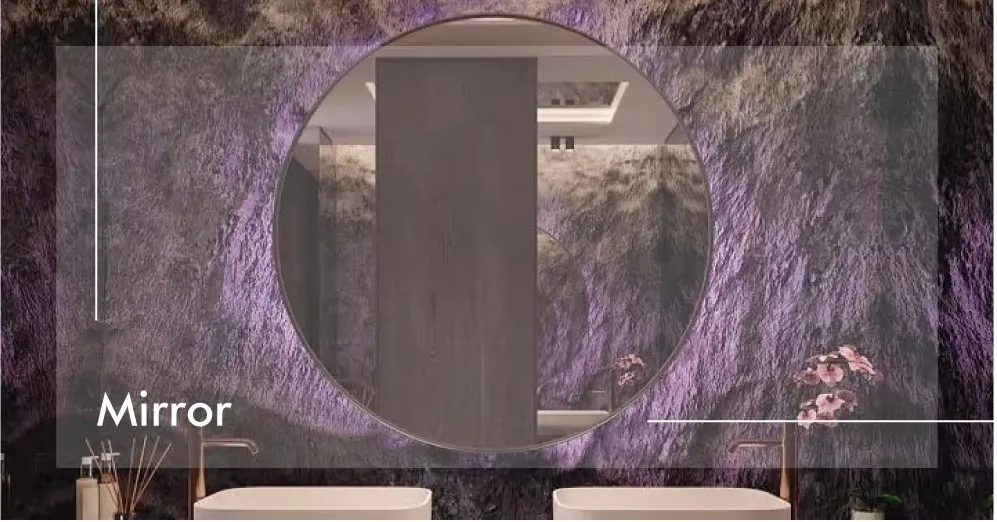
Look around you - how many mirrors do you see? Probably at least one within arm's reach right now. We interact with mirrors dozens of times daily without a second thought. But have you ever stopped to wonder about the journey that transforms raw materials into these everyday magical surfaces?
The mirror manufacturing process is a perfect blend of ancient craftsmanship and cutting-edge technology. It's a story stretching back millennia but constantly being rewritten with modern innovations. Let's pull back the curtain on how these reflective marvels are made and why your bathroom mirror isn't quite the same as one in a research lab.
Our obsession with reflections runs deep. Remember Narcissus, bewitched by his own reflection in water? Or those fairy tales where mirrors had magical powers? It wasn't all mythology - ancient people crafted some surprisingly sophisticated reflective surfaces.
The first real mirrors likely emerged around 6,000 BCE - simple slabs of polished obsidian stone reflecting blurred silhouettes. Then came the Egyptians with their copper-alloy mirrors around 3,000 BCE, followed by civilizations like the Mesopotamians creating rudimentary glass mirrors. But the real game-changer? That came in first-century Lebanon when artisans coated glass backs with metals like lead and gold.
The Renaissance kicked mirror-making into high gear. Mercury-based coating techniques became industrialized across Europe. But the toxicity caused major problems - mercury poisoning affected countless workers before German chemist Justus von Liebig created the silvering process in 1835. His method let manufacturers deposit thin silver layers reliably, paving the way for mass production.
Today, the mirror industry has exploded far beyond vanity applications. We rely on specialized mirrors in telescopes, lasers, microscopes, solar panels, security systems, and even self-driving cars. The core physics? Basically unchanged since Narcissus peered into water - just perfected through science.
Here's the big secret - glass itself is a terrible reflector! Plain glass bounces back just 4% of light hitting it. So why do mirrors work? It's all about what we put behind the glass.
Modern mirrors combine several vital components:
Glass Substrate: Not just any window pane. Mirror glass must have extreme uniformity with minimal imperfections. Manufacturers melt silica sand into sheets, selecting materials like borosilicate glass (Pyrex) for high-temperature applications.
Coating Choices: Here's where the magic happens. Aluminum dominates the market today for its cost-effectiveness and reflectivity. Silver coatings provide superior reflectivity across the visible spectrum - you'll find these in precision instruments. Gold coatings work wonders for infrared light reflection in specialized equipment.
Protective Layers: Ever notice how your mirror edges haven't corroded? Thank copper or specialized dielectric materials. These prevent moisture and oxygen from attacking the reflective layer. Final paint layers seal the deal literally and figuratively.
Remember those mercury-coated mirrors from history? Thankfully replaced! Today's coatings avoid toxic elements while providing better performance. But that doesn't mean mirror chemistry is simple - coating formulations represent decades of optimization.
It starts with huge glass sheets arriving at factories. Workers cut these into custom shapes using diamond-tipped tools. Ever notice how car mirrors curve? That shaping happens here through precision grinding against curved metal plates with special abrasives.
This is where glass becomes reflective. Coating occurs in specialized vacuum chambers called evaporators - essentially creating controlled metal rain on glass surfaces.
The most fascinating coating technique? Chemical vapor deposition. Manufacturers introduce gases like silicon oxides that react under heat to form incredibly durable protective layers atom by atom.
Modern facilities often incorporate automation to handle multiple coating layers simultaneously. This is especially important for specialized mirrors requiring specific optical properties.
Not all mirrors are created equal. Specialty versions serve unique purposes:
First Surface Mirrors: Scientific instruments flip the script - coatings go on the front surface to eliminate distortion from light passing through glass. You'll find these in telescopes and lasers.
Dielectric Mirrors: Ultra-precise optical equipment uses alternating transparent layers to create "tuned" reflections for specific wavelengths - crucial for laser technology.
Safety Mirrors: Tempered or laminated glass prevents dangerous shattering. You'll see these in gyms, parking garages, and children's areas.
And what about those creepy one-way mirrors? Simple physics trickery! Thin metal coatings become transparent when the viewer's side is dark. It's not magic, just light physics.
Of course, decorative mirrors have rules too. When incorporating **wall decorative profiles**, manufacturers must ensure compatibility between frame materials and mirror sealing techniques to prevent moisture intrusion at the edges.
Mirrors face strict quality control. Standard bathroom mirrors allow for imperfections invisible to the naked eye. Scientific mirrors? That's another story entirely.
Quality checks include:
Mirrors destined for space telescopes face NASA-level scrutiny. For the James Webb Space Telescope, engineers couldn't tolerate any distortion greater than 1/10,000th the width of a human hair!
The mirror world isn't standing still. Industry 4.0 technologies have transformed manufacturing:
Robotic Precision: Automated systems handle hazardous coating processes with zero human exposure. Collaborative robots work alongside humans for tasks like polishing intricate shapes.
Data-Driven Perfection: Sensors monitor every parameter - from coating thickness uniformity to temperature stability. AI algorithms predict equipment maintenance needs before failures occur.
Sustainable Progress: Closed-loop water systems conserve resources, while new formulations reduce harmful chemicals. Several plants now run entirely on solar power - ironically using mirrors to make mirrors!
Emerging trends? "Smart" mirrors incorporating LEDs and touch interfaces. Flexible plastic substrates instead of glass. Even innovations like anti-fog and anti-bacterial coatings. The next decade will transform mirrors from passive objects into interactive surfaces.
Modern manufacturers face increasing pressure to reduce environmental impact. Thankfully, sustainable solutions are emerging:
Looking forward, expect biodegradable protective films and plant-based sealing compounds to reduce the industry's footprint further.
The next time you glance at yourself, appreciate the incredible journey behind that reflection. From ancient obsidian stones to NASA's James Webb Space Telescope mirrors, humanity's quest for perfect reflections drives continual innovation.
Modern manufacturing blends physics, chemistry, and engineering to create everyday marvels we too often take for granted. As technology advances, mirrors will continue evolving - perhaps from simple reflective surfaces to intelligent interfaces that monitor our health or control our environments.
One thing remains certain: our fascination with reflections stretches back to Narcissus and will continue driving innovation for centuries to come. The mirror's story is far from complete - it's still being written in research labs and factories worldwide, one atomically perfect coating at a time.
Recommend Products












