
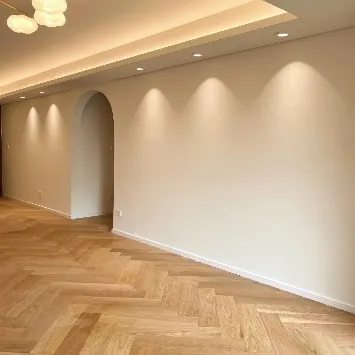
Ever wonder how those brilliant spotlights illuminating your favorite boutique or highlighting artwork in galleries come to life? The journey from raw materials to precision lighting involves fascinating engineering and quality control. This behind-the-scenes look at spotlight manufacturing reveals why quality varies so dramatically across brands and how technological advancements are reshaping this essential lighting category.
Spotlight manufacturing begins long before assembly lines start moving. Premium manufacturers carefully select:
| Component | Premium Choice | Budget Alternative | Impact |
|---|---|---|---|
| Housing | Aircraft-grade aluminum | Plastic composites | Heat dissipation & lifespan |
| Optics | Borosilicate glass lenses | Polycarbonate | Beam clarity & yellowing |
| LED Chips | Top-tier Nichia/Samsung | Generic diodes | Color consistency & efficiency |
| Heat Sinks | Extruded aluminum fins | Thin metal sheeting | Thermal management |
"Our temperature stress tests show aluminum housings outlast plastic by 300% in commercial settings," explains Feng Wei, production manager at a leading Guangdong facility producing architectural lighting solutions. "You might save 30% on material costs but lose 70% of fixture longevity."
Modern spotlight production blends automated precision with human oversight:
Surface-mount technology machines place microscopic LED components onto circuit boards with 0.01mm precision. This stage determines color consistency across batches – critical for commercial lighting installations requiring uniform illumination.
Technicians align reflectors and lenses using laser-guided rigs. The beam angle tolerance? Less than 2 degrees variance. This precision separates gallery-grade spotlights from hardware store specials.
Industrial thermal paste application requires exact pressure and temperature controls. Too little paste causes overheating; too much creates messy, inefficient interfaces.
Leading lighting manufacturers implement dual QC checks here, with both machine vision systems and human inspectors examining every tenth unit.
Each batch undergoes goniophotometer analysis verifying luminous intensity distribution matches design specifications within 5% tolerance.
Sample units endure 1,000-hour stress tests simulating five years of operation. Color shift beyond 3 SDCM (standard deviation color matching) units triggers production halt.
For outdoor-rated spotlights, pressurized water jets and dust chambers test ingress protection claims. Many budget brands exaggerate IP ratings – premium brands verify.
Fun fact: Premium LED spotlights contain more sophisticated thermal management than many smartphones! Their passive cooling systems can transfer heat 40% more efficiently than budget alternatives.
Innovations transforming production lines:
As solar adoption grows, manufacturers are creating low-voltage spotlights integrating seamlessly with green energy systems. "Our newest line draws just 3W while delivering 400 lumens," notes product developer Elena Rodriguez. "That's efficiency making renewable integration practical for architectural lighting solutions ."
Quality spotlight manufacturing combines materials science, precision engineering, and rigorous testing. From the selection of aerospace-grade aluminum to AI-optimized thermal pathways, these processes directly determine performance where it matters – in your spaces. The difference between premium LED lighting and bargain alternatives becomes strikingly clear after thousands of operational hours. Discerning buyers recognize that in lighting, manufacturing excellence makes all the difference.
| Feature | Budget Spotlights | Professional Grade |
|---|---|---|
| Average Lifespan | 15,000 hours | 50,000+ hours |
| Color Consistency (SDCM) | >7-step variance | <3-step variance |
| Lumen Maintenance @ 10K hr | 70-80% | ≥95% |
| Thermal Management | Passive only | Active+Passive systems |
| Beam Angle Accuracy | ±10 degrees | ±2 degrees |
Recommend Products












