
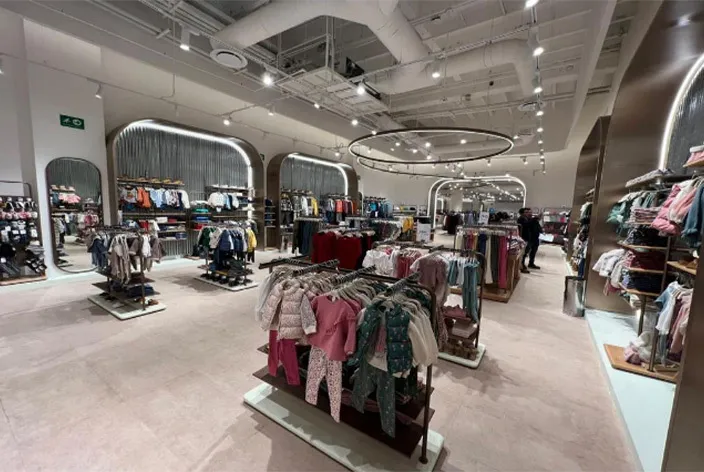
Walking through any retail space, you notice it immediately - how the lighting wraps around products like a spotlight on a stage, making colors pop and textures come alive. But have you ever wondered what goes into creating those commercial lighting fixtures that transform ordinary shops into inviting spaces?
The journey from raw materials to finished shop lighting involves more than just assembly lines. It's a carefully orchestrated dance between commercial lighting requirements, engineering precision, and material science. Whether it's a clothing boutique needing soft ambient glow or a supermarket requiring crisp white illumination, each fixture tells a story of meticulous craftsmanship.
It all starts deep in the supply chain where manufacturers source specialized ingredients. Aluminum extrusions form heat-dissipating skeletons, while polycarbonate diffusers get molded into light-spreading lenses. For premium commercial spaces, these become crucial architectural lighting solutions where form meets function.
Circuit boards are the brains of operation. Surface-mount technology places microscopic resistors and diodes before reflow ovens create permanent solder joints. Picture robotic arms moving with surgical precision:
| Component | Material Sources | Precision Specs |
|---|---|---|
| LED Chips | Specialty semiconductor plants | ±2nm wavelength tolerance |
| Heat Sinks | Recycled aircraft-grade aluminum | 0.1mm fin spacing |
| Optical Lenses | Optical-grade polycarbonate | 89-92% light transmission |
| Driver Circuits | Multilayer PCBs | Class 2 power supply standards |
This phase determines whether lights will flicker annoyingly after six months or deliver consistent illumination for a decade. Top-tier lighting manufacturer teams subject components to torture tests: thermal shock chambers cycling between -40°C to 85°C, humidity tanks simulating tropical conditions, and vibration tables recreating shipping stresses.
Raw components meet along conveyor systems where skilled technicians and automation collaborate. LED modules get precisely positioned onto heat sinks using thermally conductive adhesives - too little paste causes overheating, too much creates messy spills. Robotic dispensers apply exact 0.3mm beads like pastry chefs piping frosting.
Optical engineers then work their magic. They calculate beam angles like photographers composing shots:
Diffusers undergo injection molding at temperatures precise to ±3°C to avoid optical distortions. Workers with magnifying loupes inspect every panel for microscopic bubbles or flow marks that could create shadows. This stage separates bargain-bin fixtures from professional-grade commercial lighting systems.
Before approval, lights face simulated lifetimes. In accelerated aging rooms, fixtures burn continuously for 5,000 hours while computers monitor lumen depreciation. Engineers measure color consistency using spectroradiometers - crucial when matching multiple fixtures along a boutique wall. Any fixture drifting beyond 3 SDCM (standard deviation color matching) gets rejected.
Electromagnetic compatibility tests reveal whether lights will interfere with WiFi signals or create audible buzz - the silent killers of retail ambiance. Top manufacturers employ anechoic chambers to detect even faint electrical hums inaudible to human ears.
Remember the buzzing fluorescent tubes of old department stores? Today's LED innovations mean retailers gain unprecedented control. Tunable white technology lets coffee shops shift from energizing 5000K morning light to warm 2700K evening glow with smartphone apps. We've entered the era where architectural lighting solutions become brand storytelling tools.
Modern LED lights achieve efficiencies that seemed impossible a decade ago - converting up to 200 lumens per watt of electricity. That's like illuminating an entire shoe store with the power consumption of a single old-school bulb. This efficiency revolution directly impacts retail operating costs:
| Lighting Tech | Energy Use (1000 sq.ft) | Lifespan | Color Quality |
|---|---|---|---|
| Incandescent (Historic) | 10,000W | 1,200h | Poor consistency |
| Fluorescent (2000s) | 3,000W | 15,000h | Harsh & uneven |
| Modern LED | 1,200W | 50,000h | Premium color rendering |
The best lighting manufacturer innovators now embed IoT sensors into fixtures, enabling features like occupancy-based dimming and daylight harvesting. Picture smart lights gradually brightening fitting rooms when customers enter, then dimming to standby when empty - all while collecting anonymized traffic pattern data.
Packaging marries protection with presentation. Foam-cradled fixtures travel in triple-wall boxes bearing crush test certifications. Retailers require "open-the-box ready" solutions with all mounting hardware clearly labeled and included. Forget frustrating experiences with missing screws - leading brands provide installation kits with extras because they understand lighting technicians work on ladders with tools hanging from belts.
Final validation happens in real-world mockups. Showrooms recreate retail environments where lighting designers evaluate:
Only fixtures passing these real-world examinations earn certification as professional-grade solutions. It's this attention to invisible details that separates quality LED lights from commodity products.
For retailers, lighting decisions cascade beyond electricity bills. Studies show properly illuminated merchandise sells faster - jewelry under 90+ CRI LEDs appears more brilliant, produce under specialized spectrums looks fresher. Premium architectural lighting solutions become silent sales associates working 24/7.
But there's a sustainability narrative too. Responsible manufacturers implement closed-loop systems:
Some innovative factories now achieve 98% material reuse rates by partnering with specialized recyclers who extract gold from circuit boards and purify polymers for automotive applications. This circular approach transforms what was once waste into valuable feedstock.
Next time you stroll through a beautifully lit boutique, pause to appreciate the silent symphony overhead. Those commercial lighting fixtures represent countless hours of engineering refinement, precision manufacturing, and quality validation. From miner extracting bauxite to engineer tuning spectral output, the journey transforms raw earth into luminous art. In stores where presentation is everything, quality lighting remains the unsung hero of retail theater - proving that sometimes, it really is all about the lighting.
Behind every glowing product display lies a fascinating convergence of materials science, electrical engineering, and design philosophy. The best fixtures don't just illuminate spaces—they elevate them, proving that in retail, light isn't merely functional; it's foundational.
Recommend Products












