
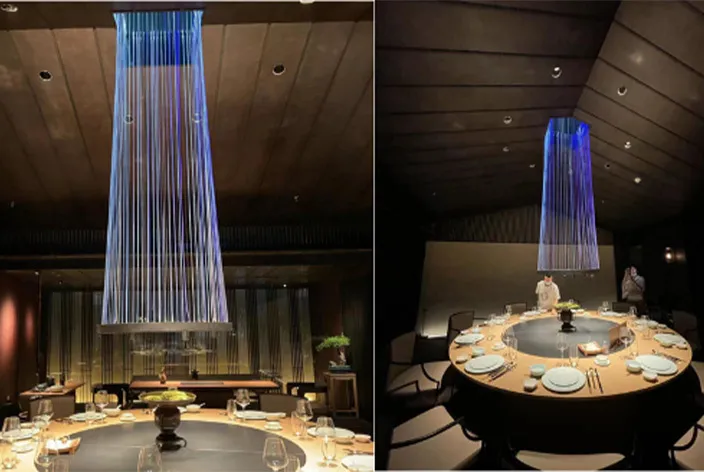
Behind every perfect dining atmosphere is a carefully crafted lighting solution – let's pull back the curtain.
Ever walked into a restaurant and immediately felt cozy, energized, or impressed? That's no accident. The lighting fixtures hanging above your table went through an incredibly intricate journey before they ever cast light on your pasta. Forget the boring technical manuals – I'll walk you through what actually happens on the factory floor when creating commercial-grade restaurant lighting.
Fun fact: High-end restaurant luminaires undergo more quality tests than your smartphone. We're talking heat resistance, durability shocks, and light consistency checks that would make most products blush.
You're not just buying bulbs and wires. You're investing in customer experience. Bad lighting can kill a restaurant's vibe faster than a health inspection. The right commercial-grade LED lights last 3x longer than cheap alternatives while slashing your energy bills. But to get that quality, you've got to understand what separates factory-floor magic from assembly-line disappointment.
It starts with light mapping – designers literally simulate how light will fall on tables using 3D modeling. Ever notice how some spots feel brighter than others? Top manufacturers solve this by creating specialized optics that distribute light evenly without blinding customers.
This is where corners get cut on cheap fixtures. Premium brands use aircraft-grade aluminum for heat dissipation. Why? Because restaurants need architectural lighting solutions that survive 12-hour daily operation without flickering or discoloring. Kitchen-adjacent fixtures get stainless steel coatings to withstand grease and steam attacks.
The "brain" of modern lighting isn't a bulb – it's the driver circuit. Top-tier factories in Shenzhen (where 70% of commercial lighting originates) use automated optical inspection to spot microscopic soldering flaws. One bad connection means flickering lights during dinner service.
Everyone brags about their "high-quality" LED chips, but the real game-changer is thermal management. Restaurant lights bake for hours in enclosed spaces. I've seen factories test heat dissipation by running fixtures in 120°F chambers for 72 hours straight. That's how you prevent the dreaded "fryer hood meltdown".
| Component | Budget Fixture | Professional Grade |
|---|---|---|
| LED Chips | Generic brands prone to color shifting | Branded chips (Cree, Lumileds) with 10-year color stability |
| Housing Material | Thin stamped steel | Extruded aluminum with thermal breaks |
| Electrical Safety | Basic insulation | Double insulation + IP65 waterproof rating (survives kitchen spray-downs) |
| Dimming Capability | Basic on/off switching | 0-10V or DALI controls for mood lighting scenes |
Forget "tested for quality" labels. Serious China lighting manufacturer facilities have entire departments doing nothing but torture-testing samples:
This explains why pro-grade fixtures cost more upfront but last decades. I've seen designer pendants outlive three restaurant remodels!
That amazing pendant over the chef's table? Probably started as a sketch on a napkin. Leading factories offer surprising customization:
Here's what designers forget to mention: A stunning 40" custom chandelier won't fit through standard doors. Smart manufacturers ship fixtures in puzzle-piece kits with idiot-proof assembly instructions. Even better? They provide certified installers who've mounted hundreds of identical units without dropping a single one.
Pro tip: Always request installation templates during ordering. These paper guides show exactly where ceiling mounts must go – preventing costly "oops we drilled in the wrong spot" moments during renovations.
When COVID hit, restaurants learned tough lessons about single-source suppliers. Modern manufacturers spread production across multiple specialized facilities:
This multi-country approach prevents total shutdowns when one region faces challenges.
Next-gen restaurant lighting isn't just about illumination. It's becoming invisible tech:
The secret? It all comes down to manufacturing precision. Those barely noticeable details – seamless welds, perfect diffuser alignments, whisper-quiet cooling systems – create the magical dining environments customers photograph. Next time you admire a restaurant's ambiance, remember: that glow started with engineers solving problems you'll never see.
Recommend Products












