


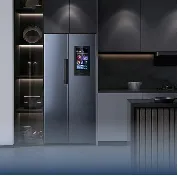
Picture walking into your kitchen on a hot summer day, grabbing an ice-cold drink that's refreshingly chilled. Ever wonder how that miracle machine in your kitchen actually works? The journey from raw materials to your modern fridge is way more fascinating than you might think. Let's peel back the curtain and explore the ingenious engineering, materials, and processes that bring refrigerators to life.
Cold Chemistry: How Refrigerators Actually Work
It’s easy to take refrigeration for granted, but the science behind it is seriously cool stuff (pun intended). Here’s the basic idea:
Refrigerators work by continuously moving heat from inside the cabinet to the outside environment using a chemical refrigerant. This happens through a cycle of compression, condensation, expansion, and evaporation. When the refrigerant evaporates inside your fridge, it absorbs heat like a sponge, chilling the interior. Then it travels outside where it releases that heat into your kitchen air.
The key components making this possible:
- The Compressor - This is essentially the heart of your fridge. It squeezes the refrigerant gas, heating it up to around 120°F while increasing pressure.
- Condenser Coils - Usually at the back or bottom, these coiled tubes let the hot gas release its heat into your kitchen air, turning back into liquid
- Expansion Valve - This precision component regulates how much liquid refrigerant enters the evaporator
- Evaporator Coils - Hidden inside your freezer compartment, this is where the magic happens. Liquid refrigerant evaporates here, absorbing heat to create that icy environment
Building Blocks: What Goes Into Your Fridge
Your refrigerator is essentially a carefully crafted sandwich of different materials, each serving critical functions:
Outer Shell - Typically made of pre-painted steel or aluminum sheets, durable enough to handle bumps in your kitchen but also looking good.
Inner Liners - Food-safe plastic vacuum-formed into intricate shapes that create shelves, drawers, and compartments. Some higher-end models use stainless steel.
Insulation Sandwich - The space between outer and inner layers is pumped full of expanding polyurethane foam that traps air in microscopic bubbles. This foam barrier is why your fridge doesn't sweat electricity bills.
Refrigerant - Modern fridges use eco-friendly gases like R600a instead of ozone-killing CFCs. This chemical is the lifeblood of the cooling system.
Hardware - From door hinges that survive thousands of openings to the magnetic door seals keeping cold air in, every piece gets engineered for longevity.
Birth of a Refrigerator: The Step-by-Step Journey
Step 1: Crafting the Cabinet
- Large sheet metal coils are fed into stamping machines that cut panels to exact dimensions
- Panels for doors and cabinets are folded and welded together using robotic arms
- All visible seams get sanded smooth for that seamless appearance
- Powder-coating booths apply multiple layers of durable paint that resists fingerprints
Step 2: Creating Interior Spaces
- Plastic pellets get heated and vacuum-formed over molds to create custom liners
- Robotic arms apply food-grade silicone seals where components meet
- The inner liner gets carefully snapped into the outer cabinet
- Special nozzles pump liquid foam into the cavity between layers
- The foam expands to fill every crevice and cures in minutes
Step 3: Building the Cold Heart
- Copper tubing gets precisely bent into condenser and evaporator coil patterns
- The compressor gets mounted on vibration-dampening rubber feet
- Technicians solder all connections in an oxygen-free environment
- The sealed system undergoes nitrogen pressure testing
- Once verified leak-free, refrigerant gets charged into the system
Step 4: Quality Check Marathon
- Each unit runs for 24+ hours while sensors monitor temperature consistency
- Door gaskets get tested with dollar bills - if you can pull it out easily, it fails
- Insulation density gets scanned with infrared cameras
- An "electronic nose" sniffs for refrigerant leaks
- Shelves get loaded with weights to test durability
Green Machines: Sustainability Revolution
The industry has made huge strides since ozone-damaging CFCs plagued older models:
"We've completely reengineered insulation and refrigerants," says Sarah Chen, a thermal engineer at LG. "Modern polyurethane foams have 97% less global warming potential. We even recover and reuse leftover foam from the manufacturing process."
Energy efficiency has also skyrocketed:
- Variable-speed compressors adjust cooling intensity like a car cruise control
- Door alarms alert you if things get left open
- Vacuum-insulated panels like those in thermoses are making their way into walls
- New models use about 75% less energy than those from the 70s
Tomorrow's Icebox: What's Coming Next?
Look for these innovations coming to kitchens soon:
Smart Integration - Imagine cameras inside your fridge sending images to your phone so you can check milk levels while shopping. One-stop architectural solution providers are already integrating this with smart home systems.
Vacuum Insulation - Thin panels similar to thermos bottles could replace foam, providing superior insulation in less space. This means more storage capacity without increasing exterior dimensions.
Solid-State Cooling - NASA-inspired technology using electric currents through special materials could eliminate compressors entirely. These systems would operate silently and with fewer moving parts.
AI Food Management - Your fridge will soon suggest recipes based on expiration dates, auto-adjust temperatures for peak freshness, and even order groceries for you.
From Factory to Kitchen
After passing all tests, each refrigerator gets:
- Protective corner padding applied to all edges
- Stretch-wrapped for humidity protection
- Custom foam inserts blocking doors during transit
- Loaded vertically onto climate-controlled trucks
The entire journey from raw materials to your kitchen typically takes 3-5 weeks, with most factories producing 15-20 units per hour. Considering the average American household has 1.2 refrigerators, that's a lot of cold boxes!
From primitive ice boxes to smart food hubs, refrigerator technology represents centuries of human ingenuity packed into your kitchen. Next time you grab that midnight snack, take a second to appreciate the incredible engineering keeping it fresh!










