
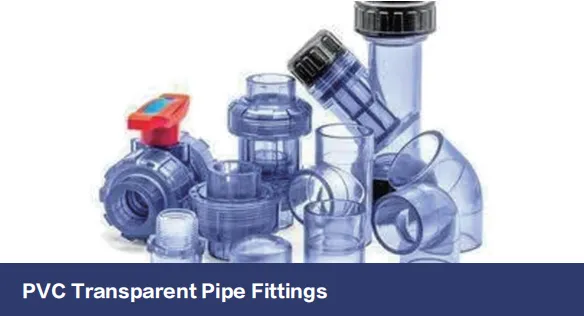
Hey there! If you've ever looked at those crystal-clear PVC pipes and wondered how they're made, you're not alone. These transparent marvels are everywhere – from industrial plants and chemical labs to your home aquarium setups. But what really goes into creating something that combines see-through clarity with industrial toughness?
Let's cut through the technical jargon and dive into the fascinating world of PVC transparent pipe manufacturing. It's not just about melting plastic and squeezing it through molds; it's an art form where chemistry meets precision engineering. By the end of this deep dive, you'll understand why these pipes are more than meets the eye!
Creating transparent PVC is like baking a perfect cake – it's all about the recipe. While regular PVC pipes can get away with being opaque, see-through pipes demand a carefully calibrated cocktail of components:
The Transparency Trio: At the heart is PVC resin (typically suspension-grade), plasticizers that act as clarity agents, and stabilizers that prevent cloudiness. These three work in concert to maintain optical properties while the material is processed at high heat.
Expert Insight: Many first-time manufacturers think transparency comes from the resin alone. In reality, even premium resin will turn milky without the right plasticizer-stabilizer combo. It's the synergistic effect that makes optical clarity possible.
But the magic formula doesn't stop there. For industrial-grade pipes that handle chemicals or extreme temperatures, additives like lubricants for smooth extrusion flow and special impact modifiers for durability enter the mix. The real art? Adjusting these proportions precisely for different applications – what works for aquarium plumbing would fail miserably in chemical plants.
Imagine baking with microscopic precision. Operators carefully weigh resin, plasticizer, stabilizer, and lubricant components before feeding them into high-speed mixers. The order matters – typically PVC resin enters first, followed by liquid plasticizers that coat each grain, then stabilizers, and finally lubricants. The mixer runs until it hits the sweet spot of 100-110°C, creating a homogeneous blend ready for transformation.
This premixed material now travels to an extruder equipped with specialized pelletizing dies. Temperature control becomes critical here (155-160°C), creating what insiders call a "melt curtain" – that perfect state where the polymer flows like honey before being cut into consistent granules. This step ensures the material plasticizes uniformly, eliminating opaque spots.
Here's where the magic happens! The granules enter another extruder with temperature zones carefully calibrated for optical properties. The extruder barrel gradually heats the material until it forms a continuous melt flowing toward a precisely engineered die. The secret? Slightly higher temperatures (around 5°C more than standard PVC) enhance molecular alignment for better clarity.
Pro Tip: Operators must walk a tightrope with temperature – too low causes surface imperfections, too high risks material degradation causing yellowing. Seasoned technicians monitor melt flow like chefs watching a sauce.
Just-born pipes exit the die into calibration sleeves where they're instantly cooled. This step features two techniques working together:
For larger diameters, compressed air is introduced internally. This maintains cross-section integrity while preventing collapse during cooling – vital for pipes that need to fit perfectly with transparent PVC pipe connectors in complex systems.
The nearly-finished pipes pass through haul-off equipment and cutters that trim them to specified lengths. Final quality checks include:
PVC's flexibility extends beyond its physical properties to application diversity. While transparency defines these pipes, formulation differences create specialized categories:
Optimized for corrosion resistance with enhanced stabilizer packages for acidic/alkaline fluids. Common in labs and pharmaceutical plants where fluid monitoring is critical.
Special UV inhibitors prevent yellowing for outdoor applications like aquaculture systems and greenhouse irrigation where sunlight exposure is unavoidable.
Blended with acrylic modifiers for applications needing visibility AND impact resistance, like protective machine guards or safety viewing ports.
Higher plasticizer content creates bendable tubes for medical devices, brewing setups, or any application requiring visual flow monitoring around curves.
What makes these pipes indispensable beyond their good looks? Let's look at some everyday heroes:
"In the aquarium industry alone, transparent PVC revolutionizes setup safety. I've seen countless hobbyists spot developing algae blooms or equipment issues before they become disasters – all thanks to seeing through pipes!" – Marine Systems Designer with 15 years experience
From industrial food processing plants needing visual confirmation of product flow, to pharmaceutical facilities monitoring sterile transfers, and chemical labs observing reaction processes – transparent PVC solves visibility challenges regular pipes simply can't address. Even breweries leverage them to monitor clarity during transfer processes between tanks.
Cool Fact: Some theme park ride engineers use transparent PVC in maintenance corridors. Why? To quickly spot leaking fittings or flow issues in complex water systems without invasive inspection!
Creating perfect transparent pipes isn't without challenges. Here's how manufacturers overcome common issues:
PVC's abrasive nature demands twin-screw extruders with specialized hardened barrels. Progressive cavity pumps maintain material flow consistency that single-screw systems can't deliver.
Stabilizer packages are adjusted seasonally – winter formulas differ from summer blends to account for ambient temperature effects on processing conditions.
Computer-controlled calibration sleeves with real-time laser measurement adjust vacuum pressure dynamically to maintain ±0.1mm tolerance during cooling.
Manufacturers live by these non-negotiables:
The journey continues after production. Proper handling ensures transparency survives installation:
Installation Pro Tip: When solvent-welding joints, apply cement quickly and uniformly. Any pooling or uneven application causes localized stress that creates cloudy spots as pipes age!
For designers and installers working with these pipes:
The exciting frontier? Integrating smart sensors into pipe walls without compromising clarity for applications like real-time fluid analysis. Early prototypes show promise for pharmaceutical and food industries where contamination detection is paramount.
Whether you're specifying pipes for a manufacturing plant, designing lab equipment, or just renovating your basement brewery, understanding PVC transparency changes how you implement it:
"We've reduced diagnostic time by 40% in our chemical facility since switching to transparent lines. Engineers spot flow issues immediately rather than waiting for instrument readings." – Processing Plant Maintenance Lead
Beyond industrial applications, homeowners benefit too:
Final Wisdom: When comparing products, don't just check the price tag. Demand mill certifications showing optical clarity measurements (light transmission percentages) and pressure ratings. True industrial-grade transparent PVC should maintain at least 92% light transmission!
The next time you see those crystal-clear pipes, you'll appreciate the science and craftsmanship flowing through them. From the carefully weighed ingredients to the temperature-controlled extrusion dance, creating transparency is anything but simple. Yet this hidden complexity delivers beautiful practicality across countless industries and hobbies.
Armed with this knowledge, you're equipped to specify, install, or simply appreciate transparent PVC piping systems with new eyes – seeing not just through the pipes, but into the fascinating process behind them!
Recommend Products












