
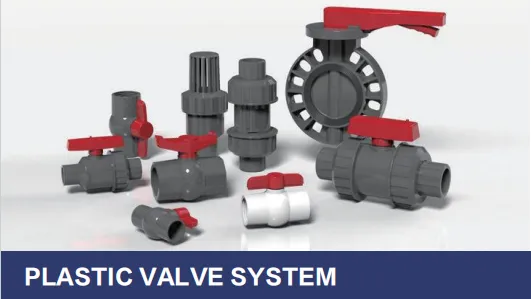
Ever wonder how that humble plastic valve controlling water flow in your home appliance or industrial equipment came to be? The world of plastic valve manufacturing is surprisingly fascinating - it's where cutting-edge engineering meets meticulous craftsmanship. These unassuming components, often hidden from sight, play pivotal roles across industries from medical devices to water treatment plants. Let's pull back the curtain on how they transform raw polymers into precision-engineered flow control solutions that outperform metal alternatives in corrosion resistance and cost efficiency.
Unlike traditional metal valves, plastic valves bring game-changing advantages to the table. For starters, they're practically immune to corrosion from chemicals and salts - a major pain point in industries like chemical processing and water treatment. Their lightweight nature translates to easier installation and reduced shipping costs, while offering excellent resistance to abrasive fluids that would destroy metal components.
Here's something surprising: high-performance plastics like PPSU and PEEK withstand temperatures up to 150°C (302°F) while maintaining structural integrity. That's why you'll find them in demanding applications like steam sterilization systems and hot chemical transfer lines.
The flexibility in design is another huge win. Injection molding allows for complex geometries that would be prohibitively expensive or impossible with metal. From miniature precision valves for medical devices to large-diameter valves for municipal water systems, plastic offers customization freedom that engineers love.
Not all plastics are created equal when it comes to valve manufacturing. Material selection determines whether a valve lasts three weeks or thirty years. PVC might be your go-to for basic residential plumbing, but move into pharmaceutical applications? You'll want chemically inert PTFE. Food processing? FDA-compliant polypropylene takes the crown.
Ever hear valves described as "plastic" when they contain fiberglass? Many industrial-grade plastic valves get their strength from reinforcements. Adding 30% glass fiber to polymers like PPA bumps pressure ratings significantly while maintaining corrosion resistance. For critical applications, carbon fiber-reinforced polymers provide aerospace-level strength-to-weight ratios.
This isn't just about technical specs. Real-world applications demand certifications like FDA, USP Class VI (for medical devices), and NSF/ANSI 61 (potable water). Reputable manufacturers maintain material traceability - if your valve handles drinking water, you should be able to trace its polymer back to its production batch.
This is where digital designs become physical realities. Using CAD software, engineers create complex multi-cavity molds costing anywhere from $20,000 to $500,000. Coolant channels get precisely routed through mold blocks for temperature control, while ejector pin placements are calculated to prevent deformation. For critical components, aluminum molds with nickel-plated cavities ensure ultra-smooth finishes and micron-level precision.
Those plastic pellets don't go straight into the molding machine! Hygroscopic polymers like nylon must be dried for 4-6 hours at 80-100°C to prevent steam explosions (known as splay) that cause surface defects. Reinforced materials undergo specialized screw designs that maintain fiber length for optimal strength properties.
Temperature, pressure, and timing must perform in perfect harmony. Barrel zones are precisely controlled - for example, a PTFE valve body requires 370-400°C melt temperature. Injection pressure might hit 20,000 psi to fill thin-walled sections, then drop to 8,000 psi for packing. Cooling time calculations determine when parts solidify enough for ejection without warping.
Here's the uncomfortable truth: quality variations in plastic valves can mean the difference between zero-maintenance operation and catastrophic failure. That's why rigorous quality systems are non-negotiable.
During a factory tour, I watched valve bodies undergo helium leak testing capable of detecting leaks down to 10 -6 mbar·L/s - that's like finding a single grain of sand on a football field. Functional testing often includes cyclic endurance runs where valves cycle continuously for weeks to simulate decades of use.
Beyond standard quality checks, validation testing mimics real-world worst-case scenarios. I've seen valves frozen to -40°C then pressurized to 150% of rating, while others cycled from boiling to freezing temperatures. Material validation includes chemical resistance testing where samples soak in aggressive chemicals for 30-90 days while monitoring structural changes.
Beyond obvious applications, plastic valves unlock possibilities in unique situations. In semiconductor manufacturing, ultrapure PFA valves prevent metallic contamination in high-purity chemical systems. For aquaculture systems, valves withstand constant saltwater exposure that would rust stainless steel within months. Even natural gas applications now employ specialty plastic valves certified for combustible gases.
Plastic valves are transforming urban water supply and drainage systems - a keyword from our analysis. Cities are replacing aging metal infrastructure with plastic valves that resist mineral buildup and last decades longer than bronze alternatives.
Future trends point toward smart valves that integrate sensing technology right into the polymer structure during molding. Imagine a valve that monitors flow volume, detects contamination, and wirelessly reports performance - all while costing less than traditional metal valves with add-on sensors.
Success isn't just about manufacturing - it starts with intelligent design. Thermal expansion differs dramatically between metals and plastics, meaning gasket materials must compensate for different movement rates. Plastic part thickness needs careful consideration to avoid sink marks while minimizing cycle time.
What happens if pressure spikes to dangerous levels? Smart plastic valves incorporate molded-in weak points designed to rupture safely before critical components fail. Others feature positive shut-off mechanisms that automatically engage when operators unexpectedly lose control.
Recommend Products












