
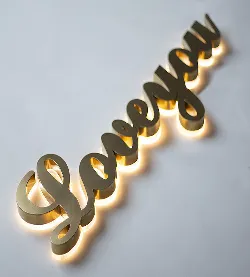
Ever wonder how those stunning storefront signs or museum displays with glowing letters come to life? Creating light letters – those illuminated characters that make brands pop – is actually a fascinating blend of art and engineering. Forget boring assembly lines; this craft mixes old-school precision with modern tech in ways that might surprise you. Whether it's a boutique hotel sign or a corporate logo, the journey from raw materials to radiant signage involves way more than just screwing in bulbs. Let me walk you through the behind-the-scenes magic.
| Component | Material Options | Why It Matters |
|---|---|---|
| Letter Faces | Acrylic, Polycarbonate | Diffuses light evenly without yellowing |
| Structural Frame | Aluminum extrusion, Stainless steel | Provides weather-resistant skeleton |
| Light Source | LED modules, Neon tubes | 90% of modern signs now use LEDs |
| Mounting System | Adjustable brackets, Raceway channels | Must adapt to any wall surface |
| Sealing | Silicone gaskets, Thermal adhesives | Critical for outdoor durability |
It starts on computers - designers use 3D modeling software to craft every curve of your favorite coffee shop's logo. This isn't just about aesthetics; they're calculating light refraction angles, heat dispersion, and even wind load resistance. Many manufacturers create mini prototypes using laser-cut acrylic pieces to test how light will travel through different font thicknesses. You'd be amazed how much engineering hides in that swoopy script!
Not all plastics are created equal. For outdoor signs, we use UV-stabilized polycarbonate that won't turn yellow after two summers. The backings? Often powder-coated aluminum that laughs at salty coastal air. And when architects want upscale touches, we integrate architectural decorative stone bases that turn signs into art installations. The material combo directly affects longevity – cheap signs fail because corners get cut here.
Industrial routers cut acrylic faces to 0.1mm tolerances – that's thinner than your phone screen protector! For metallic letters, fiber lasers slice through stainless steel like butter, creating crisp edges that won't rust. In China lighting manufacturer hubs, I've seen factories where CNC machines run 24/7, their vacuum beds holding sheets steady while diamond-tipped bits trace font outlines. This step's noise is unforgettable – imagine a dentist drill amplified tenfold!
Here's where science meets sparkle. Technicians hand-place LEDs along channels exactly spaced for uniform glow – no hot spots allowed! They're not just bulb-pluggers; they're calculating voltage drop across long letters and programming color temperatures. One manufacturer showed me their "light room" where letters get tested in pitch darkness, with light meters checking every nook for brightness consistency. Failed units? They get stripped down faster than a suspect alibi.
This step separates pro signs from DIY disasters. Silicone seals get applied with surgeon-like precision around every joint. Workers pressure-test seals by submerging letters in water tanks while powered on – seeing bubbles means instant rejection. For ceiling panels installations, they add extra moisture barriers since heat rises into signs. Miss one millimeter of sealant? That's a warranty claim waiting to happen after the first thunderstorm.
Final inspection resembles a NASA pre-launch checklist. Letters undergo thermal cycling (-20°C to 50°C), vibration tests simulating truck transport, and UV chambers accelerating years of sun damage. I watched one technician scrutinize a "B" for 15 minutes with a magnifying loupe – turns out a micro-scratch was diffusing light unevenly. Rejected. High-end manufacturers even measure lux levels at 50 points per letter!
Custom foam cradles get CNC-cut to hug each letter's contours during shipping – no bubble wrap here! For aluminum doors and windows integrations, mounting kits include specialized anchors that won't compromise weather seals. The attention to detail extends to installation manuals with augmented reality apps showing exact drill points. One company even includes sample wall materials for installers to practice on!
Next time you see light letters, gently touch the surface after they've been on awhile. If it's hot enough to fry eggs, they skimped on thermal management. Quality signs feel barely warm – that's engineering you can trust!
• Hand-bent neon tubes requiring glassblowing skills
• Wooden letter frames prone to warping
• Incandescent bulbs needing constant replacement
• Weatherproofing with tar-like sealants
• No brightness consistency between letters
• Computer-modeled light chambers
• Modular LED panels swappable like Lego
• Aerospace-grade silicone seals
• Integrated cooling fins in aluminum extrusions
• Pixel-mapping controllers for animated effects
• Recyclable composite materials
While light letters get installed worldwide, the manufacturing hub determines quality. Regions with strong architectural lighting traditions – particularly parts of China – have optimized supply chains that slash costs without compromising. Example: proximity to silicone factories means better seals at lower prices. But beware factories cutting corners – reputable Chinese lighting manufacturers undergo third-party audits for material traceability. Always ask for IEC certification reports!
Mounting seems straightforward until you're on site. Hidden steel beams behind drywall? Standard anchors fail. Integrating letters into curtain walls or ceiling panels? Thermal expansion gaps become critical. Smart manufacturers now include laser alignment tools in installation kits and provide access doors for maintenance. Pro tip: Always mount letters slightly loose in summer – materials expand when warm!
After seeing hundreds of letters born in factories, I appreciate them as tiny feats of engineering. That glowing "C" in a café sign? It's a precisely sealed environment controlling photons, surviving temperature extremes, and resisting moisture intrusion – all while looking effortlessly elegant. The best manufacturers treat each letter like a micro-building, applying principles from both curtain walls and energy-efficient lighting. Next time you admire a sleek sign, remember: its brilliance started with CNC routers, light meters, and silicone guns – proving beauty truly does meet brains in manufacturing.
Recommend Products












