
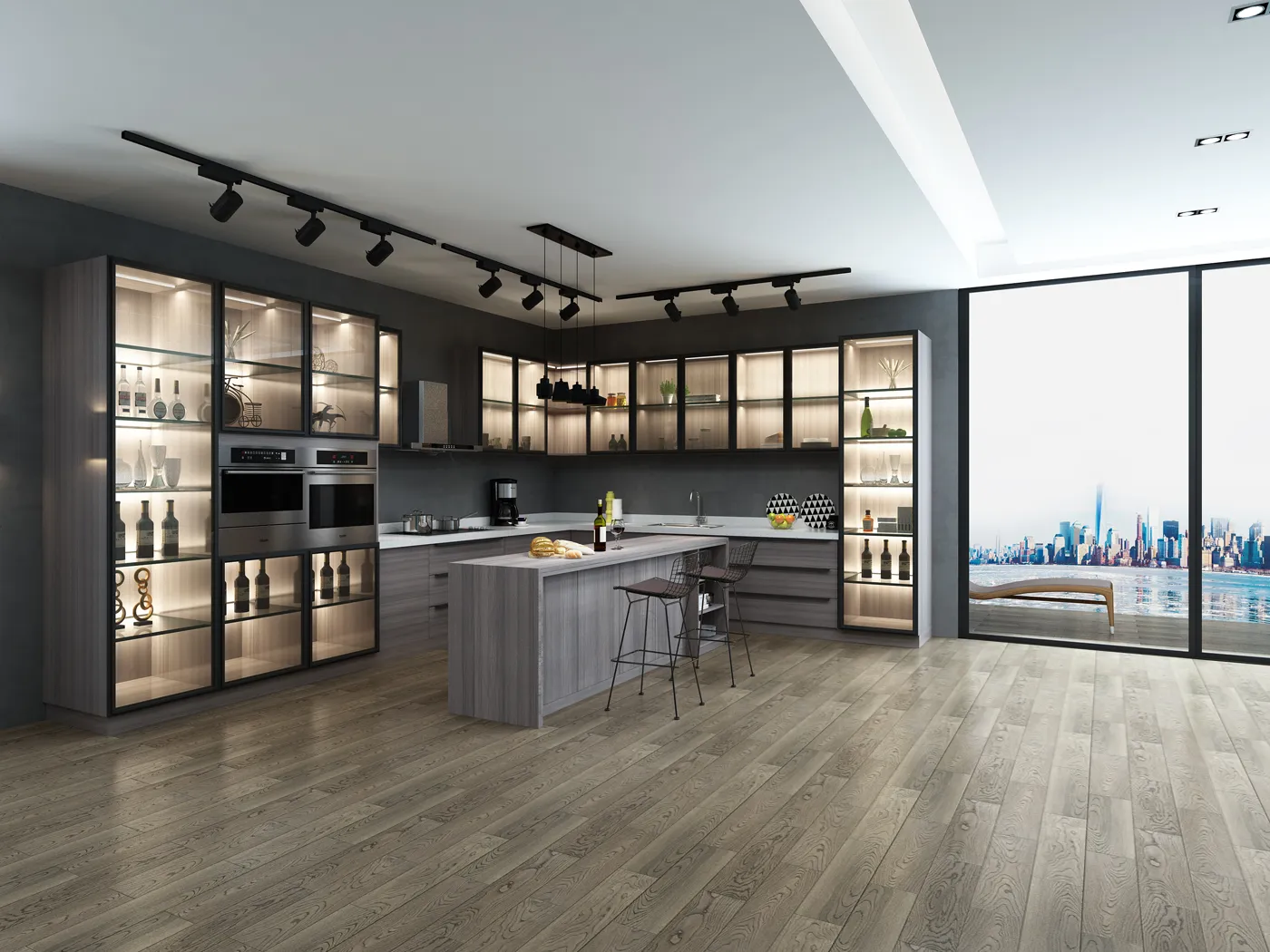
Picture this—you're standing in your kitchen, admiring those sleek cabinets. But have you ever wondered what's really holding them together? At their core, cabinets aren't just boxes with doors; they're carefully engineered pieces of furniture designed for both beauty and daily abuse. Whether you've got frameless modern units or classic face-framed designs, they all share these key components:
Think of these as the skeleton—the foundation everything else hangs on. You've got two sides, a top, a bottom, a back panel, and often a center divider. Face-framed boxes add old-school charm with their visible frames, but they need extra screws and careful pocket-hole drilling. Frameless designs? They're your go-to for a clean, contemporary look since they skip the face frame entirely.
This is where style meets function. Five-panel Shaker-style doors give that timeless vibe you can tweak endlessly. Flat-panel doors? They're all about modern minimalism—often made from durable materials like MDF or plywood. The choice boils down to whether you prefer curves or crisp lines.
How your doors sit affects the whole look. Inset mounts make doors sit flush with the frame, while overlay styles drape over it—full overlay hides everything, partial lets some frame peek through when open. Your kitchen's vibe picks its favorite.
Edges vary based on whether joints show or stay hidden. Mitered corners give a sleek finish if things are visible. And hinges? European-style hinges are ninjas—they tuck inside, are adjustable, and come in finishes that blend in. Handles and knobs? That's jewelry for your cabinets, pulling the whole look together.
Okay, so how does a pile of wood become the centerpiece of your kitchen? It’s not magic—it’s a blend of craftsmanship and precision engineering. Here’s how it rolls on the factory floor:
What’s cooking starts here. Solid wood like oak or maple screams luxury and durability but costs a pretty penny. More budget-friendly? Look at plywood, MDF, or particle board. These engineered materials may not have oak’s romance, but they hold up great and cost less. When you’re picking, ask about what you’re buying—knowing the material affects price and longevity. Plus, if you're going for custom kitchen cabinets , this stage is where your vision starts coming to life.
Once a design gets the green light, engineers create a "cutting list"—a detailed blueprint of every board needed. Then out come the electric saws (or even computer-guided ones for top manufacturers). Accuracy isn't just nice—it’s crucial. One wonky cut could mean a cabinet door that won't close properly.
Grooves are carved into panels for drawer bottoms, frames, and structural joinery. Think of these as the secret tunnels where parts slot together later. Precision tools ensure every groove aligns perfectly—critical for a rock-solid end product.
Raw board edges look messy and invite moisture damage. Enter edge banding—thin strips of PVC, wood, or melamine glued to exposed edges. It not only makes things look seamless but also guards the core material. Thicker banding (like 3mm) is common in heavy-use spots.
Now it’s time to connect the dots—literally. Holes are drilled for screws, handles, rails, and accessories. Mess this up, and you’ll have drawers jamming or hinges misaligned. Experienced workers handle this part because one wrong hole can ruin a piece.
This stage is an art. Cabinets get sanded smooth, stained, painted, or lacquered. Finishes aren’t just about color—they protect against spills, scratches, and grease. Top coat resins or sealed lacquers add hardcore durability. How well it's done? That separates cheap cabinets from gems that age gracefully.
Every part gets eyeballed—not just boards and joints but every hinge, latch, and screw. Defects mean do-overs before packing. Why? Because sending a flawed cabinet leads to returns, angry customers, and costly shipping fixes.
Cabinets get QR-tagged for tracking, wrapped in protective corners, and boxed to survive rough transit. Packaging here matters as much as in international shipping—no one wants scratches showing up with their dream kitchen.
Solid wood (cherry, oak), plywood, MDF, particle board—plus glass and laminate options. Your choice balances budget and aesthetic taste.
Three main ways: Face-frame (old-school sturdy), frameless (modern and space-savvy), and inset (doors flush with frame for seamless looks).
Think sprays and seals—high-tech applications of stains, paints, and UV coatings in controlled environments. Curing ovens lock in durability. This isn’t hand-brushed pottery—it’s engineered resilience.
Solid wood means heavy-duty beauty but higher cost and care needs. It stains gorgeously but can warp if sealed poorly—ideal when timeless appeal trumps budget concerns.
Plywood handles moisture better—great near sinks. MDF is smoother but hates water. Know your kitchen’s splash zones.
Understanding how cabinets get made isn't just for geeks—it helps you buy smarter. You start spotting where quality shows (like dovetail joinery or full-overlay doors) versus where corners get cut. When a $3K cabinet quote feels shocking, you’ll know whether you’re paying for craftsmanship or branding. Plus, it shows why top-shelf plywood kitchen cabinets might outlast bargain MDF ones despite similar looks.
Next time you tour a showroom, ask the hard questions: What’s inside these boxes? How were they finished? What’s the construction style? You’ll walk out not just with pretty samples—but confidence you’re investing in a kitchen built to endure.
Recommend Products












