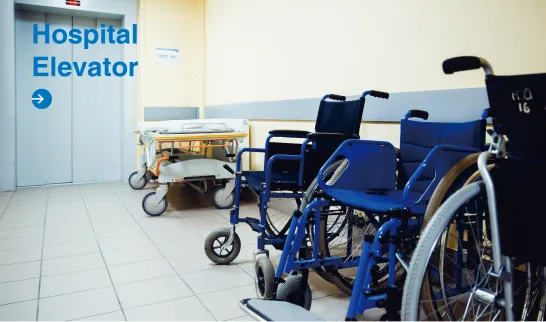
Have you ever paused to consider what makes hospital elevators different? When lives are on the line and seconds count, these aren't your average lifts. They're precision-engineered lifelines humming through hospital corridors day and night. Let's pull back the curtain on how these medical marvels come to life.
Why Hospital Elevators Are a Different Breed
Picture this: during a critical patient transfer, every bump matters, every second matters, every millimeter of space matters. That's the world hospital elevators operate in. Unlike regular lifts, they're:
-
Ambulance-friendly
– designed to swallow stretchers whole
-
Germ-resistant warriors
– built with infection control as top priority
-
Silent operators
– minimizing disturbance to vulnerable patients
-
Emergency responders
– with backup systems that refuse to quit
"Manufacturers aren't just building metal boxes that go up and down," explains a veteran elevator engineer. "We're creating mobile emergency rooms that keep critical care continuous between floors."
The Design Dance: Where Form Meets Life-Saving Function
Planning Phase
Before a single bolt is turned, months of planning unfold:
-
Traffic studies
mapping patient flow patterns
-
Emergency scenario modeling
for code blue situations
-
Equipment blueprints
– from MRI machines to isolation pods
-
Accessibility mapping
for every possible mobility device
Material Matters: The Hospital-Grade Difference
You won't find cheap plastics here. Hospital elevators feature:
-
Non-porous surfaces
that laugh at bacteria colonies
-
Seamless welded joints
leaving nowhere for germs to hide
-
Antimicrobial copper alloys
on high-touch controls
-
Impact-resistant materials
that stand up to gurney collisions
It's worth noting how these
hospital wall materials
influence elevator design. The same rigorous material standards applied to critical care environments get built into these moving spaces.
Key Design Considerations
|
Feature
|
Hospital Requirement
|
Commercial Equivalent
|
|
Door width
|
Minimum 48" for stretchers
|
36" standard
|
|
Emergency power
|
72-hour backup minimum
|
2-4 hour typical
|
|
Floor leveling
|
±1/8" precision gap
|
±1/2" acceptable
|
|
Noise level
|
<45 dB (library quiet)
|
<60 dB typical
|
The Step-by-Step Manufacturing Journey
From CAD Models to Prototype
The process kicks off digitally:
-
3D modeling of every component down to the millimeter
-
Digital stress-testing under simulated emergency loads
-
Virtual hospital integration testing with building schematics
-
Prototype development in controlled factory environments
One engineer described the precision: "We once spent three weeks adjusting door sensors by millimeters to accommodate a new type of neonatal isolator. That's how critical dimensional accuracy becomes."
Component Fabrication
This isn't assembly line work:
-
Seamless cabins
– bent from single sheets of anti-microbial steel
-
Hand-finished joints
eliminating contamination points
-
Triple-redundant control systems
with isolated power feeds
-
Biometric controls
for restricted access floors
Testing Beyond Compliance
Before installation begins:
-
1,000+ emergency brake tests under load
-
Pathogen resistance testing on all surfaces
-
Disaster scenarios with full power failure
-
8-hour continuous operation stress tests
"We break them before they save lives," one quality controller remarked. "I've personally ridden prototype elevators for 72-hour continuous shifts to detect any vibration patterns."
Installation: Precision Surgery
The final phase requires:
-
Hospital-approved infection control barriers
-
Night-shift installations to avoid disrupting care
-
Live-building integration without interrupting services
-
Staff training on emergency protocols
An installation foreman explained: "We've suspended operations mid-shaft during emergency procedures. The hospital's rhythm dictates our schedule, not the other way around."
The Hidden Heroes: Specialized Features
Hygiene Guardians
-
UV-C disinfection cycles between trips
-
Anti-microbial copper handrails
-
Seamless, non-porous wall surfaces
-
Touchless destination dispatch
Silent Operators
-
Whisper-gear traction systems
-
Vibration-isolated platforms
-
Sound-absorbing interior cladding
-
Precision-leveling without "thump"
Emergency Readiness
-
Backup battery descent capability
-
Direct EMS communication lines
-
Code Blue priority override systems
-
Seismic stabilization technology
The Human Touch in Engineering
Beyond specifications, hospital elevators embody compassion:
-
Calming color therapy
lighting to ease patient anxiety
-
Height-adjustable controls
for wheelchair users
-
Handrail contours
designed for IV pole access
-
Integrated step stools
for pediatric patients
A designer shared: "We had a children's hospital request butterfly-shaped buttons. Why? Because scared kids respond better to butterflies than numbers. That's now a standard option."
Maintaining Medical Precision
Post-installation care differs significantly:
Hospital Elevator Maintenance
-
Daily disinfection validation swabs
-
Weekly load-bearing safety checks
-
Monthly emergency system drills
-
Quarterly full-system redundancy testing
Standard Elevator Maintenance
-
Monthly visual inspections
-
Bi-annual load testing
-
Annual safety certification
-
Reactive repair approach
Future Horizons
Emerging technologies include:
-
Smart pathogen detection
systems alerting to contamination
-
Integrated telemedicine stations
during transport
-
AI traffic optimization
predicting emergency movement
-
Self-sanitizing nano-surfaces
eliminating downtime
An industry pioneer remarked: "We're moving toward elevators that monitor vital signs during transport, transmitting data to awaiting teams. The elevator becomes the first responder."
More Than Just Moving Boxes
So the next time you see a hospital elevator gliding silently between floors, remember: you're witnessing years of specialized engineering, thousands of precision components, and countless design considerations all working in concert. These vertical corridors carry more than people – they transport hope, expertise, and critical care precisely where needed.
In hospitals where every second might be separating life from loss, these engineering marvels stand ready around the clock. They don't just move through space – they navigate the critical intersection of technology, medicine, and human compassion.