So you're curious about how those stunning stone countertops or architectural facades come to life? Well buckle up, because we're taking a deep dive into the fascinating world of stone manufacturing. Whether you're a homeowner planning a renovation or just stone-curious, understanding this process reveals why quality stone is worth every penny.
Modern stone manufacturing combines ancient geological processes with space-age technology – think million-year-old minerals meeting robotic precision. It's where nature's artistry gets a technological upgrade.
Quarrying: Nature's Treasure Hunt
Picture massive open-pit mines where giant saws bite into mountain faces. Workers scout prime locations worldwide – from Carrara's marble mountains to Brazilian granite deposits. Modern quarries use diamond-tipped wire saws that slice through rock like butter, minimizing waste while extracting massive blocks.
Safety is paramount with drones monitoring rock stability and vibration sensors detecting weaknesses. As one quarry manager told me: "We're not just extracting stone; we're performing geologic surgery."
Block Preparation: The Stone ICU
Freshly quarried blocks enter what engineers jokingly call "the stone ICU." Here, 20-ton blocks get stabilized using resin injections to fill microscopic fractures. Laser scanners create 3D maps revealing hidden flaws – like a CAT scan for rocks.
Did you know? The largest granite block ever quarried weighed over 200 tons – equivalent to 40 elephants! Modern factories regularly handle 30-ton slabs with robotic precision.
Cutting and Slab Production
Massive gang saws with diamond-coated blades transform blocks into slabs. Water-cooled blades run 24/7 – cutting just 2 inches per hour! The water isn't just coolant; it captures stone dust for recycling. Nothing gets wasted in modern facilities.
After cutting, slabs undergo "gauging" – precision calibration to uniform thickness using planetary grinders. The tolerance? Often within 0.5mm – thinner than your credit card.
Surface Finishing: Where Art Meets Engineering
This is where stone develops personality. Polishing lines feature rotating heads with progressively finer abrasives:
-
Coarse grinding (50-grit) removes saw marks
-
Intermediate polishing (200-grit) begins shining
-
Final polishing (3000-grit) creates mirror finishes
Alternative finishes include:
-
Honed:
Matte finish perfect for avoiding fingerprints
-
Flamed:
Torch-treated for slip-resistant texture
-
Brushed:
Gentle abrasion revealing natural texture
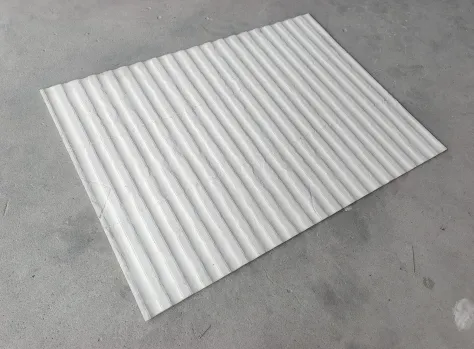
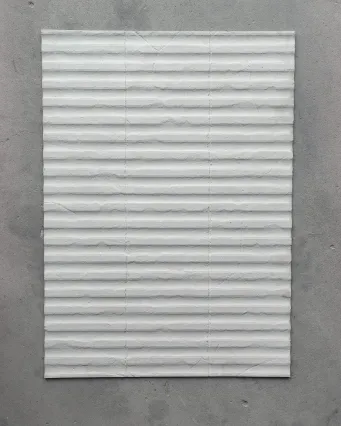
Just like the architectural facade solutions you see on modern buildings, surface finishing transforms stone from functional material to design statement. The right finish can make stone look contemporary, rustic, or timelessly elegant.
Gone are days of squinting at stone slabs. Today's quality control uses:
-
Hyperspectral imaging detecting mineral variations
-
Laser interferometers measuring flatness
-
AI systems mapping vein patterns for consistency
-
Water-immersion testing checking porosity
"Our digital QC system catches imperfections human eyes would miss after eight hours," explains quality manager Luisa Rodriguez. "A tiny fissure might be invisible until stress causes it to spread years later."
Material Science Magic
Unlike quarried stone, engineered stone combines:
-
93% crushed quartz or natural stone aggregates
-
7% polymer resins and pigments
The exact recipe is tighter than Coca-Cola's formula. Particle size distribution matters – like baking where flour texture affects the cake.
The Pressing Process
In vacuum vibration chambers, material gets compressed at 100 tons of pressure while vibrating 4,000 times per minute. This eliminates air pockets that could cause weak points. As engineer Tom Chen explains: "We're essentially making geological metamorphosis happen in minutes instead of millennia."
Curing and Finishing
Slabs bake at 85°C in steam ovens, polymerizing the resin into an impenetrable matrix. After 48-hour cooling, diamond routers shape edges while robotic arms apply sealants. The result? Non-porous surfaces that laugh at coffee spills and lemon juice.
|
Feature
|
Natural Stone
|
Engineered Stone
|
|
Appearance
|
Unique geological patterns
|
Consistent color/pattern
|
|
Maintenance
|
Requires periodic sealing
|
Virtually maintenance-free
|
|
Durability
|
Varies by stone type
|
Uniform hardness (~7 Mohs)
|
|
Eco-Impact
|
Heavy quarrying footprint
|
Uses waste stone; lower impact
|
|
Customization
|
Limited to natural variations
|
Full color/pattern control
|
Ironically, engineered stone often contains more actual quartz (93%) than some "natural" quartzites (typically 80-90% quartz content). The binding polymers simply replace weaker natural minerals.
Innovations are reshaping the industry:
-
Carbon Capture:
New facilities inject CO2 into slurry, mineralizing it into calcium carbonate filler
-
Robotic Craftsmanship:
AI-guided CNC machines create intricate patterns impossible by hand
-
Ultra-Thin Panels:
3cm-thick stone reduced to 1cm using carbon fiber backing
-
Self-Healing Surfaces:
Micro-encapsulated resins automatically fill minor scratches
"We're entering stone's Renaissance era," predicts industry analyst Maria Santos. "The next decade will see smarter, greener stone that performs like tech products while keeping nature's beauty."
From quarry to kitchen counter, stone manufacturing blends geology, chemistry, and engineering into something functional yet breathtaking. Whether choosing granite's natural drama or engineered quartz's consistent elegance, understanding this journey helps you appreciate what goes into those beautiful surfaces. Next time you run your hand over a stone counter, remember – you're touching millions of years of geology and human ingenuity.
And remember: When investing in stone, you're not just buying a surface – you're getting a piece of Earth's history, perfected by human hands.