
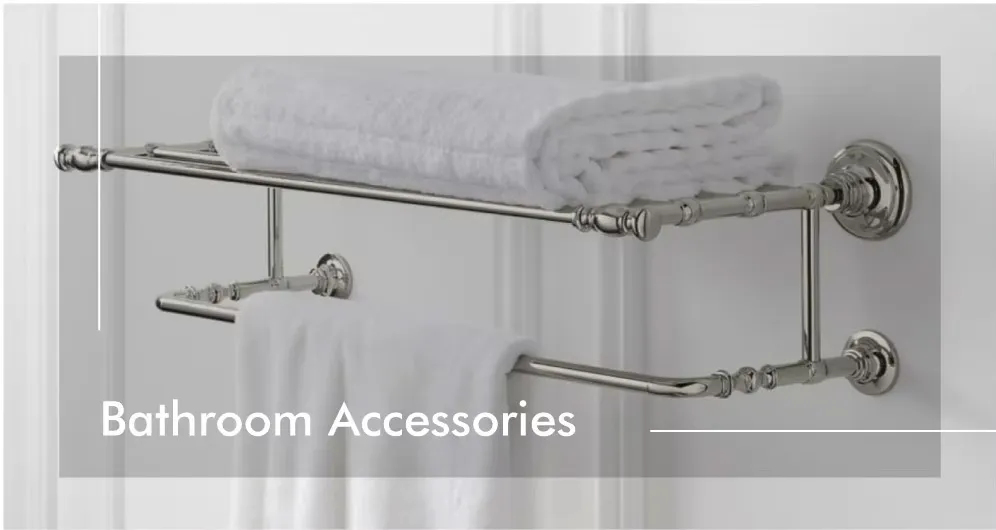
Picture this - you're standing in a beautifully designed bathroom. Everything from the faucet to the towel rack feels just right. But have you ever wondered about the journey behind these essential items? That precision-crafted faucet didn't magically appear in your bathroom; it went through an incredible transformation from raw brass to gleaming hardware.
Welcome to the fascinating world of bathroom accessory manufacturing - where design meets durability, and engineering embraces elegance. Whether it's that satisfying weight of a solid brass towel bar or the flawless chrome finish on your showerhead, every detail has a story of craftsmanship behind it.
It all starts with a designer sitting at a drafting table (or more accurately, a CAD workstation), translating bathroom needs into tangible solutions. Will this towel hook solve storage problems in compact bathrooms? Can this shower system conserve water without compromising experience? Designers wrestle with these questions while balancing aesthetics and functionality.
3D modeling software brings these concepts to life digitally, allowing designers to catch potential issues long before manufacturing begins. This phase often involves consumer research, trend forecasting, and ergonomic studies to ensure the product feels as good as it looks.
Not all metals are created equal in the bathroom. Manufacturers favor solid brass as the gold standard (even when it's not gold-colored!). Why? Because brass delivers that satisfying heft and durability while resisting corrosion from constant moisture exposure. Plus, it's a dream to machine into precise shapes and takes plating beautifully.
Top factories rigorously vet their high-quality building materials through metallurgical testing. They look beyond surface qualities to molecular-level integrity - because that seemingly simple towel ring might need to withstand decades of daily use. Environmental impact increasingly factors in too, with recycled brass becoming more common.
The journey from brass ingots to bathroom beauty begins with casting. Workers heat brass to about 900°C until it flows like liquid sunshine. This molten metal then pours into precision molds - sometimes through gravity casting (quieter, smoother surfaces) or high-pressure die casting (faster for complex shapes).
Ever wonder why high-end accessories feel so substantial? That's controlled cooling at work. Rushed cooling creates weak points, while proper cooling gives molecular alignment that translates to long-term resilience against your enthusiastic towel-pulling!
Enter CNC machining centers - the robotic sculptors of the metal world. With surgical precision measured in micrometers (that's 0.001mm!), these computer-guided tools carve raw castings into their final forms.
The real magic happens in programming. Engineers must determine optimal tool paths to:
Here's where functional metal becomes bathroom jewelry. The grinding process removes casting seams and imperfections using abrasive wheels. But it's polishing that truly transforms - first with coarse compounds, then progressively finer abrasives until the surface becomes mirror-smooth.
In luxury lines, this remains a human craft. Master polishers know exactly where to apply pressure, how long to work each curve, and when a piece is ready for its gleaming coat. The slightest scratch invisible now will scream at you after chrome plating!
Ever notice how some finishes look richer? That's plating artistry. It starts with ultrasonic cleaning - sound waves removing microscopic particles. Then comes a base copper layer (for adhesion), nickel plating (corrosion resistance), and finally chrome for that brilliant shine.
The real magic lies in bath composition and electrical current control. Adjustments of mere volts affect crystalline structure - tighter crystals mean harder, longer-lasting finishes. Top factories run micro-thickness tests and salt spray chambers to ensure that shine lasts longer than your mortgage!
Modern factories employ vision systems that capture thousands of measurements per minute. These systems can detect a scratch smaller than a human hair or measure coating thickness with X-ray fluorescence technology. Any deviation triggers immediate correction protocols.
Those faucets don't just look good - they must perform under pressure. Literally! Automated rigs subject every faucet body to water pressures exceeding normal use by 400%. Hydrostatic tests check for leaks at microscopic levels before that faucet ever sees your bathroom.
Despite advanced tech, experienced technicians remain vital. Their trained fingers detect subtle surface variations machines miss. They understand how light plays on curves to highlight imperfections. This craftsman-machinist hybrid represents manufacturing's perfect blend of art and science.
Your accessory's journey isn't over when manufacturing finishes. How it's packaged matters tremendously. Luxury brands use form-fitting foam that cradles each contour, protecting that perfect finish during its global journey.
Forward-thinking factories now tackle sustainability seriously:
The bathroom factories of tomorrow are already emerging. Water conservation requirements drive innovation in flow restrictor design. Digital twinning allows virtual testing before physical prototypes exist. Advanced robotics handle hazardous plating processes.
Perhaps most exciting is mass customization. CNC flexibility combined with AI design systems will soon let you configure unique accessories at off-the-rack prices. Imagine faucets sized perfectly for your unique reach, or finishes blending colors to match your exact tile!
As we flush away the mysteries of bathroom accessory manufacturing, remember this: that humble towel hook represents centuries of metallurgical advancement, decades of design refinement, and human ingenuity at its best. The next time you turn a precisely engineered faucet handle or admire a flawless finish, take a moment to appreciate the remarkable journey from molten metal to bathroom centerpiece.
After all, these objects touch our daily lives in profound ways - creating moments of comfort, functionality, and yes, even delight in our most private spaces. And knowing the craftsmanship behind them makes those everyday experiences all the richer.
Recommend Products












