


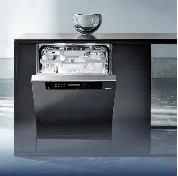
Ever loaded dirty plates into your dishwasher, pressed a button, and marveled at how sparkling clean everything comes out? I'll let you in on a secret – that magic box is one of modern engineering's most underappreciated wonders. From the satisfying click when you close the door to the whirl of water jets fighting last night's lasagna crust, every dishwasher is a masterpiece of design and manufacturing.
Today we're pulling back the curtain on this kitchen hero. We'll walk through how dishwashers are born – starting as sheets of metal and plastic pellets, transforming into that trusty appliance you load while half-asleep. Forget sterile factory images; we're talking about molten plastic rivers, robotic welders sparking like tiny fireworks, and assembly lines where workers have inside jokes about rogue silverware.
From Hand-Scrubbing to High-Tech: The Evolution
Picture your great-grandmother carrying buckets from a well just to wash teacups. That brutal reality lasted longer than you'd think – indoor plumbing didn't become standard until the early 1900s. No wonder that when Josephine Cochrane (a socialite who hated chipped heirlooms) invented an early mechanical washer in 1886, people called it frivolous. How times change!
The real game-changer came in the 1920s when factories started mass-producing models. They looked like tin boxes with manual wringers – no one's dream appliance. Sales flopped initially (refrigerators stole the spotlight), but post-WWII suburbs changed everything. Suddenly, dishwashers symbolized modern living – like tailfins on cars or TVs in dens.
Why the slow adoption? Beyond cost? Folks didn't trust them! Vintage ads practically beg: "It won't shatter Granny's crystal!" We've come a long way – today's models have sensors that adjust for a single wineglass among pots.
What's Really Inside: The Stuff That Makes the Magic
The Steel Core
Open your dishwasher. See those racks? They started life as steel coils arriving at factories like giant metal spools. Robotic arms feed wire into machines that bend, cut, and weld them into shape. Then comes the genius part – dipping racks in liquid PVC powder before baking them. That coating? It's why forks don't scratch your plates and survives 10,000 wash cycles without cracking.
Hidden Heroes You Never See
That tub holding everything? It’s injection-molded from super-tough polypropylene pellets. Engineers call this stuff "inert" – meaning detergent chemicals can't corrode it. Translation: your machine won’t melt after that lemon-scented pod overdose. Meanwhile, seals use rubber compounds surviving scalding heat and icy rinse cycles without turning brittle.
The Unsung MVP: Stainless steel interiors. Besides resisting rust, they reflect heat – helping dry dishes faster. Why does this matter? It's the difference between damp Tupperware and cabinet-ready glasses.
Where Form Meets Function: How Engineers Dream Them Up
Modern dishwasher labs look like mad scientist workshops. Engineers obsess over two things: cleaning muscle and noise levels. Remember when dishwashers sounded like jet engines? Now, brands compete on library-quiet operation using tricks like:
- Maytag's Tank Approach: One super-insulated motor housing muffles vibrations
- Amana's Dynamic Duo: Separate pumps for water and drainage work at lower volumes
The arms that spin and spray? Their nozzle angles are precision-calculated to hit fork tines without wasting water. And since the 1990s, sanitation became king – high-temp cycles now kill germs better than handwashing ever could.
Human Obsession: Engineers test with literal dirty dishes! Mystery stains get coded ("Carbonized oatmeal #7") so spray patterns can be perfected. Your burnt casserole dish? They've anticipated it.
The Dance on the Factory Floor
Birth of the Tub
Imagine giant waffle irons for plastic. Granules get melted into liquid that's injected into tub-shaped molds under insane pressure – 20,000 psi isn't uncommon! The mold splits open and out pops this glowing-hot tub skeleton needing cooling.
Assembly Ballet
Workstations buzz like choreographed dancers. Frame first, motors mounted to rubber-damped brackets (anti-rattle tech!), then that tub gets lowered in like a spaceship docking. Step by step:
- Rack rollers snap in – they'll withstand 30lbs of Thanksgiving plates
- Filter systems lock into corners catching rogue broccoli florets
- Control panels connect – think smartphone tech managing water temps
Insulation Ballet: Workers wrap the chassis in foil-covered fiberglass quilts. This isn't just noise control; it shields your cabinets from heat damage. Skip this step? Hello, warped laminate countertops!
By station 12, it's testing time. Machines flood the chamber, checking seals. Arms spin dry to detect wobbles. Control boards endure button-mashing endurance tests. Failure isn't an option – a glitch here means disassembly hell.
Zero Tolerance Zone: Quality Assurance
Forget random checks. Dishwasher QC has three pillars:
- Human Eyes: Workers know exactly how solder joints should look
- Digital Overlords: Sensors measure water pressure down to the PSI
- Customer Whisperers: Warranty complaints trigger "FMEA" autopsies where engineers redesign weak points for next year’s models
Strange But True: Some factories use sound chambers analyzing frequencies. A high-pitched whine humans ignore? Engineers classify it as "defect" and hunt its source.
Greener Every Decade: Waste Not
Modern lines are shockingly clean – scrap metal gets recycled immediately. Plastic trimmings? Ground into pellets for tomorrow's tubs. Even cardboard packaging often comes from managed forests.
And here's the kicker: building a dishwasher uses less water over its lifetime than hand-washing would for the same years. Efficiency's baked into the blueprint.
By the Numbers: A typical unit contains 70% recycled steel. That rack holding your bowls? Probably had a past life as a car fender!
Tomorrow's Dishwashers: What's Coming?
With only 56% of households owning one (vs. 99% for fridges), manufacturers see gold. Future upgrades being road-tested:
- Ultraviolet Sanitizing: LEDs killing bacteria in cool water cycles
- AI-Dirt Decoders: Cameras identifying stains to custom-clean them
- Water Recycling: Systems filtering and reusing rinse water internally
The Quiet Revolution: Top models now operate under 40 decibels – quieter than rainfall. Next target? Hitting "breathing room" levels at 35dB. Your future midnight snack won't wake anyone.
The Journey Complete
That humble box in your kitchen? It’s traveled through metallurgy labs, survived robotic assembly, and passed tests you didn't know existed. Each time you shut its door, you're activating thousands of design choices – the quiet thud of the seal, the precise spray patterns, the warmth drying your mugs.
So next loading cycle, pause a second. Those gleaming stainless steel baskets? They represent decades of innovation focused on solving humanity's oldest chore. Not too shabby for something we treat like furniture!










