
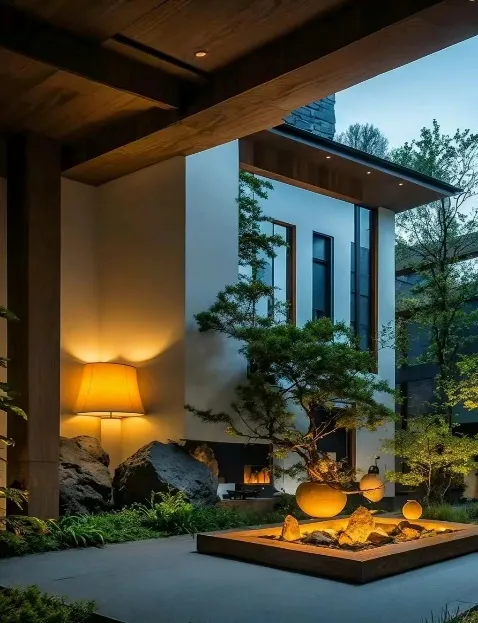
Ever stared at your backyard at dusk and thought, "This space needs some life after dark"? Or maybe you manage a commercial property where good outdoor lighting fixtures are non-negotiable for safety and vibe? Whatever your lighting need, one question is probably on your mind: what’s it going to cost me, especially in the next year or two? The world of outdoor lighting isn't static; prices shift based on materials, technology, energy costs, and even global trends. Let's dive into what’s shaping the cost of illuminating our outdoor spaces in 2024 and 2025.
Think beyond just the bulb. Outdoor lighting today covers everything from the path lights lining your garden walkway to the high-powered LED floodlights securing a warehouse perimeter, and increasingly, solar powered lighting options harnessing free energy from the sun. The market is huge and varied. Understanding where prices are heading requires peeling back a few layers – looking at what drives costs up or down, and which segments (like residential landscape lighting versus serious commercial lighting installations) might follow different paths. Let’s shed some light on the subject.
It's tempting to think the price tag just reflects the metal and plastic in your hand, but there's much more cooking under the hood. Figuring out 2024-25 pricing means looking under the lid at these key ingredients:
The metals in fixtures and wiring are price-sensitive superstars. Copper, crucial for wiring (and often fixtures), is famously volatile. Geopolitical tensions, supply chain disruptions like we saw recently, or surges in demand from other industries (think EVs) can send its price soaring. Aluminum, another fixture staple, is generally cheaper but follows similar global market pressures. On the electronics side, while the chip shortages that plagued the pandemic era have eased significantly, any new disruption could quickly push up prices for LED lighting drivers and smart controls. Raw material costs remain a fundamental, unpredictable factor.
Here's where things get brighter. LED technology continues its relentless march forward. We're getting even more light output (lumens) for less energy (watts) consumed. Higher efficiency means smaller heat sinks and less robust drivers, potentially saving on materials and manufacturing costs per unit over time. Simultaneously, smart lighting tech – Wi-Fi, Bluetooth, Zigbee integration, app control, sensors – is becoming standard even in mid-range offerings. While adding these features increases complexity (and potentially initial costs), manufacturing scales are improving. Expect this tech to keep getting cheaper to implement, but premium features will still command a premium price.
Remember the port backups and sky-high shipping costs? Thankfully, global logistics aren't the nightmare they were a couple of years back. Container shipping prices have normalized significantly. However, the landscape isn't perfectly stable. Potential trouble spots – regional conflicts affecting shipping lanes, new pandemic waves, or regulatory changes – could reintroduce friction and cost bumps. While the supply outlook for 2024-25 is generally better for stability and pricing than the recent past, it’s not a guarantee of smooth sailing.
Manufacturing is energy-intensive. Fluctuations in energy prices, particularly for factories concentrated in specific regions, can trickle down into product pricing. On the installation side, especially for complex commercial lighting systems or extensive landscape lighting projects, skilled labor remains a significant cost factor. Electrician rates vary widely by location but generally continue to trend upward.
The outdoor lighting market is fiercely competitive. Numerous brands, from legacy giants to direct-to-consumer online players, are vying for attention. This competition puts downward pressure on prices, especially for standard residential fixtures. Manufacturers constantly balance offering feature-rich products while finding cost savings to stay competitive. Increased demand for solar powered lighting also boosts economies of scale in that segment.
Outdoor lighting isn't one market; it's many. Expect different trends for that cute string light over your bistro table versus the robust outdoor lighting fixtures lighting up a parking garage. Here’s the forecast:
| Lighting Segment | Key Drivers | 2024-25 Price Outlook | Price Range Estimate (Example) |
|---|---|---|---|
|
Residential Entry-Level & Decorative
(Path lights, basic solar stakes, small wall sconces) |
High competition, standardized tech, simpler materials | Stable to Slightly Decreasing | $5 - $50 per fixture |
|
Mid-Range Residential Landscape Lighting
(Integrated LED path/spotlights, better solar options, step lights) |
Tech improvements, competition, better solar integration | Stable (Value for Money Increases) | $35 - $150 per fixture |
|
Premium Residential / Architectural
(High-output spotlights, bespoke fixtures, durable architectural pieces) |
Material costs (copper, brass), craftsmanship, advanced features | Moderate Increase (3-7%) | $150 - $500+ per fixture |
|
Solar Powered Lighting
(Path lights, spotlights, integrated solar fixtures) |
Falling solar panel/battery costs, economies of scale, competition | Stable to Slight Decrease (Value Increases) | $20 - $250 per fixture (higher for large/bright) |
|
Standard Commercial Lighting
(Utility-grade LED area lights, basic bollards) |
Commodity LED tech, mass production, competition | Stable | $100 - $400 per fixture (high output) |
|
Specialized Commercial Lighting
(High-security floodlights, sports lighting, vandal-resistant) |
Higher materials, specialized engineering, robustness | Slight Increase (2-5%) | $500 - $2000+ per fixture |
|
Commercial Smart Lighting Systems
(Networked controls, sensors, central management) |
Rapid tech evolution, installation complexity, software | Moderate Decrease (Hardware), Increase (Complex Installs) | Hardware: Dropping; Total Project Cost: High/Moderate |
Solar powered lighting deserves its own spotlight. Why? Because it’s fundamentally changing the value equation for many outdoor applications:
Early solar lights were dim, unreliable, and faded fast. Those days are largely gone. Today’s best solar powered lighting offers significantly brighter LED outputs (lumens), thanks to both better LEDs and larger solar panels. Battery tech has improved leaps and bounds – Lithium-ion (LiFePO4 especially) dominates now, replacing crappy NiMH. This means longer runtimes on a single charge (often multiple nights even with mediocre sun), much longer overall lifespans (years, not months), and better cold-weather performance. The difference in quality and longevity is immense.
This is the killer advantage. Once you buy a solar light, it costs *nothing* to run. No wiring trenches dug through your beautiful garden (avoiding landscape destruction and hefty contractor bills). No monthly electricity hit on your utility bill. For pathways, garden accents, security spots in remote areas, or even pool lighting, the operating cost savings over the 5-10+ year lifespan of a good solar fixture can completely offset a higher initial purchase price compared to wired lights. You're paying upfront for years of free light.
Need a light where there’s no outlet? Solar is your answer. Want to rearrange your garden path next season? Just pick up your solar path lights and move them. No permits, no electrician call-out fees, no hassle. This ease of installation is a massive cost (and headache) saver, especially for DIYers or complex landscapes. Add solar string lights – outdoor lighting fixtures charged by a discreet panel – and you get ambient lighting wherever you want it, instantly.
Yes, you can still buy that 5-pack of mini solar path lights at the discount store for $20. And yes, they’ll probably be junk within a year. But the market for *quality* solar lighting – the kind using robust materials, superior panels, and long-life batteries – is booming. This segment behaves less like cheap trinkets and more like durable outdoor equipment. Prices for these quality fixtures are stabilizing or even slightly decreasing as components get cheaper and production scales up. The trend for 2024-25 is clear: better performance and lifespan for the same price point, or even less.
Thinking solar? Look for reputable brands focusing on outdoor durability, check the lumen output (brightness), battery type (Lithium-ion is best), and warranty. While the upfront cost might be higher than the absolute cheapest wired option, factor in the zero installation cost and zero electricity bill forever. For many applications, it's becoming the most economical choice overall.
Smart tech isn't just a gimmick; it's transforming how we control and manage outdoor light. But it adds layers to the cost picture:
Wi-Fi modules? Bluetooth chips? These are becoming incredibly inexpensive commodity items. Integrating basic app control into a LED lighting fixture adds less cost than it did just 2-3 years ago. You'll find simple smart bulbs and plugs controlling basic outdoor lamps easily integrated with Alexa or Google Home for under $20 per unit. This low barrier to entry is great for adding remote or voice control on a budget.
For whole-home outdoor automation or sophisticated
commercial lighting
systems, it's more than just adding Wi-Fi. Think:
*
Low-Voltage Systems:
Many integrated residential
landscape lighting
systems use 12V/24V, requiring a central transformer/controller.
*
Zigbee/Z-Wave Hubs:
Often needed for reliable, wide-area control beyond simple Wi-Fi.
*
Centralized Controllers / Gateways:
Hardware (or software) brains managing scheduling, zones, sensors.
*
Professional Sensors:
Motion, daylight, occupancy sensors for advanced automation.
These components add cost beyond the basic light fixture. A high-quality smart transformer alone might cost $150-$300.
This is where budget projections can unravel. Installing a complex low-voltage system with multiple zones, sensors, and a controller isn't plug-and-play. It requires careful planning, running wires correctly (sometimes still needed even with some mesh networking), mounting components, and configuring software. For commercial systems with networked panels and central management, it's engineering-level work. The labor cost for professional design and installation can easily dwarf the cost of the fixtures themselves. DIY-friendly systems exist but have limits.
2024-25 Trend: Fixtures *with* smart tech built-in will see negligible price increases compared to their "dumb" counterparts. However, implementing a *comprehensive, professional-grade smart outdoor lighting system* remains a significant investment, primarily due to design, components, and skilled labor. The cost per fixture isn't the whole story here. Expect stable hardware component prices but increasing labor costs impacting total system price.
Knowing trends is one thing; getting the best deal is another. Here’s how to be a savvy shopper in the outdoor lighting market:
Are you accenting a flower bed, lighting a pathway for safety, or securing a dark alley? Different jobs need different tools (and price points!). That commercial lighting floodlight is overkill (and overpriced) for your herb garden. Conversely, a decorative solar stake won't cut it for perimeter security. Also, seriously consider your climate. Are you by the salty sea? Freezing winters? Baking desert sun? Opting for fixtures built with materials like marine-grade stainless steel or heavy-duty coated aluminum, rated for wet/damp or fully outdoor conditions (IP65/IP66+), will cost more upfront but save you from rusted junk in two years. Buying cheap for harsh environments is a false economy.
Focus on Lumens per Watt. This tells you how much light (lumens) you get for the electricity consumed (watts). Higher efficiency means lower operating costs over the fixture's lifetime. While slightly more efficient LEDs might cost a few bucks more upfront, they'll pay you back on your utility bill month after month, year after year. For large installations or lights that run many hours a night, this is crucial. It's the core promise of LED lighting – better light for less juice.
*
Plug-and-Play/Solar:
Path lights, solar spotlights, basic string lights? Often perfect DIY territory. Installation is usually just placing stakes or screwing in a wall mount. Big cost saving.
*
Hardwired & Complex Systems:
Replacing an old porch light? If you're comfortable with home wiring and safety (turning off breakers!), it's DIY-able. But running new circuits, burying wire for extensive
landscape lighting
, or installing high-voltage commercial-style fixtures? Hire a licensed electrician. The cost is worth it for safety, code compliance, and avoiding potential costly mistakes or damage. For low-voltage landscape systems, professional design and installation ensure proper light placement, voltage drop management, and a polished look.
Factor labor into your total project budget realistically.
Don't just compare prices. Compare specifications:
*
Lumen Output:
Actual brightness (higher lumens = brighter).
*
Color Temperature (CCT):
Warm white (2700K-3000K)? Cool white (4000K+)? Measured in Kelvin (K).
*
Color Rendering (CRI):
How true do colors look? 80+ CRI is good for outdoors, 90+ excellent (especially for accentuating plants/stone).
*
Wattage:
Energy consumed (higher lumens per watt = more efficient).
*
Ingress Protection (IP Rating):
How well sealed against dust/water? Look for IP65 (water jets) or IP66 (powerful water jets) as a minimum standard for genuine outdoor durability. IP44 (splash resistant) is often insufficient for permanent exposure.
*
Materials:
Stainless steel? Die-cast aluminum? Thick plastic? Impacts longevity and price.
*
Warranty:
Reputable brands offer 1-5+ year warranties. Cheap lights often have zero or useless warranties.
A $30 fixture with poor specs and materials isn't a better deal than a $50 fixture built to last.
Prices fluctuate! Use price tracking tools or check retailer sites regularly. End-of-season sales (Fall/Winter) can yield big discounts on outdoor stock as retailers clear shelves. Major sale events like Black Friday or Prime Day often feature lighting deals. While specialty lighting stores offer expertise, online retailers (Amazon, Wayfair, big-box online like Home Depot/Lowe's) often have aggressive pricing and user reviews to help you gauge real-world performance. For larger orders, ask retailers about volume discounts. Don't just buy the cheapest; buy the best value based on quality, features, and your specific needs.
For most homeowners seeking attractive and functional outdoor lighting fixtures for their patios, paths, and gardens, the next couple of years look financially bright. Expect steady prices for standard residential LED fixtures and continued value improvements – meaning more features, better brightness or solar performance for your dollar. While premium materials like solid brass or copper may see small increases, LED lighting efficiency gains and fierce competition will keep a lid on prices for the vast majority of products.
The real sweet spot lies in solar powered lighting , where dramatic improvements in battery life, brightness, and overall durability are hitting the market at increasingly attractive prices. Factor in zero installation hassle and zero ongoing electricity costs, and solar becomes a compelling economic choice for many applications. Don't underestimate the power of smart shopping – comparing specs carefully, timing your purchase around sales, and realistically assessing your DIY skills can lead to significant savings.
Large-scale commercial lighting rollouts face the most pressure from potential labor cost increases and the complexity of advanced control systems. However, the core hardware for standard commercial lighting remains stable. For dedicated landscape lighting projects, balancing fixture quality with professional installation costs will remain key. Overall, whether you're lighting up a cozy backyard or a sprawling property, 2024-25 offers accessible options. Advances in LED efficiency, solar technology, and smart features mean you'll likely get more sophisticated, reliable, and beautiful outdoor light for your investment than ever before. The perfect outdoor glow is no longer a luxury reserved for the few.
Recommend Products












