

When you're sourcing foamed aluminum alloy board for your construction or industrial project, evaluating suppliers goes far beyond comparing prices. The technical data a supplier provides is the single most reliable indicator of product quality, performance consistency, and manufacturing capability. Yet many buyers don't know exactly what technical documentation they should be asking for — or how to interpret it once they receive it.
This guide breaks down every essential category of technical data a reputable foamed aluminum alloy board supplier should provide, helping you make informed procurement decisions and avoid costly specification mismatches.
Physical properties define the basic characteristics of a foamed aluminum alloy board and determine whether it's suitable for your specific application. A qualified supplier should provide a comprehensive physical properties datasheet covering the following parameters:
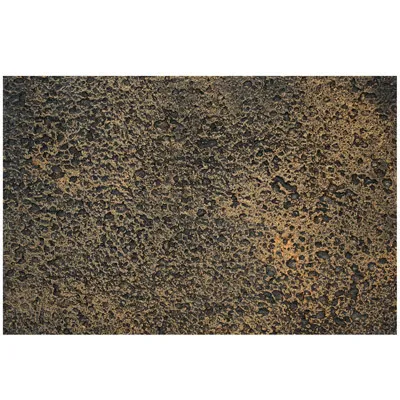
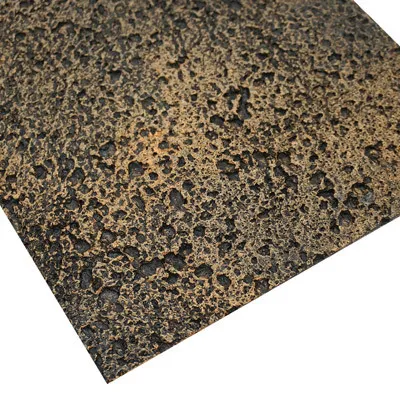
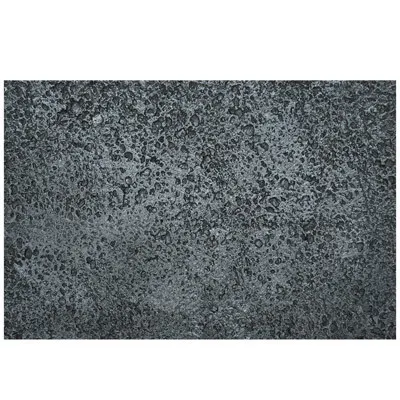
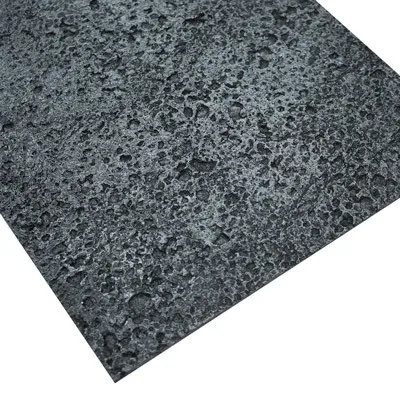
Density is perhaps the most critical parameter, typically ranging from 0.2 g/cm³ to 0.85 g/cm³ for standard foamed aluminum products. The supplier should specify the exact density range available for their product line, along with the corresponding porosity values — which generally fall between 60% and 91%. Lower density means lighter weight and better insulation but reduced mechanical strength; higher density offers greater load-bearing capacity. The supplier's technical data should clearly map the relationship between density and other properties so you can select the optimal grade.
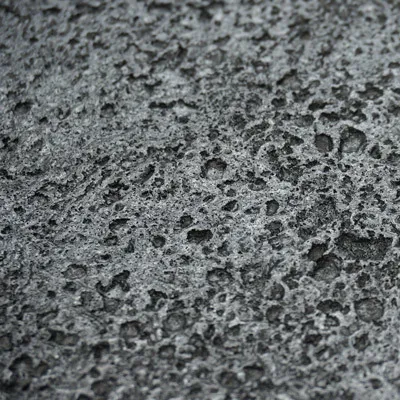
The supplier should clearly state whether their board features an open-cell or closed-cell structure. Open-cell foams (interconnected pores) excel in sound absorption and filtration, while closed-cell foams (sealed bubbles) provide superior thermal insulation and buoyancy. Pore diameter specifications — typically ranging from 0.5 mm to 12 mm — should be documented, as pore size directly affects acoustic performance, fluid flow characteristics, and visual appearance.
Standard board dimensions and thickness tolerances must be clearly documented. Common sizes include 600×600 mm, 1000×2000 mm, and 2400×800 mm, with thicknesses ranging from 3 mm to 300 mm depending on the application. The supplier should provide flatness tolerances (typically ±0.5 mm/m) and thickness uniformity data, as these affect installation quality and aesthetic consistency.
Mechanical performance data is essential for structural and load-bearing applications. Without it, you risk selecting a material that fails under operational stress. Here's what the technical datasheet should include:
Compressive strength values for foamed aluminum typically range from 1.5 MPa to 8 MPa, varying significantly with density. The supplier should provide compressive stress-strain curves rather than single-point values, as foamed aluminum exhibits a characteristic plateau region during compression that makes it excellent for energy absorption applications. This plateau stress data is critical for crashworthiness and impact protection designs.
Tensile strength values typically range from 1.2 MPa to 2.5 MPa for standard foamed aluminum, while sandwich panels with solid aluminum skins can achieve 120–200 MPa. Flexural rigidity data is particularly important for cladding and facade applications where wind load resistance matters. The supplier should document these values at multiple density grades.
For impact and blast protection applications, energy absorption per unit volume — typically 8–30 J/cm³ — should be documented across different strain rates. This data is essential for transportation, military, and protective structure applications.
Thermal and fire safety data is non-negotiable for building materials. A competent supplier should provide the following:
Thermal Conductivity: Typically 0.25–0.62 W/m·K, which is significantly lower than solid aluminum (205 W/m·K) and competitive with conventional insulation materials. The supplier should specify the test method used (ASTM C518, ISO 8301, or equivalent).
Fire Resistance Rating: Foamed aluminum is inherently non-combustible and should achieve Class A1 fire rating per EN 13501-1 or equivalent national standards. The supplier should provide official fire test reports from accredited laboratories.
Service Temperature Range: The material should maintain structural integrity across a wide range, typically from -50°C to +400°C. The melting point of aluminum (~660°C) should also be noted in the technical documentation.
Coefficient of Thermal Expansion: Approximately 19–24 × 10⁻⁶/°C, which must be considered for facade applications with large temperature fluctuations.

For projects where noise control is a priority, acoustic performance data is indispensable. The supplier's technical documentation should include:
Noise Reduction Coefficient (NRC): Values typically range from 0.4 to 0.8 depending on pore size, porosity, and thickness. Open-cell structures generally achieve higher NRC values.
Frequency-Dependent Absorption Curves: Absorption coefficients at key frequencies — particularly 250 Hz, 500 Hz, 1000 Hz, and 2000 Hz — should be provided, as performance varies significantly across the frequency spectrum.
Sound Transmission Loss: For partition and barrier applications, sound transmission class (STC) data should be documented.

Material purity and environmental durability are crucial for long-term performance. A reliable supplier should provide:
Chemical Composition: The aluminum content should typically exceed 97%, with trace elements documented. Alloy designations (e.g., 6101, 6061) should be clearly stated.
Corrosion Resistance Data: Results from salt spray testing (ASTM B117) or equivalent accelerated weathering tests should be provided. Aluminum naturally forms a protective oxide layer, but the supplier should document performance in specific environments (marine, industrial, urban).
Moisture Absorption: Closed-cell foamed aluminum should show near-zero moisture absorption (0.00%), which is a key advantage over fiber-based insulation materials.
Certifications validate that the technical data is reliable and the manufacturing process is controlled. A professional foamed aluminum alloy board supplier should provide:
ISO 9001: Quality management system certification, demonstrating consistent manufacturing processes.
Third-Party Test Reports: Test results from accredited laboratories (SGS, TÜV, Intertek, or equivalent) for fire rating, mechanical properties, and acoustic performance.
EN 13501-1 or ASTM E84: Fire classification reports for building applications.
REACH and RoHS Compliance: For projects in the European market, documentation confirming compliance with chemical safety regulations.
CE Marking: Required for construction products sold in the European Economic Area.
Different applications demand different technical data priorities. A knowledgeable supplier should tailor their documentation to your project's specific requirements:
| Application | Critical Technical Data Required |
|---|---|
| Building Facades & Cladding | Fire rating (A1), wind load resistance, thermal expansion coefficient, surface finish durability, dimensional stability |
| Acoustic Panels & Sound Barriers | NRC values, frequency-dependent absorption curves, sound transmission loss, pore size distribution |
| Structural Sandwich Panels | Compressive strength, flexural rigidity, shear strength, skin-core bonding strength, fatigue data |
| Impact & Energy Absorption | Compressive stress-strain curves, plateau stress, energy absorption (J/cm³), strain rate sensitivity |
| Thermal Insulation | Thermal conductivity, R-value at specified thickness, service temperature range, moisture resistance |
| Electromagnetic Shielding | Shielding effectiveness (dB) across frequency range, electrical conductivity |
Beyond raw technical data, a complete supplier package should include practical documentation that supports specification, installation, and long-term maintenance:
Material Safety Data Sheet (MSDS): Essential for workplace safety compliance, covering handling, storage, and any health considerations during fabrication.
Installation Guidelines: Recommended cutting methods, fixing systems, joint treatments, and substrate preparation requirements.
Surface Treatment Options: Available finishes — powder coating, PVDF coating, anodizing, natural mill finish — with corresponding performance data for each option.
Warranty Documentation: Clear terms covering material defects, performance guarantees, and expected service life under normal conditions.
Batch Traceability Records: The ability to trace each board back to its production batch, raw material source, and quality control test results.
Equally important is knowing what signals an unreliable supplier. Be cautious when:
The supplier provides only density and thickness but no mechanical strength data — this may indicate inconsistent cell structure.
Fire performance is claimed without third-party test reports — always request independent lab certification.
Technical data is presented as single values without tolerance ranges or test standards — quality materials should show consistent performance within defined limits.
The supplier cannot provide batch-specific test certificates — traceability is essential for quality assurance.
Chemical composition data is vague or absent — this is particularly important for corrosion-sensitive environments.
The depth and quality of technical data a supplier provides is a direct reflection of their manufacturing expertise and commitment to quality. A professional foamed aluminum alloy board solutions provider should be able to deliver all of the above documentation without hesitation — because they understand that informed buyers make better long-term partners.
When evaluating building material supplier options, prioritizing comprehensive technical data over the lowest price quote will save you from performance failures, compliance issues, and costly rework. Request the full technical package upfront, compare suppliers on documentation quality, and choose the partner who demonstrates the deepest understanding of their product's capabilities.
The right technical data doesn't just support a purchase decision — it supports the entire lifecycle of your project, from design through installation to decades of reliable service.
Recommend Products












