
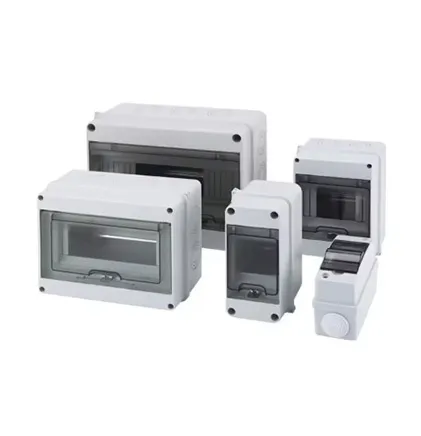
When sourcing electrical equipment from China, understanding the applicable safety standards is not just a compliance checkbox — it is the foundation of a reliable supply chain. A distribution box sits at the heart of any electrical installation, and getting the standards wrong can lead to rejected shipments, regulatory fines, or even safety hazards on site. This article walks through the key safety standards that govern China-made power distribution boxes destined for international markets.
All power distribution boxes manufactured in China are designed and tested according to the GB (Guobiao) standards, issued by the Standardization Administration of China. These standards are largely aligned with IEC guidelines but carry specific requirements for the Chinese manufacturing context.
The most relevant GB standards for distribution boxes are:
A manufacturer that follows GB 7251 series standards demonstrates a baseline commitment to electrical safety and product reliability. International buyers should request the relevant GB test reports as part of their due diligence.
The China Compulsory Certification (CCC) mark is mandatory for electrical products sold within China, including distribution boxes. A CCC-certified product has been tested by an accredited laboratory and meets Chinese safety requirements. While the CCC mark is not legally required for export-only products, its presence signals that the manufacturer operates under a certified quality management system and that the product has passed rigorous type testing.
For international buyers, a CCC-certified distribution box provides an additional layer of assurance — it means the factory has been audited and the product design has been validated by a third-party certification body.
Different regions impose different certification requirements. The table below summarizes the key standards and certifications for major export destinations.
| Market | Certification / Mark | Core Standard | Nature |
|---|---|---|---|
| European union | CE | EN 61439-1/-2/-3; LVD 2014/35/EU; EMC 2014/30/EU | Mandatory |
| United Kingdom | UKCA | BS EN 61439 | Mandatory |
| United States | UL | UL 508A / UL 67 | Market-required |
| Canada | CSA / cUL | CSA C22.2 No. 29 | Mandatory |
| Gulf (GCC) | G-Mark / SASO | IEC 61439 + SABER registration | Mandatory |
| Australia / NZ | RCM | AS/NZS 61439 | Mandatory |
| Japan | PSE | DENAN Law (Diamond or Round PSE) | Mandatory |
| Eurasian union | EAC | TR CU 004/2011; TR CU 020/2011 | Mandatory |
The EU market is one of the most common destinations for China-made distribution boxes, and it demands compliance with the EN 61439 series. The latest revision, EN IEC 61439-3:2024, specifically covers distribution boards intended for use by ordinary persons in residential, commercial, and office environments. This standard mandates testing for temperature rise, short-circuit withstand strength, dielectric properties, and mechanical operation.
CE marking for distribution boxes typically requires compliance with at least two directives:
If the distribution box forms part of a building's fire safety system, the Construction Products Regulation (CPR) EU 305/2011 may also apply.
For the U.S. market, UL certification is effectively a commercial necessity even though it is not technically a legal mandate. Insurance companies, local building codes, and fire marshals almost universally require UL-listed equipment. The two key standards are UL 508A for industrial control panels and UL 67 for panelboards and distribution boards. UL certification involves factory inspections and ongoing surveillance, making it more rigorous than a one-time CE self-declaration.
For Canada, the CSA C22.2 No. 29 standard governs distribution boxes. Products carrying a cUL or ULC mark are generally accepted across both the U.S. and Canadian markets.
The Gulf Cooperation Council (GCC) countries — including Saudi Arabia, the UAE, Kuwait, Qatar, Bahrain, and Oman — require the G-Mark for low-voltage electrical equipment. Saudi Arabia, in particular, has additional requirements through the SASO IECEE recognition program and the SABER online certification platform. Importers must register their products and upload test reports before shipment clearance is granted.
Important: As a one-stop architectural solution provider with an established agent network in Saudi Arabia, COLORIA GROUP is well-positioned to navigate the Gulf region's certification landscape. Products destined for the Middle East are pre-verified for GCC compliance, reducing clearance delays at the port of entry.
For buyers targeting multiple countries, the IECEE CB Scheme offers a practical pathway. A CB test report and certificate, issued by an accredited National Certification Body, can be converted into national certifications across more than 50 participating countries. This reduces redundant testing and accelerates time-to-market. When evaluating a Chinese electrical fixtures and cables supplier, ask whether they can provide CB test reports alongside their product documentation — it is a strong indicator of an export-oriented quality system.
Certifications are necessary, but they are not sufficient. Several technical parameters directly affect whether a distribution box will pass field inspection in the destination country:
Before placing an order, always verify the following:
Choosing the right electrical fixtures and cables supplier is as important as understanding the standards themselves. A supplier with broad export experience will already have the necessary test reports, certification documentation, and regional compliance knowledge in place. This saves time, reduces compliance risk, and ensures that the product delivered matches the specification approved during the sourcing phase.
As a one-stop architectural solution provider, COLORIA GROUP supplies distribution boxes that meet GB, CE, and GCC requirements, backed by complete technical documentation. With overseas operations in Saudi Arabia and a comprehensive product range spanning 13 categories — from electrical fixtures to walls, flooring, lighting, and elevators — the company helps international buyers consolidate their sourcing and streamline compliance across multiple product lines.
Conclusion: Safety standards for China-made power distribution boxes vary significantly by target market, but the common thread is the need for verifiable testing and documentation. International buyers who invest time in understanding GB standards, regional certification requirements, and key technical parameters will make better purchasing decisions — and avoid costly compliance issues down the line. Partnering with an experienced supplier that understands both Chinese manufacturing and international regulatory landscapes can make this process significantly smoother.
Recommend Products












