
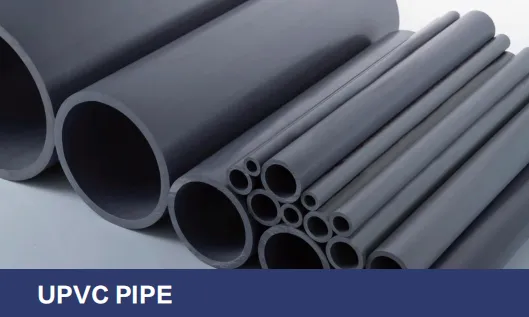
Walk into any modern building—whether it's a sleek high-rise apartment, a bustling hospital, or a cutting-edge office complex—and you'll notice the details that make it stand out: floor-to-ceiling windows, energy-efficient lighting, smart home systems. But behind these visible features lies a hidden network that's just as critical to the building's functionality: its piping system. Think of it as the "circulatory system" of the structure, carrying water for drinking and bathing, removing waste, and even supporting heating and cooling. In today's fast-paced construction world, where efficiency, durability, and sustainability are non-negotiable, choosing the right piping material can make or break a project. Among the options available, UPVC pipe solutions have emerged as a top choice for builders and architects alike. Let's dive into why.
Before we zoom in on UPVC, let's take a step back and appreciate just how vital piping is to a building's success. Imagine a residential complex where the water supply pipes corrode after a few years, leading to leaks and contaminated water. Or a hospital where outdated drainage systems fail, risking hygiene and patient safety. These scenarios aren't just inconvenient—they're costly, dangerous, and damaging to a project's reputation. Traditional piping materials like galvanized steel or copper have long been used, but they come with significant drawbacks: steel rusts, copper is expensive and heavy, and both require extensive maintenance. As buildings grow taller, more complex, and more focused on long-term sustainability, the demand for a piping solution that can keep up has never been higher.
This is where modern materials like UPVC come in. Unlike older options, UPVC (unplasticized polyvinyl chloride) is designed to address the unique challenges of 21st-century construction. But what exactly is UPVC, and how does it differ from other piping solutions on the market?
First, let's clarify: UPVC isn't your average "plastic pipe." The term "UPVC" stands for "unplasticized polyvinyl chloride," which means it's made without the plasticizers that make regular PVC flexible. This gives UPVC a rigid, strong structure that's resistant to bending or warping—qualities that are essential for piping systems. When we talk about "UPVC pipe solutions," we're referring to the full range of products and services offered by an UPVC pipe supplier, from standard pipes and fittings to customized systems tailored to a project's specific needs. These solutions aren't just about selling a product; they're about providing a reliable, long-term answer to a building's piping challenges.
So, how is UPVC made? The process starts with polyvinyl chloride resin, which is mixed with stabilizers, pigments, and impact modifiers to enhance strength and durability. The mixture is then extruded into pipes of various sizes, from small diameters for residential plumbing to large ones for commercial drainage. The result is a material that's lightweight yet robust, chemical-resistant, and designed to last for decades. But what truly sets UPVC pipe solutions apart are the benefits they bring to the table—benefits that align perfectly with the demands of modern construction.
Let's break down the advantages that make UPVC a go-to choice for today's building projects. These aren't just marketing claims—they're practical, real-world benefits that save time, money, and headaches.
One of the biggest concerns in construction is longevity. No one wants to replace pipes every 10 or 20 years. UPVC pipe solutions excel here. Unlike metal pipes, which corrode when exposed to water, chemicals, or even soil, UPVC is inherently resistant to rust, rot, and degradation. It can handle everything from acidic water to harsh cleaning agents without breaking down. In fact, most UPVC pipes come with a lifespan of 50+ years—often outlasting the building's initial occupancy. For example, in coastal areas where saltwater can eat away at metal pipes, UPVC remains unaffected, ensuring a reliable water supply for decades.
Anyone who's ever lifted a steel pipe knows how heavy and cumbersome traditional materials can be. This isn't just a hassle for workers—it also drives up labor costs and installation time. UPVC, on the other hand, is incredibly lightweight. A 10-foot UPVC pipe might weigh just a fraction of its steel equivalent, making it easy to carry, lift, and maneuver—even in tight spaces like ceiling cavities or between walls. This lightweight nature also reduces the need for heavy machinery during installation, cutting down on project timelines. For high-rise buildings, where lifting materials to upper floors is a logistical challenge, UPVC's portability is a game-changer.
Let's talk numbers. Construction budgets are tight, and every dollar counts. UPVC pipe solutions deliver savings in two key ways: upfront costs and long-term expenses. First, UPVC materials are generally cheaper than copper or stainless steel. Second, because they're lightweight and easy to install, labor costs drop significantly—no need for specialized tools or teams to handle heavy lifting. And since UPVC is leak-proof (more on that next), you avoid the hidden costs of water damage repairs or mold remediation down the line. For a mid-sized residential project, switching to UPVC can save thousands of dollars in installation alone.
A single leak in a piping system can lead to mold growth, structural damage, and even health risks. UPVC pipe solutions address this with precision-engineered joints. Most UPVC pipes use a "solvent cement" joining method, where the pipe and fitting are bonded together to create a seamless, permanent seal. When done correctly, these joints are as strong as the pipe itself, eliminating the risk of leaks. Compare this to metal pipes, which rely on threaded connections that can loosen over time, or even PPR pipes (a popular alternative), which require heat fusion— a process that's more prone to human error. With UPVC, once the joint is set, you can trust it to hold for decades.
Once installed, UPVC pipes require almost no maintenance. Unlike metal pipes, which need periodic painting or coating to prevent corrosion, UPVC doesn't rust, flake, or degrade. It's also smooth on the inside, which means fewer clogs from sediment buildup. Property managers and homeowners alike appreciate this "set it and forget it" quality. For example, in a school or hospital—where maintenance teams are already stretched thin—UPVC pipes free up time and resources to focus on other critical tasks.
Safety is paramount in any building, and UPVC pipe solutions deliver here too. UPVC is inherently fire-resistant, with a high ignition temperature and low flame spread. In the event of a fire, it won't release toxic fumes or melt easily, helping to contain the spread and protect occupants. This makes it ideal for use in public spaces like schools, hospitals, and hotels, where fire codes are strict.
To truly understand UPVC's value, it helps to compare it to other common piping materials. Let's take a look at how UPVC pipe solutions measure up against PPR (a type of plastic pipe), PVC DWV (drain, waste, and vent pipes), and traditional metal pipes.
| Feature | UPVC Pipe Solutions | PPR Pipe and Fitting Solutions | PVC DWV Pipe Solutions | Metal Pipes (Copper/Steel) |
|---|---|---|---|---|
| Material Composition | Unplasticized PVC (rigid, no plasticizers) | Polypropylene random copolymer (flexible, heat-resistant) | Standard PVC (with plasticizers, for drainage only) | Metal (copper, steel, or galvanized iron) |
| Durability | 50+ years; resistant to corrosion, chemicals, and rust | 30–40 years; prone to cracking in cold temperatures | 20–30 years; not suitable for high-pressure water | 20–50 years (varies); steel rusts, copper corrodes |
| Installation Ease | Lightweight; solvent cement joints (quick, no special tools) | Requires heat fusion equipment; more skill-dependent | Lightweight but limited to low-pressure applications | Heavy; requires threading or welding; specialized labor |
| Cost (Material + Labor) | Low; affordable materials and quick installation | Moderate; higher material cost than UPVC | Low, but only for drainage (not potable water) | High; expensive materials and labor |
| Best For | Potable water, drainage, HVAC, residential/commercial | Hot water systems (limited to 70°C max) | Wastewater, vents (not for high-pressure use) | Historic buildings, high-temperature industrial use |
As the table shows, UPVC pipe solutions offer a balanced mix of durability, cost-effectiveness, and versatility that's hard to beat. While PPR is better for hot water in some cases, its shorter lifespan and higher installation costs make it less ideal for large-scale projects. PVC DWV is cheap but limited to drainage, and metal pipes are simply too heavy and prone to corrosion for most modern builds. UPVC, by contrast, handles both potable water and drainage, lasts longer, and saves money—making it a jack-of-all-trades for today's construction needs.
UPVC's versatility means it's not just for one type of building—it works across residential, commercial, and even industrial projects. Let's explore some real-world use cases.
In homes, UPVC pipes are used for everything from the main water supply line to bathroom and kitchen plumbing, as well as drainage systems. Homeowners love that UPVC ensures clean, safe water (no rust or contamination) and quiet operation—unlike metal pipes, which can rattle or "water hammer" when water flows through them. For example, in a new housing development in Saudi Arabia, an UPVC pipe supplier worked with builders to install a network of UPVC pipes for both water supply and drainage. The result? Homes with reliable plumbing, lower utility bills (thanks to efficient water flow), and happy residents who don't have to worry about leaks or repairs.
Commercial buildings have unique demands, and UPVC pipe solutions rise to the challenge. In hospitals, hygiene is critical—and UPVC's smooth, non-porous surface prevents bacteria buildup, making it ideal for medical facilities. Schools benefit from UPVC's fire resistance and low maintenance, ensuring student safety and reducing upkeep costs for cash-strapped districts. High-rises, meanwhile, take advantage of UPVC's lightweight design: installing pipes in a 50-story building is far easier when you're not hauling heavy metal pipes up stairwells. Even in specialized projects like hotels or shopping malls, UPVC adapts—whether it's supporting sprinkler systems or carrying wastewater from food courts.
These days, "sustainability" isn't just a buzzword—it's a requirement for many construction projects, with certifications like LEED or BREEAM pushing builders to reduce their environmental impact. UPVC pipe solutions fit neatly into this trend, offering several eco-friendly benefits:
For builders aiming for green certifications, these benefits can make a big difference in scoring points toward LEED or BREEAM approval. It's a win-win: you get a durable, cost-effective piping system and contribute to a more sustainable future.
As construction technology evolves, so too will the demand for smarter, more efficient materials. UPVC pipe solutions are well-positioned to lead this charge. Innovations in UPVC manufacturing are already making pipes even stronger, more flexible, and better suited to extreme temperatures. For example, new additives are being developed to enhance UPVC's resistance to UV rays, making it ideal for outdoor use in sunny climates like Saudi Arabia. Additionally, as smart building technology becomes more common, UPVC pipes can be integrated with sensors to detect leaks or monitor water flow—adding a layer of intelligence to an already reliable system.
Looking ahead, we'll likely see UPVC pipe suppliers partnering with architects and engineers to create even more tailored solutions. Whether it's custom pipe sizes for unique building designs or color-matched pipes for visible installations (like in modern, industrial-style interiors), UPVC's adaptability will keep it at the forefront of construction trends.
At the end of the day, modern construction is all about balance: balancing cost and quality, durability and sustainability, functionality and innovation. UPVC pipe solutions hit this balance perfectly. They're durable enough to last decades, cost-effective enough to fit tight budgets, and sustainable enough to align with global green goals. Whether you're building a single-family home, a sprawling hospital, or a towering commercial complex, UPVC pipes deliver the reliability and performance that modern projects demand.
So, the next time you walk into a modern building, take a moment to appreciate the hidden network of UPVC pipes working behind the scenes. They may not be as glamorous as a rooftop infinity pool or a smart lobby, but they're the unsung heroes keeping the building—and its occupants—thriving. For builders and architects looking to future-proof their projects, UPVC pipe solutions aren't just an option—they're the ideal choice.
Recommend Products












