

Let's face it: choosing the right building materials for a project—whether it's a cozy home renovation or a sprawling commercial complex—feels a lot like solving a puzzle. You want something that looks great, lasts forever, doesn't break the bank, and maybe even checks a few sustainability boxes. And if you're dealing with both interior and exterior spaces? The list of demands gets even longer. Here's the thing, though: in the world of interior and exterior decoration materials, there's a rising star that's quietly revolutionizing how we think about walls. It's called PU stone wall panel solutions, and if you haven't heard of it yet, today's your lucky day. Let's dive into why this material isn't just a trend, but a smart, long-term investment for anyone serious about building better.
Before we get into the "why," let's clear up the "what." PU stone wall panels are a type of engineered building material designed to mimic the look and feel of natural stone—think granite, marble, or travertine—but with a secret weapon: they're made with polyurethane (PU) as their core. Picture this: a lightweight, flexible panel that's crafted by blending high-density PU foam with mineral aggregates, pigments, and reinforcing fibers. The result? A material that's tough as nails but light enough to hold with one hand, and versatile enough to fit any design vision.
Now, you might be thinking, "Why not just use real stone?" Trust me, I get it. Natural stone has that timeless appeal, but it's heavy, expensive, and a nightmare to install. PU stone panels, on the other hand, were born from a simple question: "What if we could have the beauty of stone without all the hassle?" And as we'll see, that question led to a solution that's changing the game for architects, contractors, and homeowners alike.
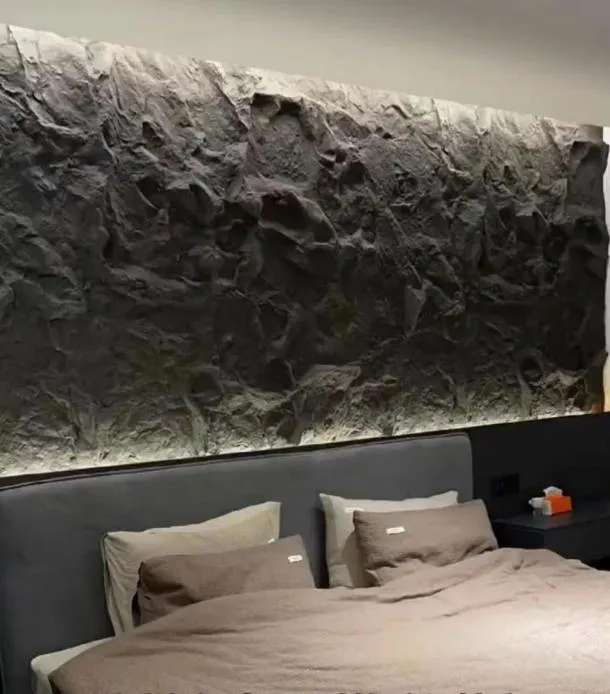
Here's a truth about building materials: durability isn't just about looking good on day one—it's about still looking good on day 1,000. And when it comes to standing up to the elements (or the chaos of daily life), PU stone wall panels are overachievers.
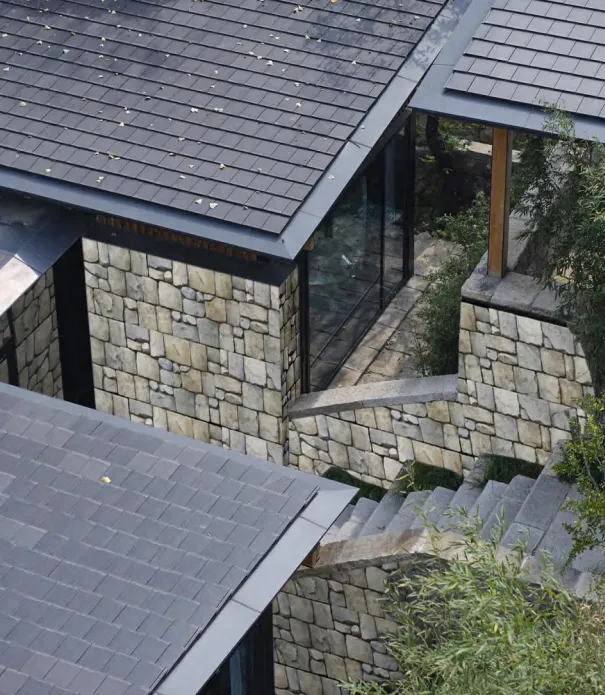
Let's start with the outdoors. Exterior walls take a beating: rain, snow, UV rays, extreme heat, even the occasional hailstorm. Natural stone can crack under freeze-thaw cycles; wood rots; vinyl fades or warps. PU stone panels? They're designed to laugh off these challenges. The polyurethane core is inherently water-resistant, so no more worrying about mold or mildew seeping in. UV-stabilized pigments mean the color won't fade, even after years of direct sunlight. And because they're flexible (yes, flexible!), they can handle minor structural shifts without cracking—something rigid materials like brick or concrete just can't do.
Now, flip to the interior. Kids, pets, furniture scrapes, spilled coffee—interior walls need to be tough, too. PU stone panels have a hard, scratch-resistant surface that stands up to daily wear and tear. I've seen them in busy restaurants where waitstaff brush against walls with trays, in family homes with rambunctious toddlers, and even in hotel lobbies with rolling luggage. The result? Walls that look fresh year after year, without the need for constant touch-ups or repaints.
And let's not forget fire safety. While they're not classified as "Class A fireproof" (that's more the realm of specialized materials like CPL inorganic boards), most PU stone panels are fire-retardant, meaning they resist ignition and slow the spread of flames. For commercial spaces like offices or retail stores, that's a big plus for meeting building codes and keeping occupants safe.
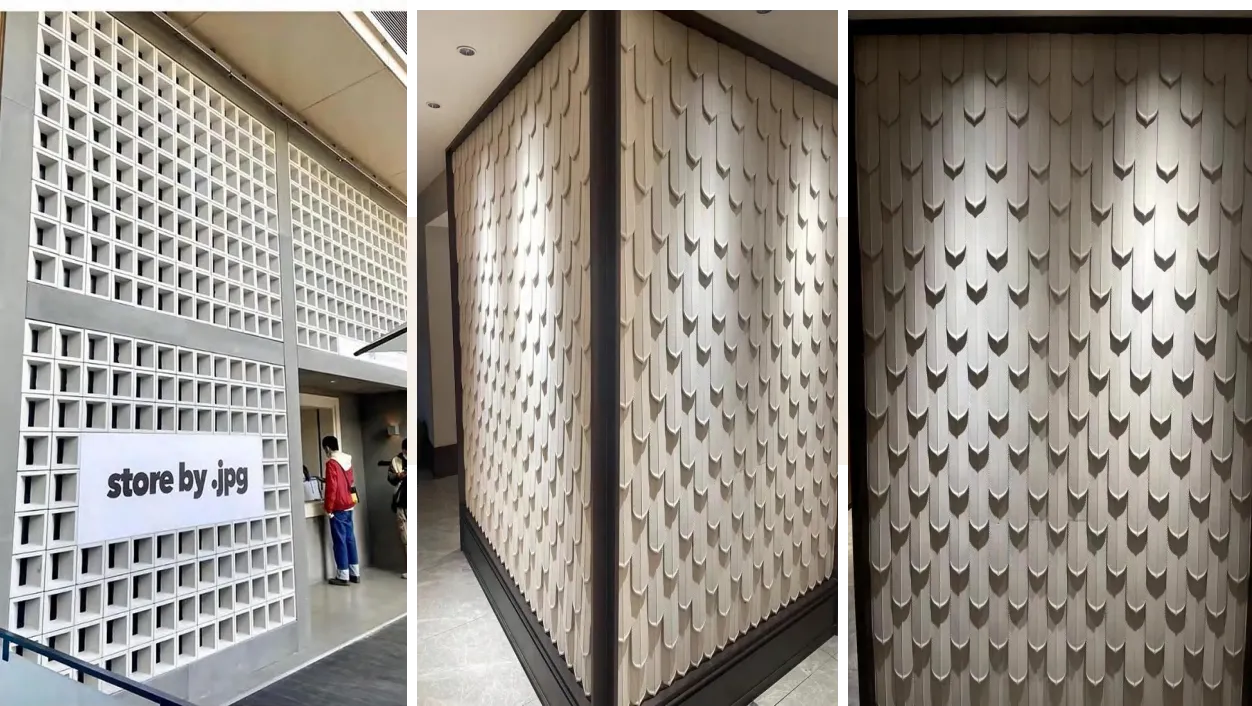
Let's be honest: if a material is durable but ugly, no one's going to invest in it. That's where PU stone wall panels really shine. They don't just "imitate" stone—they elevate it. Thanks to advanced molding techniques, these panels capture every nuance of natural stone: the veins in marble, the texture of rough-hewn granite, the warmth of travertine. You can get them in virtually any color, from classic grays and beiges to bold blacks or even custom shades. Want a modern, sleek look for a corporate office? Go with a smooth, polished finish. Dreaming of a rustic cabin vibe for your backyard patio? Opt for a chiseled, stone-like texture. The options are almost endless.
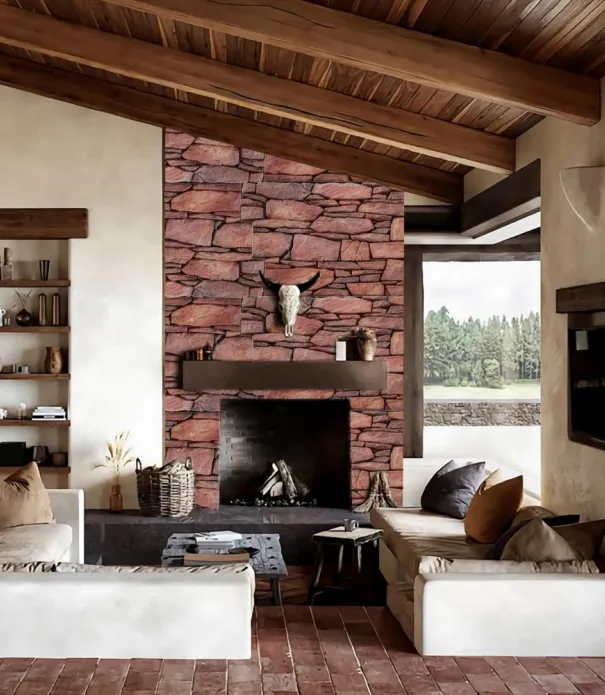
But here's the kicker: unlike natural stone, which is limited by what Mother Nature provides, PU stone panels let you get creative with patterns and designs. Mix and match colors for a feature wall, or use them to mimic the look of stacked stone without the weight. I recently worked with a homeowner who wanted a "mountain lodge" feel in their living room but didn't have the budget for real river rock. PU stone panels gave them the exact texture and color they wanted—at a fraction of the cost. And guests? They couldn't tell the difference. That's the magic of it: you get high-end aesthetics without the high-end price tag.
Let's talk numbers—because at the end of the day, "investment" always comes down to value. PU stone wall panel solutions might not be the cheapest option upfront, but they more than make up for it over time. Here's how:
Lower upfront costs than natural stone: Natural stone is expensive—like, "call-a-stone-mason-and-pray" expensive. Quarrying, cutting, and transporting heavy slabs drives up the price, and that's before installation. PU stone panels, being lightweight and man-made, cost significantly less per square foot. We're talking 30-50% savings in some cases. For a 1,000 sq ft exterior wall, that's tens of thousands of dollars your pocket.
Cheaper and faster installation: Ever watched a crew install natural stone? It's slow. Each slab is heavy, requires precise cutting, and often needs a reinforced wall structure to support the weight. PU stone panels? They're lightweight (about 3-5 lbs per square foot, compared to natural stone's 20-30 lbs), so you don't need special framing or heavy equipment. Most panels click together or adhere with a simple adhesive, meaning a small team can install hundreds of square feet in a day. Faster installation = lower labor costs. And in construction, time really is money.
Minimal maintenance: Natural stone needs sealing every 1-2 years to prevent staining and water damage. Brick needs repointing. Wood needs painting or staining. PU stone panels? Wipe them down with a damp cloth, and you're done. No sealing, no repainting, no expensive repairs. Over 10-20 years, those maintenance savings add up big time.
Energy efficiency bonus: Polyurethane is a natural insulator. That means walls clad in PU stone panels can help reduce heating and cooling costs by keeping indoor temperatures more stable. It's not a massive savings on its own, but when combined with other energy-efficient materials, it's a nice little bonus that pays off month after month.
If you've ever been stuck in a renovation that dragged on for months, you know: installation headaches can turn a dream project into a nightmare. PU stone wall panels solve that problem with a "plug-and-play" approach that contractors love. Let's break it down:
First, the weight. As we mentioned, these panels are light—so light that a single worker can carry multiple panels at once. No need for cranes, forklifts, or reinforced scaffolding. That alone speeds up the process. Second, the flexibility. Unlike rigid materials, PU panels can be cut on-site with basic tools (a saw or utility knife), so you can easily fit them around windows, doors, or odd angles. Third, the adhesion. Most panels use a strong, weather-resistant adhesive that bonds directly to existing surfaces like concrete, drywall, or even brick. No messy mortar, no complicated fastening systems. Just measure, cut, stick, and repeat.
I recently spoke with a contractor who switched to PU stone panels for exterior home renovations. He told me a project that used to take 5 days with natural stone now takes 2 days with PU panels. "Less time on-site means happier clients, fewer weather delays, and more projects we can take on," he said. That's the kind of efficiency that makes everyone's life easier.
These days, "smart investment" isn't just about money—it's about impact. We all want to build in a way that doesn't leave a huge carbon footprint, and PU stone wall panel solutions deliver here, too. Let's start with the production process. Unlike natural stone, which requires mining and transporting heavy materials (a major source of emissions), PU panels are made in controlled factories with minimal waste. Many manufacturers even use recycled materials in their production, further reducing environmental impact.
Then there's the transportation factor. Because PU panels are lightweight, shipping them requires less fuel than hauling natural stone or brick. Less fuel = lower emissions. And since they're durable, they don't need to be replaced as often, which means less material ending up in landfills over time. For businesses aiming for LEED certification or homeowners who want to reduce their eco-footprint, these are tangible benefits that add up.
Still not convinced? Let's put PU stone wall panels head-to-head with other popular wall materials. The table below breaks down key factors like durability, cost, and ease of use—so you can see exactly why PU stone is a standout choice.
| Material | Durability (Weather/ Wear) | Weight (Per Sq Ft) | Installation Time (100 Sq Ft) | Cost (Initial/ Sq Ft) | Long-Term Maintenance Cost | Aesthetic Options |
|---|---|---|---|---|---|---|
| PU Stone Wall Panels | Excellent (resists moisture, UV, scratches) | 3-5 lbs | 2-3 hours (2 workers) | $15-$25 | Low (occasional cleaning) | High (mimics stone, marble, granite; custom colors) |
| Natural Stone (Granite/Marble) | Good (prone to cracking in freeze-thaw; stains without sealing) | 20-30 lbs | 8-10 hours (4 workers + mason) | $40-$80 | High (sealing every 1-2 years; professional cleaning) | Medium (limited by natural availability) |
| Brick | Good (prone to water damage; mortar cracks over time) | 15-20 lbs | 6-8 hours (3 workers) | $25-$35 | Medium (repointing every 5-10 years) | Low (limited colors; uniform texture) |
| MCM Flexible Cladding Panels | Good (resists UV, but less impact-resistant than PU) | 4-6 lbs | 4-5 hours (3 workers) | $20-$30 | Medium (occasional repairs; fading in harsh climates) | Medium (stone/metal looks; fewer custom options) |
Numbers and specs are great, but nothing beats real-life examples. Let's look at two projects where PU stone wall panel solutions made a measurable difference:
Case Study 1: A Boutique Hotel Renovation
A 50-room boutique hotel in Riyadh wanted to update its exterior to attract more guests. The original brick walls were faded, and the mortar was cracking. The owners considered natural stone but balked at the cost and installation time. Instead, they went with PU stone wall panels in a warm travertine finish. The result? The project took 3 weeks instead of the projected 8 (saving on labor costs), and the new exterior withstood Saudi Arabia's extreme heat and sandstorms for 3 years with zero fading or damage. Guests raved about the "luxury stone look," and bookings increased by 20%. As the hotel manager put it: "We got the high-end vibe we wanted, without the high-end price tag."
Case Study 2: A Homeowner's Kitchen Remodel
A family in Jeddah wanted to replace their outdated tile backsplash with something more modern and durable. They chose PU stone panels in a sleek, gray granite pattern. Installation took just one day (the contractor even finished early!), and the panels held up beautifully against splatters, heat from the stove, and the kids' sticky fingers. "I was worried about scratches from pots and pans, but after a year, it still looks brand new," the homeowner told me. "And cleaning it? A quick wipe with a sponge—no scrubbing required."
At the end of the day, no single material is perfect for every project. But if you're looking for a wall solution that balances aesthetics, durability, cost, and ease of use—whether for interior accent walls, exterior facades, or commercial spaces—PU stone wall panel solutions deserve a spot at the top of your list. They're not just a "good enough" option; they're a smart investment in a material that works as hard as you do.
So, whether you're a contractor bidding on your next big job, a business owner upgrading your storefront, or a homeowner finally tackling that renovation, remember: the best investments are the ones that pay off in both the short term and the long run. And in the world of interior and exterior decoration materials, PU stone wall panels are proving to be exactly that.
Ready to explore how PU stone wall panel solutions can transform your project? Reach out to a trusted PU stone wall panel supplier today. They'll help you choose the right style, color, and application—so you can build something that looks great, lasts longer, and keeps more money in your pocket. Trust me, your future self (and your walls) will thank you.
Recommend Products











