
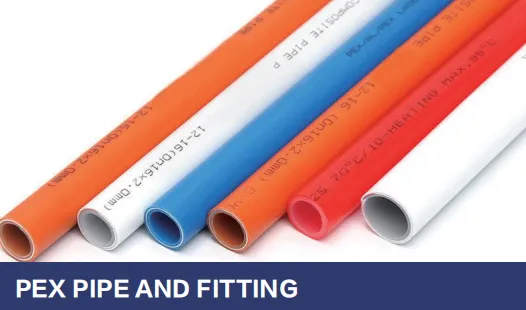
Walk into any construction site today, and you'll likely hear a common refrain among contractors: "The right materials make or break the project." Nowhere is this truer than with piping systems—the silent workhorses that carry water, heat, and gas through homes, offices, hospitals, and skyscrapers. In recent decades, one material has revolutionized the industry: PEX (cross-linked polyethylene). Flexible, durable, and resistant to corrosion, PEX pipes have become the go-to choice for residential and commercial projects alike. But here's the critical question: with so many suppliers claiming to offer "premium" PEX products, how do you separate the genuine experts from the rest? What defines a top-tier pex pipe and fitting supplier —and why should it matter to your project?
This isn't just about buying pipes. It's about partnering with a team that understands your unique challenges, from tight installation spaces in a historic home to high-pressure requirements in a commercial complex. A top supplier doesn't just sell products—they deliver pex pipe and fitting solutions that align with your goals for safety, efficiency, and longevity. Let's break down the standards that set the best apart.
Every great PEX product starts with one thing: high-quality raw materials. Imagine ordering a luxury car only to find it's built with recycled instead of durable steel—that's the risk you take with suppliers who cut corners on resin. Top-tier PEX suppliers prioritize virgin polyethylene resin, not regrind or recycled material, because virgin resin ensures consistent performance. Why does this matter? Recycled resin often contains impurities that weaken the pipe's structure, making it prone to cracks, leaks, or failure under temperature fluctuations.
But not all virgin resin is created equal. Reputable suppliers source resin from certified manufacturers with a track record of compliance with global standards, such as ISO 9001. They'll happily share documentation—like certificates of analysis (CoA)—proving the resin meets specifications for density, melt flow rate, and cross-linking potential. This transparency isn't just a nice-to-have; it's a non-negotiable for anyone serious about project safety.
Take cross-linking, for example. PEX pipes get their strength from a chemical or physical process that links polyethylene molecules, creating a rigid yet flexible structure. The three main types—PEX-A, PEX-B, and PEX-C—differ in how they're cross-linked, and each has unique properties. A top supplier won't push a one-size-fits-all solution. Instead, they'll guide you: PEX-A, with its high flexibility and resistance to kinking, is ideal for tight bends in residential projects. PEX-B, cost-effective and durable, works well for commercial applications with straight runs. PEX-C, known for consistent thickness, suits small-diameter systems like radiant heating. This level of expertise comes from deep material knowledge—something you won't get from a supplier focused solely on price.
Even the best resin can become a subpar pipe if the manufacturing process is flawed. Picture a bakery: the finest flour won't save a cake if the oven temperature is off. Similarly, PEX manufacturing demands meticulous control over every step—from extrusion to cutting to fitting production.
Start with extrusion. The resin is melted, mixed with additives (like antioxidants to prevent UV degradation), and forced through a die to form the pipe. Top suppliers use state-of-the-art extrusion lines with computerized controls to monitor temperature, pressure, and speed in real time. Why? Inconsistent temperature can lead to uneven cross-linking, creating weak spots in the pipe wall. A 0.1mm variation in wall thickness might seem minor, but under high pressure, it can cause the pipe to burst. Reputable suppliers invest in laser gauges to ensure wall thickness stays within ±0.05mm of specifications—precision that directly translates to reliability.
Then there are the fittings—the often-overlooked components that connect pipes and control flow. A leaky fitting can undo even the best pipe work, leading to water damage, mold, and costly callbacks. Top-tier suppliers manufacture fittings using high-grade materials: lead-free brass for durability, or engineered polymers for corrosion resistance in aggressive water conditions. They also use precision machining to ensure a tight seal, with tolerances as small as 0.02mm. For example, crimp fittings must have exact inner diameters to grip the pipe securely, while push-fit fittings rely on O-rings that are tested for compression set (how well they maintain their shape over time). A supplier that skimps on fitting quality is gambling with your project's success.
In an industry flooded with buzzwords like "industrial-grade" and "premium," certifications are the only objective measure of quality. Think of them as a report card from independent third parties, verifying that a product meets strict safety and performance standards. For PEX pipes and fittings, the most critical certifications include:
But certifications aren't just pieces of paper. Top suppliers don't just "have" certifications—they live by them. They'll undergo annual audits, random product testing, and continuous improvement to maintain compliance. When you ask for a copy of their NSF certificate, they won't hesitate to provide it. If a supplier hesitates or offers vague excuses, that's a red flag.
Certifications are the baseline; real-world testing is where great suppliers prove their mettle. Imagine buying a new phone without testing its battery life—you'd regret it when it dies halfway through the day. Similarly, PEX pipes must withstand years of wear, from freezing temperatures to high water pressure to chemical exposure. Top suppliers test their products beyond industry minimums, often subjecting them to extreme conditions to ensure they exceed expectations.
Consider burst pressure testing. The ASTM standard requires PEX pipes to withstand 480 psi at 73°F for one hour. A top supplier might test at 600 psi for 24 hours to simulate decades of use. Or thermal cycling: pipes are exposed to temperatures ranging from -40°F to 180°F, repeated 1,000 times, to mimic seasonal changes. Leak testing for fittings is equally rigorous—suppliers use automated machines to apply pressure and check for even the smallest drips. Some even conduct long-term aging tests, exposing pipes to hot water for 10,000 hours (over a year) to predict lifespan.
What does this mean for you? Peace of mind. When a supplier can show you test reports proving their pipes last 50+ years under normal conditions, you're not just buying a product—you're investing in a system that won't fail when your client moves in or your commercial tenant opens their doors.
Here's a secret: the best residential building materials supplier and commercial building materials supplier aren't just vendors—they're extensions of your team. They understand that your success is their success, so they go beyond delivering pipes to offering support that solves your unique challenges.
Take technical support, for example. Imagine installing PEX in a 100-year-old home with uneven studs and limited space. A top supplier won't just sell you pipe—they'll send a technical consultant to assess the site, recommend bend supports or manifolds, and even train your crew on proper crimping techniques. For commercial projects, like a hospital with strict infection control requirements, they'll suggest antimicrobial PEX options and provide documentation for code compliance.
Then there's inventory management. Construction schedules are tight, and delays cost money. The best suppliers maintain large, well-organized warehouses to ensure quick delivery—even for custom orders. Need 500 feet of PEX-A with oxygen barrier for a radiant heating system by next week? They'll make it happen. And if a shipment is delayed, they'll communicate proactively, offering alternatives to keep your project on track.
Warranty is another area where top suppliers shine. A standard warranty might cover defects for 10 years, but leaders offer 25-year or lifetime warranties on materials. More importantly, they honor those warranties without hassle. If a pipe fails due to a manufacturing defect, they'll replace it and send a technician to investigate—no blame-shifting, no fine print.
Today's projects aren't just about function—they're about responsibility. Clients and regulators alike demand eco-friendly solutions, and top PEX suppliers are leading the charge. How? By reducing their carbon footprint, minimizing waste, and creating products that last longer (reducing the need for replacements).
Consider manufacturing: energy-efficient extrusion lines, recycling of production scrap, and solar-powered facilities are becoming standard for industry leaders. PEX itself is inherently sustainable—its light weight reduces transportation emissions, and its longevity means fewer pipes end up in landfills. Some suppliers even offer take-back programs for old pipes, turning them into new resin for non-potable applications.
Sustainability also aligns with cost savings. A pipe that lasts 50 years instead of 20 reduces long-term replacement costs, and energy-efficient manufacturing often translates to stable pricing—no surprises when market conditions fluctuate.
Talk is cheap. The best suppliers let their work speak for itself. Ask for case studies, and they'll share stories like this: A luxury apartment complex in Riyadh needed a piping system that could handle Saudi Arabia's extreme heat. The supplier recommended PEX-A with UV protection, provided custom lengths to reduce joints (and leak points), and completed installation 2 weeks ahead of schedule. Today, the building's property manager reports zero leaks and lower maintenance costs than comparable complexes with copper pipes.
Or this: A school district in Canada wanted to replace outdated galvanized pipes to improve water quality. The supplier conducted a site audit, recommended PEX-B for its balance of cost and durability, and trained the district's maintenance team on proper care. Now, the schools have cleaner water, and the district saved 30% on installation compared to copper.
These stories aren't just marketing—they're proof that a top-tier supplier delivers on its promises.
| Feature | PEX Pipes | Copper Pipes | PPR Pipes |
|---|---|---|---|
| Flexibility | High (bends easily, no elbows needed) | Low (requires fittings for bends) | Moderate (stiffer than PEX) |
| Corrosion Resistance | Excellent (no rust or scale buildup) | Poor (prone to pinhole leaks in acidic water) | Good (resists chemicals, not as durable as PEX) |
| Installation Cost | Low (fewer fittings, faster labor) | High (expensive material and labor) | Moderate (similar to PEX, more fittings needed) |
| Freeze Resistance | High (expands without bursting) | Low (cracks in freezing conditions) | Moderate (can crack if frozen) |
| Lifespan | 50+ years | 20–50 years (depending on water quality) | 25–40 years |
At the end of the day, choosing a PEX pipe and fitting supplier isn't just about checking a box on your material list. It's about selecting a partner who understands that every pipe, every fitting, and every solution impacts your project's safety, budget, and reputation. A top-tier supplier brings transparency to material sourcing, precision to manufacturing, rigor to testing, and dedication to your success.
So the next time you're evaluating suppliers, ask the tough questions: Where do you source your resin? What certifications do you hold? Can you share test reports? How do you support projects like mine? The answers will tell you everything you need to know. Because when you partner with the best, you're not just building structures—you're building trust, one pipe at a time.
Recommend Products












