
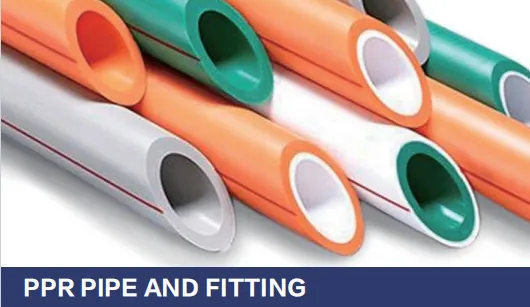
Walk into any modern building—whether it's a cozy family home, a bustling office complex, or a state-of-the-art hospital—and you'll find a silent workhorse keeping things running smoothly: PPR pipes. These unassuming tubes carry everything from hot and cold water to heating systems, making them the circulatory system of our built environment. But here's the thing: not all PPR pipes are created equal. And when it comes to choosing a supplier, settling for "good enough" can lead to leaks, delays, or even safety risks down the line. So what separates the best PPR pipe and fitting suppliers from the rest? It's not just about selling products—it's about delivering trust, reliability, and solutions that grow with your project. Let's unpack the qualities that turn a vendor into a long-term partner, especially in a market as dynamic as Saudi Arabia's construction industry, where demand for durable, efficient building materials is skyrocketing.
At the end of the day, a PPR pipe is only as good as the materials and craftsmanship that go into it. Reliable suppliers know this, and they treat quality as non-negotiable. Let's start with the basics: raw materials. The best PPR pipes are made from 100% virgin PPR resin, not recycled or blended plastics that can weaken the structure. Why does this matter? Virgin resin ensures consistent density, heat resistance, and pressure tolerance—critical for pipes that handle everything from scalding hot water in showers to high-pressure commercial systems.
But it's not just about the resin. The manufacturing process matters, too. Top suppliers invest in advanced extrusion and molding technologies to ensure every pipe and fitting has uniform thickness, smooth inner walls (to prevent clogs), and precise dimensions. Imagine a scenario where a contractor is installing pipes in a high-rise apartment: if the fittings are slightly misaligned or the pipe walls vary in thickness, it could lead to leaks during pressure testing—costing time, money, and reputational damage. A reliable supplier avoids this by subjecting every batch to rigorous testing: hydrostatic pressure tests at 95°C for 1000 hours, impact resistance checks at low temperatures, and even chemical resistance tests to ensure compatibility with common household and industrial fluids.
What's more, quality-focused suppliers don't just test products in the lab—they stand behind them with warranties. A 10-year warranty on PPR systems isn't just a marketing gimmick; it's a promise that the supplier is confident in their product's longevity. Compare that to fly-by-night suppliers who offer no guarantees and vanish when issues arise. When you're building a home that's meant to last decades, or a commercial space that needs to stay operational 24/7, that warranty becomes your safety net.
A great PPR pipe and fitting supplier doesn't just hand you a box of pipes and wave goodbye. They understand that construction projects—whether residential, commercial, or industrial—are complex ecosystems, and your plumbing system needs to fit seamlessly into the bigger picture. That's where "solutions" come into play, not just products. For example, a hospital might need PPR pipes that can withstand frequent temperature fluctuations and are easy to sanitize, while a luxury villa might require pipes that minimize noise from water flow. A one-stop architectural solution provider anticipates these unique needs and tailors their offerings accordingly.
Let's break it down: first, the range of fittings. PPR systems rely on more than just straight pipes—you need elbows, tees, reducers, valves, and flange connections to navigate corners, split lines, and control flow. A reliable supplier stocks a full suite of fittings, all made from the same high-quality PPR resin as the pipes, ensuring a perfect, leak-proof fit. But it doesn't stop there. They might also offer specialized components: thermal expansion for buildings with extreme temperature changes, or sound-insulating pipes for hotels where guest comfort is paramount.
Then there's customization. Maybe a contractor is working on a heritage building with unusual pipe routing, or a developer wants to integrate smart home technology into their plumbing (like sensors that detect leaks). A forward-thinking supplier will collaborate with you to design custom solutions—whether it's modifying a fitting's shape or creating a color-coded system to distinguish hot and cold lines. This level of flexibility turns a supplier into a problem-solver, not just a product pusher.
| Pipe Material | Temperature Resistance | Pressure Rating (20°C) | Typical Lifespan | Best For |
|---|---|---|---|---|
| PPR | Up to 95°C (continuous use) | 16 bar (PN16) | 50+ years | Residential hot/cold water, commercial HVAC, hospitals |
| PVC | Up to 45°C | 10 bar (PN10) | 25-30 years | Drainage, cold water only |
| PEX | Up to 82°C (continuous use) | 10 bar (PN10) | 40-50 years | Residential plumbing, underfloor heating |
Even the best PPR pipes can fail if installed incorrectly. That's why technical support is the unsung hero of reliable suppliers. Think about it: a plumber who's used to working with PVC might not be familiar with PPR's heat fusion techniques. A good supplier doesn't just assume you know it all—they provide training. Maybe it's a workshop at your construction site, a step-by-step video series, or a dedicated technical hotline you can call at 2 a.m. when you're stuck on a weekend installation.
On-site support is another game-changer. Imagine you're building a large residential complex in Riyadh, and your team hits a snag: the PPR pipes aren't fitting through a narrow wall cavity as planned. A responsive supplier will send a technical rep to the site within 24 hours to assess the situation, suggest workarounds (like using a flexible elbow or adjusting the pipe diameter), and even help redesign the layout if needed. This kind of hands-on assistance saves weeks of delays and prevents costly mistakes.
And it's not just during installation. Post-project, a reliable supplier stays in touch. They'll follow up to ask how the system is performing, offer maintenance tips (like how to clean PPR pipes to prevent limescale buildup), and update you on new technologies—like antimicrobial PPR additives that reduce bacteria growth in hospitals. This ongoing relationship turns a one-time transaction into a partnership built on mutual success.
In the construction world, compliance isn't optional—it's survival. Every region has its own codes, and Saudi Arabia is no exception. From the Saudi Standards, Metrology and Quality Organization (SASO) to international benchmarks like ISO 15874 (the global standard for PPR pipes), a reliable supplier ensures every product meets or exceeds these requirements. Why does this matter? Non-compliant pipes can lead to project shutdowns, fines, or even legal liability if a failure causes damage or injury.
Let's take fire safety, for example. While PPR isn't classified as Class A fireproof (that's more common in materials like CPL inorganic boards used in hospitals), it does have inherent fire-retardant properties, and suppliers should provide test reports proving it meets local fire codes. For commercial buildings in Saudi Arabia, where fire safety regulations are strict, this documentation isn't just paperwork—it's a requirement to get your project approved.
Then there's sustainability. More and more developers in Saudi Arabia are prioritizing green building certifications like LEED or Estidama. A forward-thinking PPR supplier will highlight their eco-friendly practices: using recyclable packaging, reducing energy consumption in manufacturing, or offsetting carbon emissions. They might even offer PPR pipes made from recycled resin (though, importantly, only for non-potable water systems—never for drinking water, where virgin resin is a must). These efforts not only help your project meet sustainability goals but also align with global trends toward responsible construction.
Let's talk about the elephant in the room: construction delays. We've all heard horror stories: a shipment of pipes arrives late, throwing off the entire project timeline. Or worse, the order is incorrect—you asked for PN20 pipes (rated for higher pressure) but received PN10, and now you can't start installation. A reliable supplier doesn't let this happen. They have streamlined logistics networks, especially in key markets like Saudi Arabia, with local warehouses that stock popular PPR sizes and fittings. This means when you place an order, it's delivered within 48 hours, not 48 days.
Communication is another cornerstone. From the moment you send an inquiry, you should feel heard. A dedicated account manager will take the time to understand your project's scope, budget, and timeline, then recommend the best PPR solutions—no upselling unnecessary products. If there's a delay (because, let's face it, even the best suppliers hit snags sometimes), they'll proactively notify you, explain the issue, and offer a clear plan to resolve it. Compare that to suppliers who ignore your calls or give vague excuses—stress you don't need when you're already juggling a dozen contractors.
After-sales support is the final piece of the puzzle. Let's say six months after installation, a PPR fitting starts leaking due to a manufacturing defect. A reliable supplier will send a replacement immediately, no questions asked, and might even dispatch a technician to fix it—all at no extra cost. This kind of accountability builds trust, and trust is what turns first-time buyers into repeat customers.
The construction industry doesn't stand still, and neither should your PPR supplier. New technologies, stricter regulations, and evolving customer needs demand constant innovation. For example, smart plumbing is on the rise—integrating sensors that monitor water flow, pressure, and temperature in real time. A forward-looking supplier might partner with tech companies to develop PPR pipes with built-in sensor ports, making it easier to install these systems without damaging the pipes.
Then there's material science. Researchers are always finding ways to make PPR more durable, flexible, or heat-resistant. A supplier with an in-house R&D team might introduce a new PPR blend that can handle higher temperatures (up to 110°C) for industrial applications, or a lightweight version that's easier to transport and install without sacrificing strength. These innovations don't just make your project better—they give you a competitive edge in a crowded market.
Choosing a PPR pipe and fitting supplier might seem like a small decision in the grand scheme of a construction project, but it's one that ripples through every phase—from installation to long-term maintenance. The best suppliers aren't just vendors; they're partners who share your commitment to quality, reliability, and success. They prioritize product integrity, offer tailored solutions, provide unwavering support, and stay ahead of industry trends.
So the next time you're evaluating suppliers, ask yourself: Do they feel like a transaction, or a team member? Do their products come with stories of shortcuts, or of rigorous testing and care? In a market as dynamic as Saudi Arabia's, where construction is booming and standards are higher than ever, the answer to these questions will determine whether your project is a headache or a triumph.
At the end of the day, a reliable PPR pipe and fitting supplier doesn't just sell pipes—they build trust. And in construction, trust is the foundation that everything else stands on.
Recommend Products












