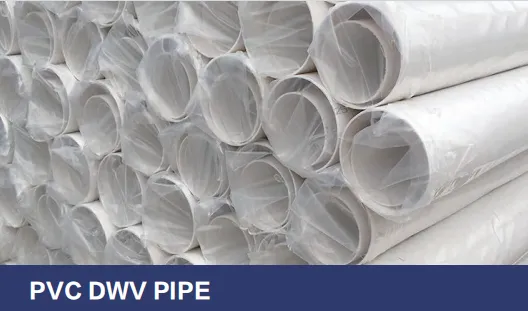
At the heart of every premium PVC DWV pipe supplier lies an unwavering commitment to quality. This isn't just about meeting minimum industry standards—it's about redefining them. Let's break down what this looks like in practice.
Material Selection: The Starting Point of Excellence
Premium suppliers understand that a pipe is only as good as the raw materials that go into it. Unlike budget-focused competitors who may cut corners with recycled plastics of questionable origin or fillers that weaken structural integrity, top-tier suppliers invest in high-grade virgin PVC resin. This resin is sourced from trusted manufacturers, ensuring consistency in molecular structure, which directly impacts the pipe's flexibility, impact resistance, and chemical stability. For instance, a supplier specializing in PVC DWV pipes might opt for resin with a K-value (a measure of molecular weight) of 67 or higher, a specification known for balancing strength and processability—critical for withstanding the rigors of installation and long-term use in diverse environments, from humid bathrooms to temperature-fluctuating attics.
Manufacturing Processes: Precision in Every Inch
Quality manufacturing is a symphony of precision, technology, and human expertise. Premium suppliers leverage advanced extrusion technology—such as twin-screw extruders—that ensures uniform wall thickness, consistent diameter, and smooth inner surfaces. Why does this matter? Uneven walls can lead to weak points prone to cracking under pressure, while rough inner surfaces increase friction, raising the risk of clogs in DWV systems. Take, for example, the production of a 4-inch PVC DWV pipe: a premium supplier's extruder will maintain wall thickness within ±0.01 inches of the specified dimension, while lesser suppliers might allow variances of up to ±0.05 inches—a difference that, over hundreds of feet of piping, can compromise the system's efficiency and durability.
Beyond extrusion, premium suppliers also prioritize proper cooling and curing. Rapid cooling can introduce internal stresses in the pipe, making it brittle over time, while insufficient curing can leave the material vulnerable to chemical degradation. By controlling cooling rates with precision water baths and implementing post-extrusion annealing processes, they ensure the PVC polymer chains stabilize uniformly, resulting in pipes that remain flexible yet strong, even in extreme temperatures.
Rigorous Testing: Leaving No Room for Doubt
Talk is cheap; testing is proof. Premium suppliers subject every batch of PVC DWV pipes to a battery of tests, far beyond the basic checks required by law. These include:
-
Hydrostatic Pressure Testing:
Pipes are pressurized with water at 1.5 times their rated working pressure for extended periods (often 1000 hours) to simulate decades of use. A premium supplier might test at 200 psi for a pipe rated for 125 psi, ensuring it can handle unexpected surges without failure.
-
Impact Resistance Testing:
Pipes are cooled to -10°C (14°F) and struck with a weighted pendulum to mimic the impact of tools, debris, or accidental drops during installation. A passing result means the pipe doesn't crack or split—a critical safety feature in busy construction sites.
-
Chemical Resistance Testing:
Samples are exposed to common household and industrial chemicals (e.g., detergents, acids, alkalis) to ensure they don't degrade, swell, or leach harmful substances. This is especially vital for pipes used in commercial kitchens, laboratories, or healthcare facilities.
-
Flame Spread and Smoke Density Testing:
While PVC is inherently fire-resistant, premium suppliers go further by testing compliance with standards like ASTM E84, ensuring their pipes contribute minimally to flame spread and smoke production in the event of a fire—protecting lives and property.
These tests aren't just box-ticking exercises. Results are documented, stored, and made available to customers, providing transparency that builds trust. When a supplier can hand you a certificate showing that your batch of PVC DWV pipes passed 1000 hours of pressure testing with zero leaks, that's not just data—it's peace of mind.
Certifications: Beyond the Basics
Industry certifications are non-negotiable for premium suppliers, but they don't stop at the minimum. Look for suppliers who hold certifications like ASTM D2665 (the gold standard for PVC DWV pipes in North America), ISO 9001 (quality management systems), and NSF/ANSI 61 (certifying that pipes are safe for use in drinking water systems, even if they're primarily for DWV—an extra layer of assurance). Some suppliers even pursue additional certifications, such as LEED v4 compliance, for pipes made with recycled content (without sacrificing quality) or low-VOC emissions, aligning with sustainable building goals.
In short, quality for a premium PVC DWV pipe supplier isn't a buzzword—it's a mindset. It's about recognizing that every pipe they produce is part of someone's home, workplace, or community space, and that failure is never an option.