
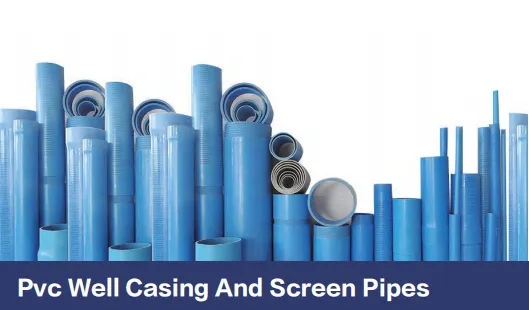
In the world of construction, agriculture, and water resource management, few components are as critical yet underappreciated as well casing and screen pipes. These unassuming structures form the backbone of water wells, ensuring clean, reliable access to groundwater for communities, farms, and industries. But not all PVC well casing and screen pipes are created equal—and neither are the suppliers who provide them. For project managers, engineers, and procurement teams, choosing the right supplier isn't just about buying a product; it's about partnering with a team that understands their unique challenges, delivers solutions that stand the test of time, and elevates the success of their projects. So, what exactly separates a leading PVC well casing and screen pipes supplier from the rest? Let's dive in.
At the heart of any leading supplier's reputation lies an unwavering commitment to product quality. PVC well casing and screen pipes are subjected to harsh conditions—underground pressure, corrosive soils, fluctuating water chemistry—and cutting corners here can lead to catastrophic failures: collapsed wells, contaminated water supplies, or costly replacements. A top-tier supplier recognizes this and builds quality into every step of the process, from raw material selection to the final product.
Take, for example, the choice of raw materials. While many suppliers opt for recycled or low-grade PVC resins to cut costs, leading providers invest in high-purity virgin PVC compounds. Why? Virgin PVC offers superior tensile strength, impact resistance, and chemical stability—properties that are non-negotiable when a pipe is expected to last 50+ years underground. This attention to detail extends to additives, too: UV stabilizers to prevent degradation in sunlight during storage, impact modifiers to withstand installation stresses, and antimicrobial agents for applications in potable water systems.
Manufacturing processes matter, too. Advanced extrusion lines with precision controls ensure consistent wall thickness, dimensional accuracy, and smooth inner surfaces—critical for maintaining water flow rates and preventing sediment buildup. For screen pipes, the slotting process is a art form: leading suppliers use laser-cutting technology to create uniform, precise slots that filter out sediment while maximizing water intake. Unlike cheaper mechanical slotting methods, laser cutting minimizes burrs and stress points, reducing the risk of cracks over time.
Quality isn't just about materials and machines, though—it's about testing. A leading PVC well casing and screen pipes supplier doesn't wait for third-party inspections; they implement rigorous in-house testing at every stage. Tensile strength tests, impact resistance trials (using the ASTM D2444 standard, for instance), and pressure testing to ensure pipes can handle the hydrostatic pressures of deep wells. For screen pipes, slot opening uniformity and flow performance are verified through specialized equipment, ensuring the product meets not just industry standards but the specific needs of the client's project.
This commitment to quality often extends beyond well casing to related products, such as UPVC pipes. As an upvc pipe supplier, a leading provider ensures their UPVC offerings—used in everything from irrigation systems to municipal water distribution—meet the same high standards. After all, a project that relies on PVC well casing to draw water needs equally durable UPVC pipes to transport it, creating a seamless, reliable system from source to tap.
In a market flooded with generic products, what truly sets a leading supplier apart is their ability to move beyond "selling pipes" to delivering PVC well casing and screen pipes solutions. Every project is unique: a well in sandy soil requires different screen slotting than one in clay; a municipal water well has stricter contamination standards than an agricultural irrigation well. A one-size-fits-all approach simply doesn't work—and leading suppliers know this.
Technical expertise starts with a deep understanding of the industries they serve. Agricultural clients, for example, need well casing that can withstand the abrasion of sand-laden water and resist corrosion from fertilizers. Municipal clients prioritize compliance with potable water regulations (like NSF/ANSI 61) and long-term durability to avoid disruptions to public water supplies. A leading supplier's team includes engineers and geoscience specialists who can assess a client's site conditions—soil type, water table depth, intended use—and recommend the optimal casing diameter, wall thickness, and screen design.
Innovation is another hallmark of technical leadership. The best suppliers invest in research and development to stay ahead of emerging challenges. For instance, in regions with high levels of hydrogen sulfide in groundwater—a common cause of PVC degradation—leading suppliers have developed specialized formulations with enhanced chemical resistance. Similarly, for deep-well applications (over 1,000 feet), they've engineered casing with thicker walls and reinforced joints to handle extreme pressure. These aren't just "solutions" in name; they're problem-solving tools tailored to real-world needs.
Customization is often where this expertise shines brightest. A client building a well in a karst landscape—characterized by porous limestone and underground caves—might need screen pipes with variable slot sizes to target specific aquifers. A leading supplier doesn't just say, "We don't have that in stock"; they collaborate with the client to design, prototype, and manufacture a custom screen that meets those exact requirements. This level of flexibility transforms the supplier from a vendor into a strategic partner, invested in the project's success.
Technical support doesn't end at delivery, either. Leading suppliers offer on-site assistance during installation, helping contractors ensure proper joint fusion, casing centralization, and screen placement. They provide detailed installation guides, video tutorials, and even training workshops for client teams. For complex projects, they might assign a dedicated technical representative to oversee the process from start to finish—ensuring the solution performs as promised long after the pipes are in the ground.
In today's fast-paced construction and infrastructure landscape, time is money—and coordination is everything. A project that requires well casing, distribution pipes, fittings, and valves from multiple suppliers can quickly become a logistical nightmare: mismatched specifications, delayed deliveries, and fragmented communication. This is where the value of a one-stop architectural solution provider becomes clear. A leading PVC well casing and screen pipes supplier doesn't just stop at well components; they offer a comprehensive range of related products and services that simplify procurement and streamline projects.
Consider the example of a rural water supply project. The client needs PVC well casing and screen pipes to drill the well, UPVC pipes for water distribution to villages, PVC DWV pipes for wastewater management, and fittings to connect it all. A one-stop supplier can provide all these products under one roof, ensuring compatibility across the system. No more worrying if the well casing threads will fit the distribution pipe adapters or if the valve materials are compatible with the water chemistry—everything is designed to work together.
This integration extends to product lines beyond pipes, too. Many leading suppliers offer a suite of solutions, from PVC well casing and screen pipes to valves, pumps, and even water treatment components. For agricultural clients, this might mean pairing well casing with irrigation sprinklers and drip systems; for industrial clients, combining casing with chemical-resistant pipes for process water. The result? Clients save time on research, reduce the risk of compatibility issues, and enjoy the convenience of a single point of contact for all their needs.
One-stop convenience also translates to better inventory management. Instead of juggling multiple orders and delivery schedules, clients can place a single order for all their project needs. Leading suppliers leverage advanced inventory management systems to ensure stock availability, even for specialized products, and offer flexible delivery options—from just-in-time deliveries to bulk shipments—to align with project timelines. For clients working in remote areas, this can be a game-changer, eliminating the need to coordinate with multiple logistics providers.
Perhaps most importantly, a one-stop approach fosters long-term relationships. When a supplier understands a client's broader needs—beyond just well casing—they can anticipate future requirements and offer proactive solutions. A municipal client, for example, might start with a well project but later need UPVC pipes for a road expansion; a leading supplier, already familiar with their standards and preferences, can quickly adapt and deliver, turning a one-time transaction into a lasting partnership.
In industries where public health, safety, and environmental protection are at stake, compliance isn't optional—it's essential. PVC well casing and screen pipes are no exception: they must adhere to strict standards to ensure they don't contaminate water supplies, fail under pressure, or harm the environment. A leading supplier doesn't just "meet" these standards; they embed compliance into their culture, using it as a benchmark for excellence.
Regulatory compliance starts with certifications—and not just the minimum required. For potable water applications, look for suppliers certified to NSF/ANSI 61, which verifies that their products don't leach harmful chemicals into drinking water. For pressure piping, ASTM D1785 (for PVC pipes) and ASTM F480 (for well casing) are critical standards, ensuring pipes can withstand the stresses of installation and long-term use. In regions like Saudi Arabia, where construction standards are stringent, leading suppliers also comply with local regulations, such as SASO (Saudi Arabian Standards Organization) requirements, to ensure seamless project approvals.
Environmental compliance is equally important. PVC production, when done poorly, can have a significant carbon footprint, but leading suppliers are committed to sustainable practices. They invest in energy-efficient extrusion lines, recycle production waste, and source raw materials from suppliers with strong environmental credentials. Some even pursue certifications like ISO 14001, demonstrating their commitment to minimizing environmental impact throughout the supply chain. For clients prioritizing green building or sustainable development goals, this compliance isn't just a checkbox—it's a selling point.
Compliance also extends to documentation. A leading supplier provides comprehensive technical data sheets, material safety data sheets (MSDS), and certification records for every product. This isn't just about transparency; it's about empowering clients to meet their own regulatory obligations. Imagine a contractor submitting a project for approval—having easy access to all necessary compliance documents from their supplier can speed up inspections and prevent costly delays.
Perhaps most importantly, leading suppliers view compliance as a moving target. They stay updated on evolving standards, whether it's new NSF requirements for drinking water or stricter environmental regulations in their target markets. By proactively adapting their processes and products, they ensure clients are never caught off guard by changing rules—another layer of security that builds trust.
In a market where products can seem interchangeable, exceptional customer service is often the deciding factor for clients. A leading PVC well casing and screen pipes supplier understands that technical expertise and quality products are table stakes; what truly wins loyalty is a commitment to putting the customer first. From the first inquiry to long after installation, these suppliers prioritize the client experience, turning transactions into relationships.
It starts with responsiveness. Anyone who's worked in construction knows that project timelines can shift overnight—and a delayed response from a supplier can derail weeks of planning. Leading suppliers prioritize quick, clear communication: phone calls returned within hours, emails answered the same day, and a dedicated account manager for large clients. For urgent requests, they offer expedited services, from rush quotes to emergency deliveries, ensuring clients never have to put projects on hold.
Transparency is another cornerstone of customer-centric service. No one likes surprises, especially when it comes to costs or delivery timelines. Leading suppliers provide detailed, itemized quotes with no hidden fees, realistic delivery estimates based on current inventory and production schedules, and proactive updates if delays occur. If a product is out of stock, they're honest about lead times and offer alternatives when possible—no vague promises or excuses.
Post-sales support is where many suppliers fall short—and where leaders shine. A pipe failure months after installation is stressful enough; having to navigate a bureaucratic customer service process makes it worse. Leading suppliers stand behind their products with robust warranties and a responsive claims process. More than that, they offer ongoing technical support: if a client has questions about maintenance, or notices an issue with performance, a technical team is just a phone call away. For complex installations, they might even send a representative to the site to troubleshoot, ensuring the problem is resolved quickly.
To illustrate the difference between leading and average suppliers, consider the following comparison:
| Service Aspect | Leading PVC Well Casing Supplier | Average Supplier |
|---|---|---|
| Response Time | 24-hour maximum for inquiries; dedicated account manager for large clients | 48-72 hour response; general customer service line for all clients |
| Technical Support | On-site assistance available; detailed installation guides and training | Basic phone support only; limited documentation |
| Warranty Coverage | 10+ year warranty on materials and workmanship; proactive claims handling | 1-3 year warranty; claims require extensive documentation and delays |
| Delivery Flexibility | Custom delivery schedules; expedited options for urgent needs | Fixed delivery windows; no rush options |
| Transparency | Detailed quotes with breakdowns; real-time inventory updates | Vague pricing; limited visibility into stock availability |
For clients, this level of service isn't just convenient—it's a competitive advantage. When you partner with a supplier who prioritizes your success, you can focus on what you do best: building, innovating, and delivering projects that make a difference.
In an era where environmental responsibility is no longer optional, leading suppliers are stepping up to the plate—and clients are taking notice. A PVC well casing and screen pipes supplier that ignores sustainability risks falling behind; one that embraces it gains a competitive edge, attracts eco-conscious clients, and contributes to a healthier planet. So, what does sustainability look like in this industry?
It starts with responsible manufacturing. PVC production has historically been criticized for its environmental impact, but leading suppliers are working to change that. They invest in energy-efficient extrusion lines that reduce electricity consumption, implement waste reduction programs (like recycling scrap PVC into non-critical components), and use low-VOC (volatile organic compound) additives to minimize emissions. Some even power their facilities with renewable energy, from solar panels to wind turbines, further reducing their carbon footprint.
Material selection plays a role, too. While virgin PVC is necessary for critical applications like potable water wells, leading suppliers explore sustainable alternatives where possible. For non-critical components, they might use recycled PVC (certified to meet quality standards, of course), or biobased additives derived from plant materials. For UPVC pipes, which are known for their durability, they emphasize the material's long lifespan as a sustainability benefit: a pipe that lasts 50 years reduces the need for frequent replacements, lowering overall resource consumption.
Sustainability also extends to product design. Leading suppliers engineer pipes and screens that maximize water efficiency—for example, screen designs that reduce friction loss, improving flow rates with less energy input. They also prioritize recyclability: PVC is 100% recyclable, and top suppliers work with recycling partners to ensure end-of-life products are repurposed, rather than ending up in landfills. For clients with green building certifications (like LEED), this commitment can contribute to points toward certification—a valuable differentiator in competitive bids.
Beyond their own operations, leading suppliers engage with clients to promote sustainable practices. They offer guidance on proper installation techniques that minimize environmental disruption (like directional drilling to avoid disturbing sensitive ecosystems), and share best practices for well maintenance that extend the life of the casing and screen. For agricultural clients, they might recommend screen designs that reduce water extraction rates, promoting aquifer recharge—a win for both the client and the environment.
In the end, sustainability isn't just about "being green"—it's about long-term viability. A supplier that prioritizes sustainability is better positioned to adapt to evolving regulations, attract eco-conscious clients, and build a resilient business model. For clients, partnering with such a supplier aligns with their own sustainability goals, enhances their reputation, and ensures their projects contribute to a better future.
At the end of the day, what makes a leading PVC well casing and screen pipes supplier stand out isn't just one thing—it's the combination of quality, expertise, convenience, service, and sustainability that transforms them from a vendor into a partner. These suppliers understand that their success is tied to the success of their clients, and they go above and beyond to deliver solutions that elevate projects, reduce risks, and build trust.
For clients, the choice is clear: partnering with a leading supplier means access to products that last, solutions that solve real problems, and a team that's invested in their success. Whether you're drilling a well for a rural community, building an irrigation system for a farm, or managing a municipal water project, the right supplier can make all the difference—turning challenges into opportunities and visions into reality.
So, the next time you're in the market for PVC well casing and screen pipes, look beyond the price tag. Ask about their materials, their technical capabilities, their range of solutions, and their commitment to service and sustainability. The answers will tell you everything you need to know about whether they're just another supplier—or a leader in their field.
Recommend Products












