
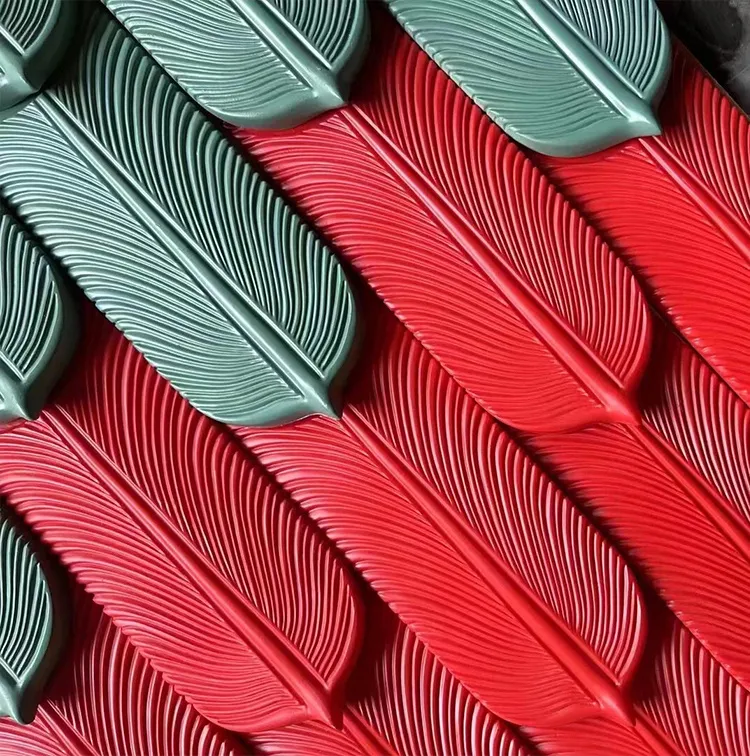
The short answer is that a feather stone supplier typically delivers panels that are 80% to 90% lighter than natural stone. In practical terms, a feather stone wall panel weighs about 2 to 5 pounds per square foot, while a comparable area of natural stone cladding weighs several times more. That gap is the entire reason feather stone exists, and it drives every benefit that follows: cheaper transport, faster installation, less structural load, and lower overall project cost. This article explains where those numbers come from, why they vary between suppliers, and what to check before you place an order.
Feather stone is a lightweight polyurethane panel that reproduces the texture, veining, and color of natural stone. Manufacturers pour liquid polyurethane resin into molds taken from real stone surfaces, then cure it under high pressure. The result is a panel that looks like quarried stone but behaves like a building board. Because the core is a rigid foam rather than solid rock, the finished panel keeps the visual depth of stone while shedding most of its mass.
This is why the material is grouped with other lightweight building materials rather than with conventional stone. It is specified for accent walls, feature facades, fireplace surrounds, and commercial interiors where the look of stone is wanted without the engineering burden of the real thing.
The "80% to 90% lighter" figure is not a single fixed number, because the comparison depends on the baseline. When feather stone is measured against thin-cut natural stone veneer, the reduction is typically around 80%. When it is measured against full-thickness granite or marble slabs, the reduction climbs toward 90% or more. Either way, the material sits in a completely different weight class from natural stone.
Against a thin veneer, a 2 to 5 lbs/sf feather stone panel works out to roughly 80% lighter; against a full slab, the same panel is 90% or more lighter. When a supplier quotes a weight reduction percentage, always ask what they are comparing against, because the baseline changes the number.
The weight difference is not a marketing detail. It changes how a project is planned, priced, and executed.
Structural load. Natural stone cladding often requires reinforced walls, steel brackets, and structural calculations. Feather stone panels are light enough to be fixed directly to standard drywall, blockwork, or timber framing with adhesive, which removes the need for additional support in most residential and light commercial applications.
Installation speed. A single worker can carry and position feather stone panels without a forklift or a lifting team. Installers typically fix them with a glue-and-nail combination, and many panels can be cut with a utility knife. Projects that would take weeks with natural stone can be completed in days.
Transport and logistics. Lighter material means more coverage per truckload and lower freight costs, which matters most on international projects where shipping is charged by volume or weight. It also reduces the risk of damage during handling, because panels are far less likely to crack when dropped or bumped.
Total cost. Because installation is faster and requires less equipment and labor, the installed cost of feather stone is typically 30% to 50% lower than natural stone for the same visual effect. For large commercial surfaces, that saving can be substantial.
The low weight comes from the material itself. Polyurethane foam has a closed-cell structure that is mostly air, which is why the panels are light without being fragile. The same structure gives feather stone two practical bonuses: it resists moisture absorption and mold growth, and it provides a degree of thermal insulation that solid stone cannot offer.
The manufacturing process also matters. High-pressure molding compresses the resin into a dense, impact-resistant skin over a lighter core, so the surface holds detail while the body stays light. Fire-retardant grades are available, and many feather stone products meet a B1 flame-retardant rating, which makes them suitable for commercial and public buildings.
Sustainability is another reason the material is growing in popularity. Feather stone production uses less energy than quarrying, many formulations include 20% to 40% recycled polyurethane, and the lighter panels cut transport emissions. For projects pursuing green building certification, these factors count.
When you compare quotes from a feather stone supplier, the weight reduction percentage is only one of several numbers worth checking.
A reliable supplier will give you clear technical data and a sample before you commit. Because feather stone is a manufactured product, quality varies between factories, and the panel weight, surface finish, and consistency of color are the details that separate a good batch from a poor one.
Feather stone rarely arrives on a project alone. It is usually specified alongside other surface materials, such as wall panels, flooring, and decorative profiles, and it is often combined with lighting and sanitary fixtures in hotel and residential fit-outs. Working with a one-stop supplier that can coordinate these categories saves time and reduces the risk of mismatched deliveries.
COLORIA GROUP is a building materials supplier based in Foshan, China, with an agent in Saudi Arabia. The company supplies feather stone and decorative profiles alongside walls, flooring, ceilings, sanitary fixtures, customized furniture, appliances, doors and windows, elevators, electrical fixtures, lighting, and solar panels. For buyers who need feather stone as part of a larger fit-out, this kind of consolidated supply can simplify procurement considerably.
A feather stone supplier typically achieves a weight reduction of 80% to 90% compared with natural stone, with panels weighing roughly 2 to 5 pounds per square foot. That reduction is what makes the material faster to install, cheaper to ship, and easier on building structures. When you evaluate suppliers, compare the actual panel weight and the baseline they quote, and ask for samples before ordering. With the right product and the right supplier, feather stone delivers the look of natural stone at a fraction of the weight.
Recommend Products












