
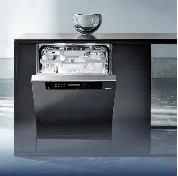
When installing or replacing a dishwasher in a residential kitchen, one of the most frequently overlooked details is the pipe fitting size. Getting the connection dimensions right is not just about convenience — it directly affects water pressure, drainage efficiency, and the long-term reliability of your plumbing system. This guide breaks down the standard sizes of dishwasher pipe fittings for residential use, covers the most common pipe materials, and explains how to choose quality fittings that meet international plumbing standards.
A residential dishwasher requires two essential plumbing connections: a water supply line that brings fresh water into the appliance, and a drain line that removes wastewater after each wash cycle. Each connection relies on specific pipe fittings that must match the appliance inlet, the household plumbing, and applicable building codes. Using the wrong size or substandard material can lead to leaks, reduced water flow, or even water damage over time.
The water supply side typically connects to a dedicated shut-off valve under the kitchen sink, while the drain side connects either to a sink tailpiece, a garbage disposal inlet, or a standalone standpipe. Both connections demand correctly sized fittings and hoses to form a watertight seal.
The water supply connection for most residential dishwashers uses a compression fitting attached to a flexible braided hose. The threaded end of this hose connects to the dishwasher's inlet valve, and the other end connects to the shut-off valve. The standard sizes you will encounter are:
| Fitting Type | Common Size | Application |
|---|---|---|
| Compression Fitting | 3/8 inch | Most common — connects to 3/8-inch water supply lines in North American and many international residential installations |
| Compression Fitting | 1/2 inch | Used in some older homes or regions with larger-diameter supply plumbing |
| Garden Hose Thread (GHT) | 3/4 inch | Found on select dishwasher models; often requires a reducer adapter to connect to standard supply lines |
The 3/8-inch compression fitting is by far the most prevalent for residential dishwasher installations. It matches standard 3/8-inch copper or PEX supply lines found in most modern kitchens. Always confirm the exact size specified in your dishwasher's installation manual before purchasing fittings.
The drain side of a dishwasher involves a flexible corrugated or reinforced hose that carries wastewater away. The standard dimensions for drain-side components are:
| Component | Common Size | Notes |
|---|---|---|
| Dishwasher Drain Hose (ID) | 5/8 inch to 7/8 inch | Most residential dishwashers use a 5/8-inch or 7/8-inch internal-diameter hose |
| Drain Hose Connection Port | 1 inch to 1-1/2 inch | The hose typically connects to a branch tailpiece, garbage disposal inlet, or a dedicated standpipe |
| Drain Pipe (under sink) | 1-1/2 inch (DN40) | Standard kitchen sink drain pipe size; the dishwasher drain hose connects via a barbed spigot or hose clamp |
The drain hose must be secured with a stainless steel hose clamp at every connection point. Equally important is the high-loop installation: the drain hose should be routed upward and secured to the underside of the countertop before dropping down to the drain connection. This creates an air gap that prevents contaminated sink water from backflowing into the dishwasher.
The quality of pipe fittings used in dishwasher installations depends heavily on the material. Different materials offer varying levels of durability, temperature resistance, and chemical compatibility. Here are the most common pipe and fitting materials used in residential plumbing that may be part of a dishwasher installation:
PPR pipes are widely used in hot and cold water supply systems. They offer excellent heat resistance (up to 95°C), corrosion resistance, and a service life exceeding 50 years under normal conditions. PPR pipe and fitting systems are joined by heat fusion welding, creating a homogeneous, leak-proof connection that is ideal for residential water supply lines — including the branch that feeds the dishwasher.
PEX has become one of the most popular materials for residential plumbing in North America and Europe. Its flexibility allows it to bend around corners without additional fittings, reducing potential leak points. PEX pipe and fittings are available in multiple connection systems — crimp, clamp, and push-fit — and are compatible with the 3/8-inch and 1/2-inch compression fittings commonly used for dishwasher supply lines.
CPVC pipes are designed for hot water applications and can withstand temperatures up to 93°C. They are commonly used in residential hot water distribution, making them suitable for the hot water supply line in kitchens. CPVC pipe fittings are joined using solvent cement, creating a chemical bond that is as strong as the pipe itself. CPVC SCH80 high-pressure piping systems are also available for applications requiring extra durability.
PVC-U pipes are primarily used for cold water supply and drainage. For dishwasher drain connections, PVC DWV (Drain-Waste-Vent) fittings in 1-1/2-inch size are standard. PVC-U SCH40 pressure piping systems provide reliable cold water distribution, while PVC electrical conduit fittings protect any wiring routed near the dishwasher installation area.
Pipe fittings used in residential dishwasher installations must comply with relevant international standards to ensure safety, compatibility, and long-term performance. The table below summarizes key standards by region:
| Standard | Region | Applicable Materials |
|---|---|---|
| ASTM D2846 | North America | CPVC piping systems for hot and cold water distribution |
| DIN Standard PN10 | Europe / International | PVC and PVC-U pipe fittings for pressure applications up to 10 bar |
| AS/NZS 2053 | Australia / New Zealand | PVC electrical conduit and fittings for residential installations |
| SCH40 / SCH80 | North America / International | Pressure-rated PVC-U and CPVC piping systems (wall thickness classification) |
| IRAM | South America (Argentina) | PPH threaded pressure piping systems |
When sourcing pipe fittings for a dishwasher installation, always verify that the products carry the appropriate certification marks for your region. Fittings that comply with these standards have been tested for pressure resistance, material safety, and dimensional accuracy.
Selecting the correct fittings involves more than matching sizes. Consider the following factors to ensure a reliable, long-lasting installation:
A drip at the water supply connection is often caused by a worn rubber washer inside the compression nut, an improperly seated compression ring, or insufficient tightening. replace the washer or compression ring and re-tighten the fitting. If the leak persists, the fitting threads may be damaged and the entire connector should be replaced.
Drain-side leaks typically result from a loose hose clamp, a cracked hose end, or a hose that has not been pushed far enough onto the barbed fitting. Trim off any cracked portion of the hose (if length allows) and re-secure with a new clamp. Ensure the hose covers the full length of the barb for a proper seal.
If the dishwasher drains slowly or leaves standing water at the bottom, check for a clogged drain hose, a kinked hose, or a blocked sink drain. The drain hose should have a smooth, continuous downward slope after the high loop. Clean the dishwasher filter regularly to prevent food debris from accumulating in the drain path.
What is the standard size of a dishwasher water supply fitting?
The most common size is a 3/8-inch compression fitting, which connects to a standard 3/8-inch water supply line. This size is used by the vast majority of residential dishwashers across all major brands. Always check the manufacturer's installation manual to confirm.
Are PPR fittings suitable for dishwasher hot water connections?
Yes. PPR pipe and fitting systems are rated for continuous operation at temperatures up to 70°C (158°F) and can handle short-term peaks up to 95°C (203°F). This makes them well-suited for residential hot water supply lines, including those feeding dishwashers. The heat-fusion welding method used with PPR creates a permanent, leak-proof joint.
Can I use PVC fittings for the dishwasher drain?
Yes, PVC DWV fittings are commonly used for dishwasher drain connections. The standard 1-1/2-inch PVC tailpiece with a dishwasher branch inlet is the most widely used configuration. Ensure the PVC fittings are solvent-welded correctly and that the connection is properly supported.
What is the difference between SCH40 and SCH80 pipe fittings?
SCH40 and SCH80 refer to the wall thickness of the pipe. SCH80 has a thicker wall than SCH40 of the same nominal size, giving it a higher pressure rating. For residential dishwasher installations, SCH40 is generally sufficient for cold water supply lines, while SCH80 CPVC fittings are recommended for high-temperature or high-pressure hot water applications.
How often should dishwasher pipe fittings be inspected or replaced?
Inspect the visible supply and drain connections at least once a year for signs of corrosion, mineral buildup, or moisture. The flexible braided supply hose should be replaced every 5 to 7 years as a preventive measure. PPR, PEX, and CPVC fittings that are properly installed can last decades without replacement.
Getting the pipe fitting sizes right for a residential dishwasher installation is a straightforward task when you know the standards. The 3/8-inch compression fitting for the water supply and the 5/8-inch to 7/8-inch drain hose cover the vast majority of residential installations. Beyond sizing, the material quality of the fittings — whether PPR, PEX, CPVC, or PVC — plays a critical role in the long-term reliability of the plumbing system. Choosing fittings that comply with international standards such as ASTM D2846, DIN PN10, and AS/NZS 2053 ensures safety and performance. For homeowners, contractors, and project developers, sourcing fittings from a trusted one-stop building material supplier simplifies procurement and guarantees consistent quality across every component of the installation.
Recommend Products












