
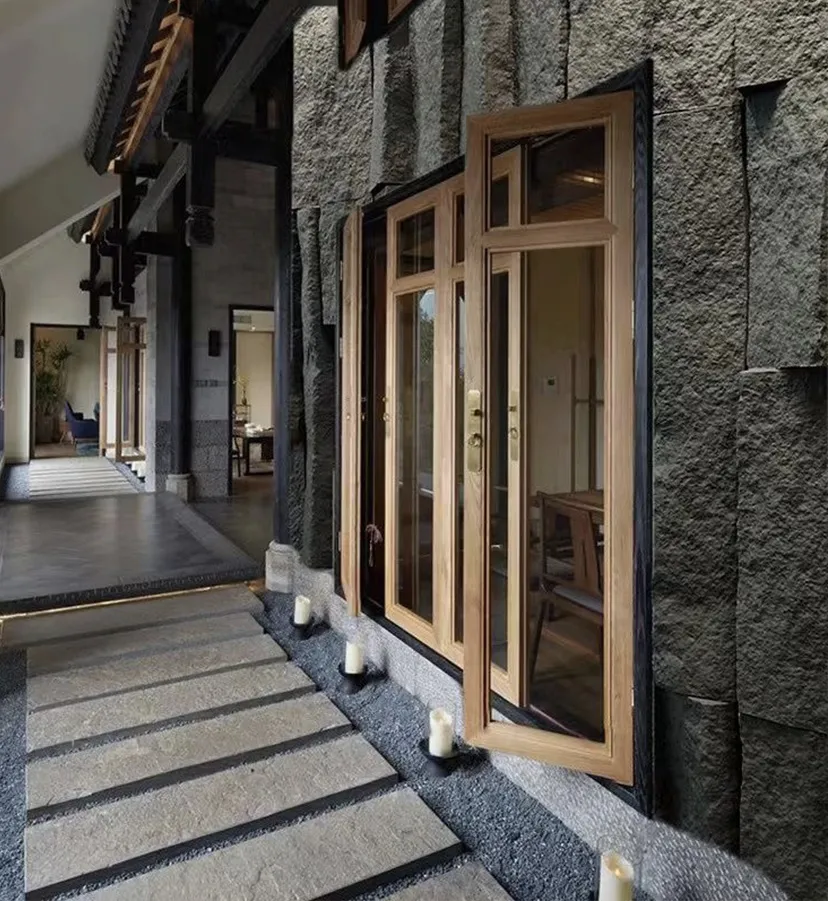
If you are sourcing natural or engineered stone for a facade, garden wall, or interior feature, you will often see decorative stone quoted by the linear meter rather than by the piece or tile. This is especially common with narrow, elongated products such as strip rock, which is cut into long rectangular strips and measured along its length. Knowing what actually sits behind that per-linear-meter number will help you compare strip rock supplier quotes fairly and ask the right questions before you commit to an order.
The short answer is that there is no single, fixed price per linear meter for strip rock. A supplier quotes each project individually, because the final figure is shaped by the stone type, the strip profile, the quantity, and the terms of shipment. This guide walks through the main drivers so you can estimate a realistic budget and request a precise quotation.
Strip rock is supplied as long, narrow pieces that run in a horizontal or vertical band pattern on a wall. Because the length is the dominant dimension, suppliers often price by the linear meter, then a separate adjustment is made for the width and thickness you choose. As a rule of thumb, one square meter of coverage is built up from a strip width that determines how many linear meters you need — for example, a strip 100 mm wide produces about 10 linear meters per square meter of wall area, while a wider 200 mm strip produces about five. Before you compare quotes, confirm the strip width, thickness, and edge finish that each price refers to.
Several factors move the price of strip rock, and understanding them prevents surprises when the quotation arrives:
Stone type and origin. Natural materials such as granite, slate, limestone, and quartzite differ widely in hardness, rarity, and color stability. Rarer colors and imported stones command a premium, while common local varieties are more affordable. Engineered or processed alternatives can offer a consistent look at predictable cost.
Finish and texture. Surface treatment directly affects both appearance and machining cost. Sawn, split, tumbled, honed, polished, or flamed finishes each require different processing and reject rates, and those differences show up in the unit price. Textured split-face strips, for instance, generally cost more than a plain sawn edge because of the extra handling.
Strip dimensions. Wider and thicker strips consume more raw stone per linear meter, so price rises with section size. Premium-style textures on thicker material push the cost higher still. Always confirm dimensions before judging whether an offer is cheap or expensive.
Order volume and packaging. Wholesale strip rock is generally cheaper per linear meter in larger volumes. Freight and handling are reduced when you order full pallets or containers, and packaging designed to protect long, narrow strips matters because fragile sections are prone to breakage in transit. Ask about the minimum order quantity and how the strips are packed and palletized.
Customization and accessories. Cut-to-size lengths, special corner pieces, and matching trim add labor and waste, increasing the price per linear meter. If you need coordinated accessories for a balanced pattern, mention them when requesting a quote rather than ordering them later as afterthoughts.
As a planning reference rather than a fixed price, decorative stone cladding materials in typical renovation projects can be broken into a material portion and an installation and preparation portion, and the stone product itself generally makes up only part of a project's total spend. Because strip rock is a material product, its per-linear-meter figure is influenced by the stone type, section size, and finish described above, and these can vary noticeably between one supplier and the next for the same nominal product. Rock type, size, and shipping distance are widely recognized as the main cost variables in any stone purchase. Treat any online range as a starting point, not a binding quote.
Where you source strip rock matters almost as much as the material itself. Distance to the port, container loading, and the final delivery leg all add to cost, and the trade terms determine who pays for each step. Establish whether a quotation is EXW, FOB, CIF, or delivered duty paid, and check whether the price includes packaging, inland transport, and any customs handling. Asking for the price "per linear meter" without these details can produce misleading comparisons.
To receive a reliable per-linear-meter figure, a strip rock supplier will normally ask for a short list of details: the stone type and finish, strip width and thickness, total coverage area, the country of delivery, and the required volume. Supplying these up front allows the supplier to calculate an accurate unit price instead of a rough estimate. It is also wise to confirm the sample policy, lead time, and after-sales support so the quoted price reflects the full buying experience.
COLORIA GROUP is a one-stop supplier of building and construction materials, offering a wide strip rock range as part of its decorative profiles line alongside walls, flooring, doors and windows, lighting, and more. Sourcing strip rock directly from a manufacturer-focused supplier such as Coloria Group can help you lock in competitive per-linear-meter pricing across larger volumes, keep quality and consistency under control, and simplify the whole buying process when one order covers several material categories. Whether you are building a facade, a garden feature wall, or an interior accent, strip rock solutions are quoted on the basis of your exact plans rather than a one-size-fits-all number.
The price per linear meter from a strip rock supplier is shaped by stone type, finish, strip dimensions, order volume, packaging, and shipping terms, so no single figure applies to every project. The reliable path is simple: define your strip profile and coverage area, clarify the delivery terms, and request a formal quotation. Working with a full-range building materials supplier such as COLORIA GROUP means you get the product, the freight, and the supporting categories handled together, keeping your project on track and on budget.
Recommend Products












