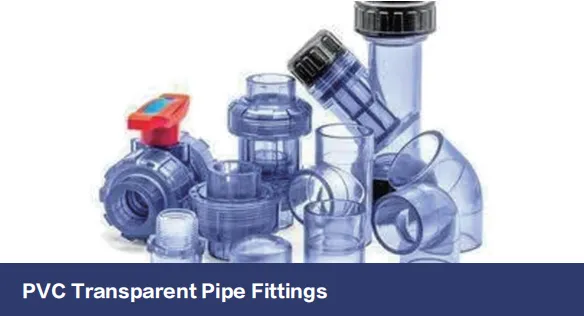
Let's talk about something we all interact with daily but rarely notice – PVC transparent
pipe fittings. These unsung heroes of plumbing and construction are about to get interesting. If you're renovating your home, working on an industrial project, or just curious about market trends, you're in the right place. Today, we'll cut through the technical jargon and explore what's really driving prices for these crucial
building materials
over the next two years.
The PVC Rollercoaster: Where We've Been
Remember 2024? PVC prices did the cha-cha all year! We started at ₹74,000 per metric ton in January, saw a hopeful climb to ₹76,500 by December 2024, only to slide back down to ₹66,500 by July 2025. That's a 13% dip in just six months. Why should you care? Because transparent fittings
mirror these same market dances. When PVC resin zigged, fittings zagged right along with it.
Current Market Pulse (Mid-2025)
Right now, you'd pay around ₹64,000-66,000/MT for standard PVC. Transparent fittings? Add 15-20% premium for the specialized manufacturing. But here's the kicker – regional variations are huge. Chennai buyers pay nearly ₹65,000 while Mundra gets it for ₹63,650. This geographic price tag roulette matters when you're sourcing materials nationwide.
Five Forces Shaping Your Wallet
1. The Oil & Ethylene Tango
Nearly 70% of PVC production costs come from oil derivatives like ethylene. When oil prices sneeze, PVC catches cold. With Middle East tensions and supply chain headaches, expect this dance to continue.
2. Regulatory Whiplash
Governments worldwide are cracking down on single-use plastics. While PVC pipes aren't banned, the production scrutiny increases compliance costs. Europe's Green Deal alone could add 8-12% to manufacturing overheads by 2025.
3. Construction Boom or Bust?
India's Jal Jeevan Mission and US infrastructure bills are gobbling up PVC. But here's the twist – these projects prioritize standard piping, not specialty transparent fittings. Manufacturers might pivot production, creating temporary shortages that spike prices.
4. The China Factor
China controls 38% of global PVC production. When they sneeze – like during their 2024 energy crisis – the whole world catches cold. Their export taxes and production quotas directly hit transparent fitting inventories worldwide.
5. Innovation's Double-Edged Sword
New recycling tech could lower costs long-term, but the upfront investment hurts now. Manufacturers charging premium prices for "eco-friendly transparent fittings" aren't just greenwashing – they're funding R&D that might pay off by 2026.
2024-25 Forecast: What to Expect
Buckle up for a divided year:
Q3-Q4 2025
: Construction season meets hurricane prepping. Demand surges but new factories in Southeast Asia might soften prices. Expect ₹68,000-71,000/MT for standard PVC, with transparent fittings at 1.18-1.22x multiplier.
Q1 2026
: Watch the oil markets! If conflicts ease, we could see relief. If not, perfect storm territory. Recycling tech advances might start showing real savings by late 2026.
Smart Buyer Strategies
•
Regional Arbitrage
: Mundra prices consistently undercut Chennai by 2-3%. Worth the shipping?
•
Contract Timing
: November-January traditionally sees lower demand. Lock contracts then.
•
Spec Flexibility
: Can you use opaque fittings for non-visible sections? Mix-and-match saves 12-18%.
•
Recycled Options
: New clear recycled PVC performs nearly identically at 15% discount.
Industry Insights: What Manufacturers Won't Tell You
The biggest open secret? Transparency isn't free. That crystal-clear view comes from intensive purification that:
-
Uses 18% more energy than standard PVC
-
Has 22% production waste versus 7% for opaque
-
Requires climate-controlled storage to prevent yellowing
That's why premium persists even when resin prices dip.
Your Burning Questions Answered
Q: Will transparent fittings get cheaper than opaque eventually?
Unlikely. The purification process inherently costs more. Even with tech advances, expect 10-15% premium.
Q: How accurate are online price trackers?
For standard PVC? 90%+. For specialty clear fittings? Barely 60%. Niche products have less transparent pricing (ironically).
Q: Are there cheaper alternatives appearing?
Bio-based clear polymers exist but currently cost 2-3x more. Not yet viable except for medical applications.
The Bottom Line
Expect turbulence with slight upward pressure. Smart buyers will monitor ethylene futures, not just PVC spot prices. Diversify suppliers regionally. Most importantly – don't assume transparent fittings follow standard PVC trends exactly. That clarity comes at a consistent premium. Watch the specialty chemical markets for real pricing cues as we navigate this pivotal 18-month period together.
The construction sector's hunger won't fade. The quest for maintenance-friendly visible piping won't disappear. But how we source, price, and innovate around these humble clear connectors? That story's still being written – one fitting at a time.