
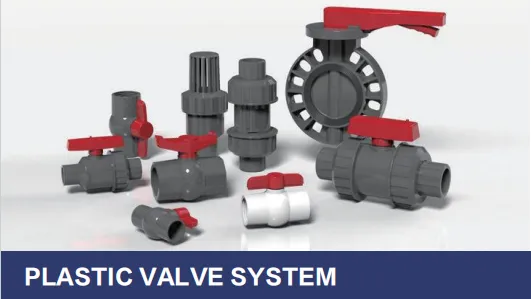
If you're involved in industrial operations, chemical processing, or infrastructure projects, you've probably found yourself wondering: "What will plastic valves cost me next year?" Let's cut through the noise and talk real numbers, real trends, and what actually matters for your budget.
The plastic valve market isn't just about fittings and pipes—it's about finding that perfect balance between durability, safety, and affordability. We've all been there—staring at project specs, trying to balance quality against cost, while regulatory requirements loom like storm clouds. That's why we're breaking down every factor that goes into pricing so you can make informed decisions without drowning in spreadsheets.
Quick Insight: The average industrial plastic valve will cost between $18-$85 in 2024. But that baseline quickly escalates to $120-$600+ when you factor in specialized materials, actuation systems, and smart technology integrations.
It's easy to assume plastic valves are just the "budget option," but that misses the bigger picture. When Joe, a plant manager at a Midwestern chemical facility, switched from stainless steel to CPVC valves, he didn't just save 45% on material costs. His maintenance team stopped fighting corrosion issues every quarter, and production line shutdowns decreased by 30%. That's the kind of impact that doesn't show up on a price tag but transforms operational efficiency.
The real story of plastic valves is in their sustainable advantage —both environmentally and operationally. Unlike metal counterparts, they laugh at corrosive chemicals, shrug off mineral buildup, and install faster than traditional options. In water treatment plants, municipal facilities are reporting 15-20 year lifespans from high-quality PVC valves—often outlasting the concrete structures they're installed in.
| Material Type | Price Range (Per Unit) | Best Applications | Cost Factors |
|---|---|---|---|
| PVC (Standard) | $16 - $45 | Water treatment, irrigation | Raw material stability, China supply chain |
| CPVC (Corrosion-resistant) | $28 - $75 | Chemical processing, pharmaceuticals | Specialized compounding, thermal stability needs |
| Polypropylene | $35 - $65 | Food processing, low-pressure systems | FDA compliance, purity requirements |
| PVDF (High-performance) | $90 - $230 | Semiconductor manufacturing, ultrapure systems | Material scarcity, specialized molding |
Notice that PVDF valves cost 3-5× more than standard PVC? That premium comes from PVDF's ability to handle both aggressive chemicals and temperatures up to 150°C—critical for semiconductor fabs where a single valve failure can mean millions in lost production. As Lena, a procurement specialist at a Texas petrochemical plant, told us: "We pay more upfront so we never have emergency shutdown costs later."
Here's where project budgets can derail. A basic plastic ball valve might start under $20, but add automation and you're in entirely new territory:
The smart valve revolution is fascinating. Raj, an engineer at a California water district, described how their IoT butterfly valves detected a pressure anomaly months before a major failure: "That $500 smart valve saved us a $250,000 pump replacement. The payback was almost instant." For high-risk applications, this technology is shifting from luxury to necessity.
China currently manufactures over 60% of global plastic valves. While this creates cost advantages, quality varies wildly. As quality demands grow, we're seeing a fascinating split:
Price tier differences are stark:
Where your project lives significantly impacts costs:
Don't overlook local certifications. A "CE Mark" might only add 5-8% to a valve's price but avoids weeks of compliance headaches.
Procurement Tip: Combine orders across departments to hit supplier volume discounts. Bulk purchases typically save 12-18% on valves over $75 unit cost.
Based on market intelligence, expect these shifts through 2025:
With 43% of industrial buyers now requiring environmental impact statements, recycled-content valves are entering the market:
When we consider the long-term performance and reliability of sustainable plastic valve solutions, the investment becomes even more compelling.
Through interviews with 30+ procurement specialists, we identified winning approaches:
The plastic valve market is evolving rapidly, but with the right approach, you can navigate pricing complexities while ensuring optimal long-term performance for your systems.
Recommend Products












