


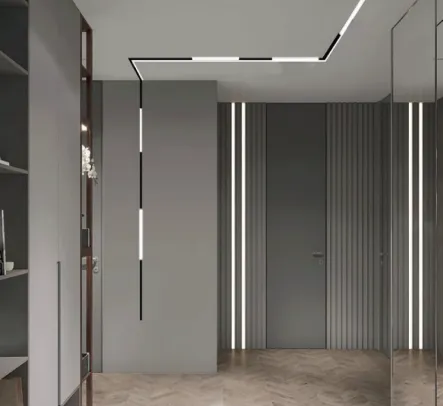
The Real Cost Breakdown
Okay, let's dive deeper. When you're budgeting for magnetic track lighting in 2024-25, you're not just buying fixtures – you're investing in a flexible lighting solution that evolves with your space. I've been helping homeowners and architects navigate these choices for years, and here's the real deal:
Why commercial lighting projects love these systems? Because they solve two headaches: future flexibility and installation costs. Contractors save 30-40% labor time compared to fixed systems, especially in retail spaces where displays rotate seasonally. That's money saved before you even flip the switch!
What You're Actually Paying For
- Smart engineering: The magnetic connection isn't just cool – it prevents wear-and-tear from repositioning lights. Cheaper systems? They degrade faster.
- Material upgrades: Aluminum housings that dissipate heat better mean your LEDs last longer. Cheaper fixtures cook their components.
- Modular magic: Quality systems let you add architectural lighting solutions like pendant drops or wall-washers without rewiring.
The China Lighting Revolution
Here's something I've watched transform the market: China lighting manufacturers have leveled up their game. Five years ago, "Made in China" meant questionable quality. Today? Brands like OPPLE and MLS are exporting professional-grade systems at 20-30% below European equivalents. Their secret? Massive investments in automated facilities that cut production costs without compromising on those crucial IP ratings and safety certifications.
Latest Tech That's Shaking Up Costs
Manufacturers are packing serious innovation into these tracks:
- Low-voltage DC systems that eliminate transformers (and failure points)
- Wireless controllers embedding Bluetooth mesh or Matter protocol
- Hybrid tracks accepting both magnetic and standard fixtures
The good news? Competition is fierce, so these features trickle down faster than ever. That color-tunable spotlight that cost $200 last year? You'll find it under $80 by Q4 2024.
Price Forecast: What to Expect
Based on my conversations with factories and distributors, here's the 2024-25 outlook:
| Component | 2024 Price Trend | 2025 Projection | Key Driver |
|---|---|---|---|
| LED Modules | ↓ 5-8% | ↓ 8-12% | Improved chip yields |
| Aluminum Extrusions | ↑ 3-5% | ↑ 2-4% | Global supply volatility |
| Smart Drivers | ↓ 15-20% | ↓ 25-30% | Mass production scales |
| Shipping | ↓ 10% from 2023 peaks | Stabilizing | Logistics normalization |
This creates an interesting balance – while aluminum tracks might cost slightly more, electronics are dropping fast enough to keep overall prices flat or even decreasing for residential kits. For commercial buyers, expect 5-7% savings thanks to volume discounts on smarter systems.
Hidden Costs You Can't Ignore
Before you celebrate that shiny price tag, consider these often-overlooked expenses:
- Trim kits: Those sleek end caps and connectors? They add 12-15% to your track budget.
- Compatibility costs: Bargain magnets might not grip third-party fixtures, locking you into one brand.
- Certification pitfalls: UL or CE markings aren't optional – unlisted systems can void insurance.
Here's a pro tip from our architectural lighting team: Allocate 25% of your budget beyond fixtures for proper dimmers, controllers, and clean accessories. Nothing screams "DIY fail" like messy joins in your gorgeous gallery lighting!
The Commercial Advantage
For retailers and restaurants? These systems shine brighter. I recently designed lighting for a café chain that used magnetic tracks to:
- Reconfigure seating zones in 20 minutes flat
- Swap spotlights for pendants before evening service
- Install emergency lighting modules as required by code
Their maintenance manager told me they recovered costs in 14 months through reduced electrician call-outs. Now that's smart business lighting!
Budget Strategies That Actually Work
Want premium looks without bankruptcy? Try these tactics:
- Hybrid approach: Splurge on key magnetic tracks, then use standard pendants elsewhere
- Future-proof wiring: Install extra ports even if you're only using half now
- Phase purchases: Buy tracks now, add fancy magnetic spotlights during holiday sales
Remember what lighting designers always say: "Your magnetic system should look intentional, not accidental." That means planning those curves and junctions is worth every penny.
The Bottom Line
In 2024-25, you'll find quality magnetic track systems starting around $8/foot for residential use, while commercial-grade solutions typically begin at $150 per starter kit. But the magic isn't just in the price – it's how these systems transform lighting from static necessity to dynamic design element. As costs continue their slow descent thanks to manufacturing innovations and smarter sourcing, there's never been a better time to embrace magnetic flexibility for your home or business. Just remember: Truly great lighting isn't about finding the cheapest fixture – it's about investing in the most adaptable solution that grows with your vision.










