

The selection between Wood-Plastic Composite (WPC) and Polyvinyl Chloride (PVC) wall panels represents a critical decision in modern construction and interior design. While both offer alternatives to traditional materials like ceramic tiles or painted drywall, they possess distinct structural compositions, performance characteristics, and aesthetic qualities. This comprehensive analysis explores how raw materials, manufacturing processes, physical properties, environmental impact, and application suitability differentiate these innovative cladding solutions.
Wood-Plastic Composite combines recycled wood fibers (typically 50-70%) with polymer resins (typically HDPE, PP, or PVC). This material synergy creates a product that inherits structural integrity from wood cellulose while maintaining the moisture resistance of plastics. The composite formulation is engineered through high-temperature extrusion processes that fuse organic and synthetic components at molecular levels.
PVC panels derive from petroleum-based polyvinyl chloride resins blended with plasticizers, stabilizers, and pigments. This creates a fully synthetic product with consistent molecular structures that deliver uniform performance characteristics. The manufacturing process involves calendaring or extrusion techniques without organic components.
| Property | WPC Wall Panels | PVC Wall Panels |
|---|---|---|
| Organic Content | 50-70% wood fibers | 0% |
| Polymer Matrix | HDPE/PP/PVC resins | PVC resins |
| Recycled Content | Up to 95% | 20-40% |
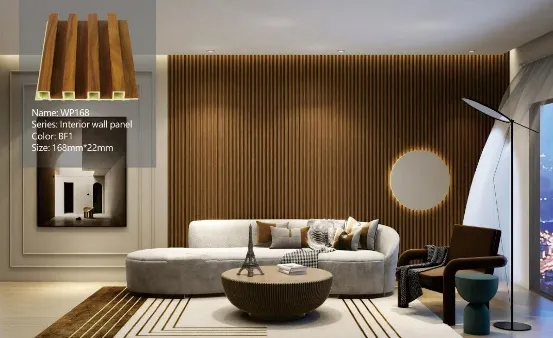
WPC panels (density: 1.1-1.3 g/cm³) offer superior impact resistance and load-bearing capacity due to their composite reinforcement. Laboratory tests show WPC withstanding 30-40% higher impact forces before deformation compared to PVC. This makes WPC suitable for high-traffic areas and exterior applications requiring structural resilience.
PVC panels (density: 1.3-1.5 g/cm³) exhibit greater hardness ratings on the Rockwell scale (R110-120) resulting in exceptional scratch resistance. This surface durability comes at the cost of flexibility, making PVC more susceptible to cracking under sudden impact or structural shifting.
| Performance Metric | WPC | PVC |
|---|---|---|
| Impact Resistance (ASTM D6110) | 85-110 kJ/m² | 50-75 kJ/m² |
| Scratch Resistance (Mohs Scale) | 3.0-3.5 | 4.0-4.5 |
| Flexural Modulus (ASTM D790) | 2,500-3,500 MPa | 2,000-2,800 MPa |
| Thermal Expansion Coefficient | 5 × 10⁻⁵ /°C | 8 × 10⁻⁵ /°C |
Material Science Insight: WPC's lower thermal expansion coefficient reduces expansion/contraction issues in temperature-variable environments. The cellulose reinforcement provides superior dimensional stability compared to homogeneous PVC structures.
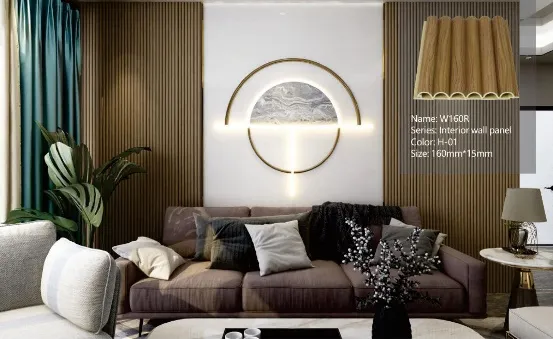
WPC panels incorporate significant recycled content (up to 95% including post-industrial wood waste and recycled plastics), reducing landfill contributions and virgin material consumption. Lifecycle assessments show WPC products generating 30-40% lower carbon emissions than comparable PVC systems during production. Additionally, some WPC formulations qualify for LEED material credits due to recycled content percentages.
PVC manufacturing involves chlorine processing and potential dioxin emissions. Recent innovations have reduced environmental impacts through calcium-based stabilizers replacing lead compounds and improved recycling streams. However, PVC recycling remains challenging due to polymer degradation during reprocessing.
WPC demonstrates better recyclability potential as its composite structure can be reground and reprocessed into lower-grade building products. PVC recycling typically yields products with limited applications due to thermal degradation of polymer chains. The emergence of bamboo charcoal board wall panel alternatives represents another eco-innovation in sustainable cladding.
| Installation Factor | WPC Panels | PVC Panels |
|---|---|---|
| Panel Weight | 1.8-2.5 kg/m² | 1.2-1.8 kg/m² |
| Installation Methods | Clip systems, hidden fasteners, adhesive | Primarily adhesive bonding |
| Substrate Preparation | Requires structural furring for exterior | Direct bonding to clean surfaces |
| Cutting/Shaping | Conventional woodworking tools | Plastic-cutting blades required |
The higher weight of WPC panels necessitates robust framing systems, especially for ceiling applications. However, its compatibility with standard fastening systems offers installation versatility. PVC's lightweight nature enables direct adhesive bonding but limits mounting options.
Both materials demonstrate excellent moisture resistance, but fundamental differences exist in moisture management mechanisms. PVC provides complete waterproofing through its non-porous surface, preventing water ingress. WPC offers moisture resistance while maintaining breathability, reducing vapor pressure buildup in wall assemblies.
PVC panels excel in shower surrounds and steam rooms requiring impermeable surfaces. WPC performs exceptionally well in pool houses and spas where humidity regulation prevents condensation issues.
WPC provides superior insulation (R-value: 1.2-1.8 per inch) compared to PVC (R-value: 0.9-1.1 per inch) due to its cellular structure containing air pockets. This thermal barrier significantly impacts energy efficiency in climate-controlled spaces.
PVC panels achieve Class A fire ratings through flame-retardant additives with self-extinguishing properties. WPC typically achieves Class B ratings but offers significantly higher ignition temperatures (380-420°C vs PVC's 280-320°C). The inorganic nature of PVC lends advantage in preventing fire propagation.
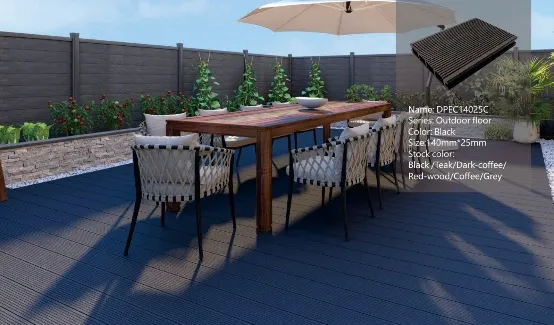
WPC technology replicates wood grains with remarkable fidelity through advanced embossing techniques that create three-dimensional textures. The inherent wood particles in the matrix provide authentic visual characteristics ranging from oak to teak reproductions.
PVC surfaces deliver consistently uniform appearances in glossy, matte, or satin finishes. Digital printing enables photographic reproductions of materials like marble or abstract patterns, but surface textures remain smooth without dimensional depth.
Accelerated weathering tests demonstrate PVC's superior color stability with ΔE values below 2.0 after 3,000 hours of UV exposure. WPC exhibits slightly higher ΔE values (3.0-4.0) primarily due to lignin reactions in wood fibers despite UV stabilizers. Both outperform natural wood dramatically.
| Cost Factor | WPC Panels | PVC Panels |
|---|---|---|
| Material Cost Range (USD/m²) | $25-$55 | $18-$45 |
| Installation Cost | Moderate (20-30% premium) | Low |
| Expected Service Life | 25-40 years | 15-25 years |
| Maintenance Cost (20 years) | $0.75-$1.25/m²/year | $0.85-$1.35/m²/year |
The lifecycle cost advantage shifts to WPC for projects with extended time horizons. The initial 25-40% price premium typically achieves payback within 12-18 years when accounting for replacement cycles and maintenance.
Healthcare Facilities: PVC dominates in surgical areas and sterilization zones due to seamless surfaces and chemical resistance. WPC enhances patient rooms and waiting areas with warmth and acoustic benefits.
Hospitality Spaces: WPC elevates luxury suites and restaurants through premium wood aesthetics. PVC serves back-of-house areas, kitchens, and laundry facilities demanding practical maintenance.
Kitchens: PVC performs well behind sinks and appliances. WPC enhances dining areas and islands with aesthetic warmth.
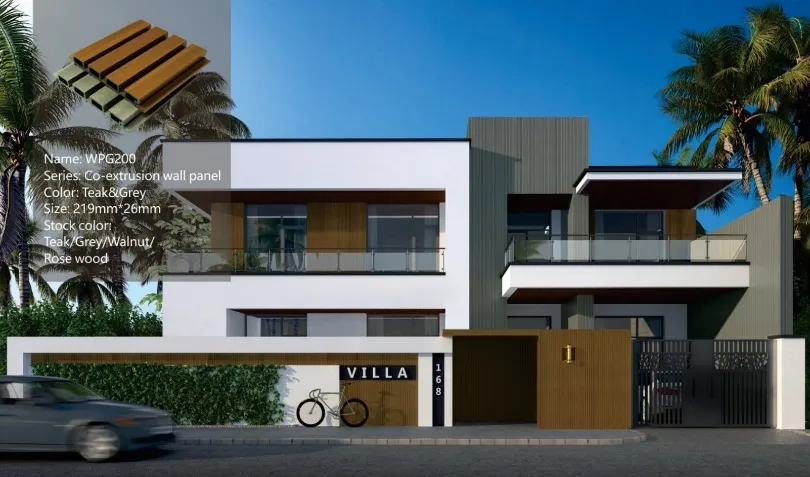
Exteriors: WPC cladding provides weather-resistant beauty with minimal expansion/contraction. PVC trim systems offer economical low-maintenance solutions.
Recent advances in material science continue to enhance both technologies:
The market is witnessing hybrid developments that combine wood particulates with PVC matrices, creating materials that bridge performance gaps at mid-range price points. The emergence of mcm flexible cladding stone wall panel alternatives adds further material options.
The choice between WPC and PVC wall panels represents a complex evaluation balancing material science, performance requirements, aesthetic aspirations, and budget considerations. WPC excels through its superior structural properties, natural aesthetics, thermal performance, and life-cycle sustainability. PVC dominates where complete impermeability, chemical resistance, ease of installation, and initial affordability are paramount.
Contemporary building design increasingly utilizes both materials strategically - applying PVC in moisture-intensive zones like showers while installing WPC in living spaces and façades for beauty and comfort. This hybrid approach leverages the unique strengths of each material while creating visually compelling environments.
As manufacturing innovations continue to enhance both technologies, the performance gap narrows annually. Progressive formulations such as PVC-WPC hybrid composites offer exciting possibilities for future wall systems that might bridge current limitations. What remains constant is the value proposition: both WPC and PVC represent durable, low-maintenance alternatives that outperform traditional materials in demanding applications.
Recommend Products











