
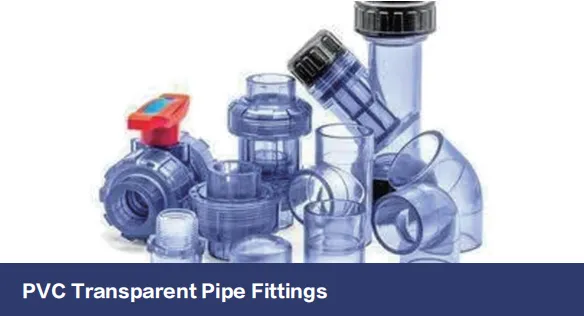
Hey there! If you're knee-deep in a plumbing project or just trying to wrap your head around what goes behind your walls, you've probably stumbled across a jungle of pipe types. Today, we're breaking down two heavyweights that often get mixed up: PVC transparent pipe fittings and DWV pipes. I'll walk you through what they are, why you'd use one over the other, and where these unsung heroes shine in your home or business.
Picture this: you're at a brewery tour, and you notice all those clear tubes carrying colorful liquids between giant tanks. That's the magic of PVC transparent fittings! Made from polyvinyl chloride with special additives, they're engineered to be both tough and see-through. Unlike their opaque cousins, you get a live show of whatever's flowing through them – water, chemicals, or even craft beer!
The transparency isn't just for show. It lets engineers and maintenance crews spot:
These fittings aren't just for industrial use – they pop up in everyday spaces too:
Quick Tip:
That see-through magic weakens when exposed to UV rays over time. If using outdoors, look for UV-resistant versions or sleeve them in protective conduit.
Down in your basement or under the sink lives DWV piping – the quiet giant of waste management. The acronym stands for Drain-Waste-Vent, which perfectly describes its triple-threat purpose:
Unlike pressure pipes, these rely on gravity, not pump force. That means thinner walls and smoother interiors optimized for sludge flow rather than pressure containment.
Glance around your house – that white or light gray piping snaking through ceilings? That's DWV hard at work:
Plumber's Secret:
DWV joints must be solvent-welded. That milky purple cleaner isn't just decoration – it preps surfaces for permanent bonding that won't leak sewage gases into your living spaces.
| Feature | PVC Transparent Fittings | DWV Pipes |
|---|---|---|
| Core Mission | Visible flow + pressurized transport | Gravity-based waste removal |
| Pressure Handling | Up to 150+ PSI systems | Zero pressure (gravity flow only) |
| Wall Thickness | Thicker (schedule 40/80) | Thinner (non-pressure optimized) |
| Chemical Resistance | Special formulations for acids/alkalis | Optimized for sewage/enzyme cleaners |
| Temperature Range | 140-180°F depending on compound | Max 140°F (scalding water risk) |
| Installation Clues | Threaded, push-to-connect, flange joints | Solvent-welded bell/spigot joints |
Ever wonder how they get PVC clear? It takes a cocktail of modifiers:
While some DWV uses PVC, many now use ABS plastic (that black stuff you see). Why? ABS laughs at:
Chemist Corner:
That opaque color you see in standard PVC? It comes from titanium dioxide. Transparent versions skip this additive, relying instead on crystal-formulation polymers and optical enhancers.
Installing these isn't rocket science, but I've seen DIYers make these classic mistakes:
Plumbing inspectors share horror stories. Don't be that person:
Pro Tip:
Never use DWV pipe for compressed air! The thin walls can explode under pressure. I once saw a shop wall blasted apart – not a pretty sight.
The next wave of see-through fittings includes:
Innovations aiming to solve age-old drain headaches:
Eco Note:
Modern DWV systems increasingly use recycled ABS – sometimes up to 60% post-consumer content. It's a win-win: durable infrastructure meets sustainability.
Whether you're installing a tropical fish tank with crystal-clear circulation lines or rerouting your basement plumbing, remember this: both transparent PVC fittings and DWV pipes have specialized jobs. Choosing the right one prevents leaks, clogs, and costly rework. When in doubt? Snap a picture and show it to your local pipe fitting specialists – that's what they're there for!
Recommend Products












