
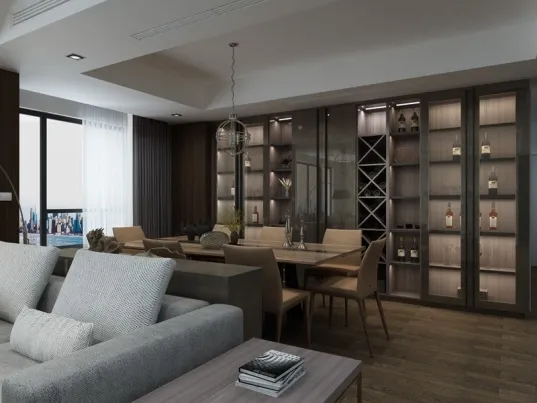
Picture this: You've finally decided to take your wine appreciation journey to the next level. Your burgeoning collection deserves better than being crammed in the corner of your regular refrigerator, battling for space with last night's leftovers. But as you start exploring wine storage options, you're suddenly facing a crucial decision that even seasoned wine lovers ponder over - should you go for a sleek built-in model that disappears into your kitchen cabinetry, or a freestanding wine cabinet that makes its own statement?
Choosing between these two isn't just about aesthetics - it's about ventilation systems, installation constraints, temperature stability, and understanding how different designs impact your wine's journey from vine to glass. It's the kind of decision that keeps wine enthusiasts awake at night, scrolling through endless product specs while sipping a bold Cabernet.
In this deep dive, we'll uncork everything you need to know about built-in versus freestanding wine cabinets. By the end, you'll be equipped to make a choice that keeps your precious bottles happy for years to come - whether that means integrating your wine cabinet seamlessly into your kitchen or letting it stand proudly on its own.
A built-in wine cabinet is precisely what it sounds like - designed to integrate flawlessly into your existing cabinetry like a perfectly choreographed culinary ballet. Unlike its freestanding cousin, these models are meant to be installed under countertops or alongside other kitchen appliances, creating that dreamy, magazine-worthy seamless look that makes designers swoon.
The magic lies in the ventilation engineering. Built-in models feature front-vented exhaust systems, typically visible as a discrete grille along the bottom of the unit. This positioning is intentional - it allows heat to escape forward rather than upward or sideways, making safe under-counter installation possible. Without this clever forward venting strategy, you'd essentially be creating a mini oven for your Cabernets and Chardonnays.
These cabinets operate using powerful compressor-based cooling systems similar to your main refrigerator. This robust technology provides superior cooling power and remarkable temperature stability - crucial factors for long-term wine aging. The compressors might hum slightly louder than thermoelectric systems, but don't imagine industrial clatter; we're talking about subtle background noise comparable to a quality refrigerator.
Design-wise, they're constructed to standard kitchen counter depth (usually around 24 inches), so they sit perfectly flush with surrounding cabinetry. The best models offer customizable panels that can match your existing kitchen finishes, creating that elusive integrated look that feels both luxurious and effortlessly functional.
Freestanding wine cabinets are the independent spirits of the wine storage world - complete units that stand proudly on their own without needing to integrate into cabinetry. Where built-in models hug your kitchen walls, these portable solutions can migrate anywhere with sufficient clearance and a power outlet: kitchens, dining rooms, home offices, or even basement rec rooms.
Ventilation tells the primary story here. Instead of front exhaust systems, freestanding models breathe through rear or side vents. This is why they demand significant airspace around them - typically at least 10 inches on sides, 6 inches back clearance, and open overhead space. Try to box them into a tight space, and you'll create heat buildup that stresses the cooling system and puts your precious vintages at risk.
Many freestanding cabinets employ thermoelectric cooling systems rather than compressors. Think of thermoelectric systems as the library scholars to the compressor's construction crew - they work through silent Peltier technology using electrical currents and heat-conducting plates. This means:
But this gentle technology brings limitations. Thermoelectric systems generally can't achieve the deep cooling power of compressors, usually maxing out about 20°F below ambient temperature. Translation: if your room stays at 78°F, your cabinet might not drop below 58°F - potentially too warm for long-term red wine storage.
Now that we've explored both options independently, let's place them side-by-side in the ultimate wine storage showdown. Understanding these distinctions is like knowing your Cabernet from your Cab Franc - essential knowledge for making an educated choice.
| Feature | Built-In Wine Cabinet | Freestanding Wine Cabinet |
|---|---|---|
| Ventilation System | Front exhaust (grille beneath door) | Rear or side exhaust |
| Clearance Requirements | Minimal space needed (¼" sides/top, 1-2" rear) | Substantial clearance (10"+ sides, 6"+ rear) |
| Cooling Technology | Compressor-based systems | Typically thermoelectric (some compressor) |
| Audible Noise Level | Noticeable hum (like standard refrigerator) | Near silent operation |
| Temperature Performance | Powerful cooling with greater stability | Affected by ambient room temperature |
| Installation Complexity | Requires proper installation, often professional | Plug-and-play simplicity |
| Placement Limitations | Designed for cabinetry integration but can be freestanding | Freestanding use only, cannot be built-in |
| Capacity Range | Wide spectrum (12 bottles to 300+) | Typically small to medium (12-150 bottles) |
| Initial Investment | Higher purchase price | More budget-friendly |
| Aesthetic Integration | Seamless with cabinetry, hidden storage solution | Standalone appliance statement |
| Mobility | Permanent or semi-permanent installation | Easily relocated if needed |
Now that we've laid out the technical differences, how do you translate this into a choice that feels right for your home, your collection, and your lifestyle? Consider these decision-making factors like a sommelier evaluating a wine's potential.
As we reach the bottom of our wine cabinet exploration, remember that both options ultimately serve the same noble purpose: preserving and showcasing your beloved bottles at their absolute best. Whether you opt for the discreet elegance of built-in integration or the versatile convenience of a freestanding wine cabinet reflects your personal priorities.
Here's the honest truth - if kitchen design and large-collection aging are your priorities, a built-in model deserves serious consideration despite the premium investment. Its robust performance becomes a kitchen asset much like a professional range or premium refrigerator. Conversely, if flexibility, budget, and simple setup resonate more with your current life phase, a freestanding cabinet offers exceptional value without compromising on core chilling performance.
The journey to perfect wine storage mirrors fine wine itself - nuanced, personal, and ultimately rewarding when you find that perfect match. So assess your space realistically, inventory your collection honestly, and choose with confidence. Whichever route you choose, your future self will thank you every time you retrieve a perfectly conditioned bottle from your very own custom furniture solution designed specifically for wine preservation.
Cheers to finding your ideal wine cabinet match - may it preserve your treasured bottles perfectly until that moment when you finally pop the cork to celebrate!
Recommend Products












